The main purpose of a marketing campaign, be it email, static photos, or videos, is to grab the target audience’s attention and establish a real connection. Our brains process visuals way faster than text, and the video format is the most engaging. With the rise of Personalized Video at Scale, marketers now have the ability to combine this engaging format with tailored messaging that resonates with each viewer individually.
Whether it’s a reel, a TikTok video, or a YouTube documentary, this is the format most used for telling brand stories because it transmits emotion, sound, and movement. It’s one of the most effective ways to convey a message and establish trust.
But if you really want to tug at your viewers’ heartstrings, you need personalization. Today’s clients are desensitised to generic ads (no matter how colorful and entertaining). To cut through the noise, you have to find a way to talk to each potential client individually. This is where personalized videos come in.
In this piece, we’ll have a look at how marketers use personalized videos and how you can produce them at scale without decreasing quality.
How Do Marketers Use Personalization?
Personalization is a big deal in the world of marketing, and for good reason. Data shows that, when done right, it can increase conversion and cross-sell rates by 30–40%.
The practice involves using data collected from customers to create customized content, messages, and offers that respond to each person’s individual needs. Instead of a generic broadcast, the goal is to create a one-on-one conversation that feels relevant to the targeted individual.
For example, a personalized email marketing campaign might greet customers by name (Hi John!), and recommend products based on their past purchase history or browsing behavior. Speaking directly to someone’s needs is a great way to catch their attention.
It’s important to highlight that personalization is not a strategy to trick the consumer. People are aware of this practice and even encourage it because it’s more convenient to receive offers customized to their needs. In fact, a McKinsey study found that about 71% of buyers expect personalization, and 76% get frustrated when brands fail to deliver it.
Through personalized content, brands show they care about customers’ individual needs. In a world where we’re all bombarded with generic messages, it’s nice to see brands take the time and effort to produce more authentic content.
But, to make this magic happen, marketers need data. This may include everything from name and location to past purchases, browsing history, and what the customer has clicked on in their emails.
How Do You Personalize a Video?
You probably know about Spotify’s Wrapped videos (it’s hard to ignore their existence even if you’re not a Spotify user). When the first Wrapped campaign was released, it generated a social media explosion. There was a 461% increase in tweet volume, with 425 million tweets in just 3 days, accompanied by 15% higher total volume, 17% more engagements and potential impressions, and a 22% rise in unique authors.
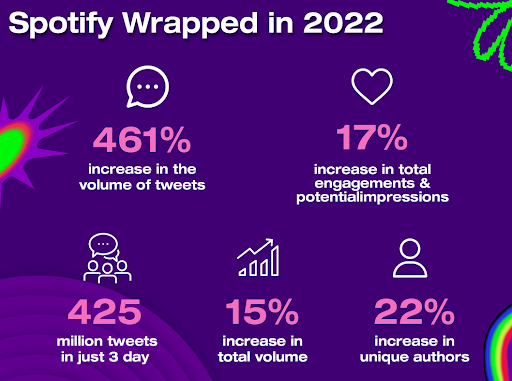
The power of Spotify Wrapped campaigns
Or maybe you’ve received a year-in-review video from your favorite airline. These are perfect examples of personalized video campaigns at scale.
How to Create a Personalized Video
The best part about this type of content is that almost anyone can do it. You don’t need expensive or complex tools. Just a user-friendly platform, a template, and the data (which is the most important aspect).
Let’s discuss each of the elements:
The Platform
Nowadays, there are quite a few platforms that let you create your own personalized video and integrate it with a marketing campaign. The secret to finding the right one is knowing what you’re trying to achieve.
- For a sales outreach campaign, you want a platform that integrates with your CRM and email client. Look for features like browser extensions and analytics that show who watched what.
- For large-scale marketing campaigns, you need a platform built for automation. Focus on robust data integration capabilities and a powerful rendering engine that can generate thousands of videos quickly.
- For smaller projects that don’t require much rendering power (maybe you just need to add a name and a logo), look for user-friendly interfaces and pre-made templates.
The Template
This is the foundation of your campaign. It can be a live-action video featuring an actor, a slick animation, a simple screencast, or whatever you need. Still, it must accurately represent the brand and convey the message efficiently.
In this template, leave placeholder spots where the personalized (dynamic) elements will go. These can be:
- Text: a message, name, or a person’s job position
- Video: footage that fits into the main template
- Static images: logo, product, special design, etc.
- Audio clips: some platforms can utilize text-to-speech to pronounce the person’s name or a unique phrase in a natural-sounding voice
You can also design the video so that its entire narrative changes based on the viewer’s behavior. For example, a video for a new customer might show a different set of features than one for a long-time user.
The Data
This is where the magic happens, but also where things get tricky. As we already mentioned, marketers are avid for personal data, such as:
- Viewer demographics: Name, job title, company name, and location.
- Behavioral data: Products customers have viewed or purchased, their account usage, or pages they’ve visited on a website.
- Transactional data: Recent purchases, subscription renewals, or specific actions users take (like downloading a white paper).
Given the personal aspect of the data, people are wary about what is collected and how it’s used. According to a recent survey, only about 37% of customers trust companies with their data. So privacy can be a sore spot that needs to be addressed before you start thinking about scaling your video campaigns.
From a technical point of view, the process is simple: connect the video platform you selected to your data sources (CRM, email list, or e-commerce store). When it’s time to create a video for a specific person, the system automatically pulls their data and injects it into the placeholders.
What Does Personalized Video at Scale Mean?
So, how do you create thousands, or even millions, of unique videos, each tailored to a specific viewer, without the need for manual, one-off production? After all, Spotify and other companies that use this strategy don’t have an entire team of video editors working tirelessly behind the scenes.
The key to achieving this at scale is automation. You need a system that “listens” for pre-defined triggers, such as a new customer signing up, a new month beginning, or the end of the year. When the trigger activates, the automation engine pulls the relevant data, renders a unique video for that individual, and distributes it through a chosen channel (e.g., email, a landing page, or an ad).
Say a SaaS company wants to send a personalized onboarding video to all its new users. The video can greet the user by name, show a screen recording of their specific dashboard with their name and company logo, and highlight features most relevant to their stated job role.
This is all done in a fraction of a second, which is how brands can create hundreds of thousands of personalized videos for a massive audience.
Wrap Up
Video personalization, especially at scale, is an incredibly powerful skill to master. Start slow and focus on a single compelling use case, like creating a welcome video for new customers, and a single data point, such as their name. Focus on creating a great video template first. Once you see the lift in engagement, you’ll be excited to explore more.
FAQs
1. What is personalized video marketing?
Personalized video marketing is the practice of creating videos tailored to individual viewers using their data, such as name, behavior, or purchase history, to engage them more effectively.
2. Why is personalization important in videos?
Generic ads are often ignored. Personalized videos make messages feel one-on-one, increasing engagement, trust, and conversion rates by showing viewers that the brand understands their needs.
3. How do marketers personalize videos?
By using data like viewer demographics, behavior, and transactions, marketers insert dynamic elements—names, images, or tailored content—into a video template that matches the viewer’s profile.
4. Can personalized videos be scaled for large audiences?
Yes. Automation platforms can render thousands or millions of unique videos by pulling data from CRMs or email lists and inserting it into pre-designed templates, all triggered by user actions or events.
5. What tools are needed for creating personalized videos?
You need a video platform that integrates with your data sources, has user-friendly templates, and has automation capabilities. The focus should be on clear templates, accurate dynamic content, and maintaining viewer privacy.