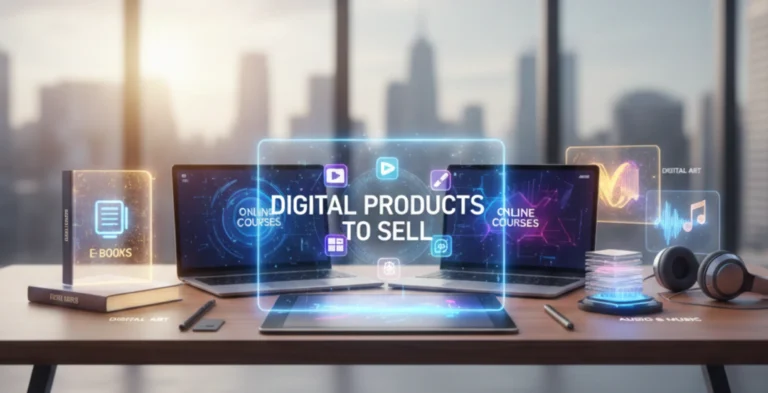
What makes digital products such a powerful income opportunity in 2026, and why are more creators shifting toward selling them online? As technology continues advancing and consumer behaviour leans heavily toward on-demand experiences, the appeal of instantly accessible and scalable products grows stronger. Entrepreneurs are increasingly embracing digital solutions that offer low overhead, high margins, and global reach without traditional business limitations.
From AI-powered tools to creative templates, e-learning resources, and automation-driven assets, the digital landscape is evolving faster than ever. This shift highlights how modern audiences prefer convenient, customizable, and value-driven products that deliver quick results and seamless user experiences.
In this blog, we will take a look at 15 Best Digital Products to Sell .
What Are Digital Products?
Digital products are intangible items that can be created, sold, and delivered online without physical inventory or shipping. These products exist in digital form and can be downloaded, accessed, or used through electronic devices.
Examples include ebooks, online courses, templates, software, digital art, music, printables, and membership-based content. Exploring platforms like Magic Eden through detailed reviews can help creators understand how to sell digital assets such as NFTs effectively. They offer creators high profit margins because they can be produced once and sold repeatedly to a global audience. Digital products are popular among entrepreneurs due to their low startup costs, scalability, and ability to generate passive income.
As visual technology advances and online learning, creativity, and automation grow, digital products such as automation tools, AI-driven design assets, and eCommerce AI product photography services have become a preferred option for businesses and individuals looking to monetize their skills, knowledge, and creativity in a flexible and efficient way.
Why Sell Digital Products?
- Selling digital products offers high-profit potential because you create once and sell repeatedly without ongoing manufacturing or shipping expenses.
- Digital products allow global reach, enabling creators to sell to customers worldwide instantly without physical limitations or distribution challenges.
- They provide passive income opportunities, letting you earn continuously even when you are not actively working or creating new content.
- Digital products require minimal startup investment, making them ideal for beginners seeking low-cost, low-risk online business opportunities.
- They are easy to update or improve, ensuring customers always receive the latest, most relevant, and high-quality versions effortlessly.
- Automation tools simplify delivery, payments, and customer management, saving time and reducing manual work significantly.
- Digital products offer flexible customisation, allowing creators to tailor offerings to niche markets and meet specific audience needs effectively.
What Makes Digital Products Better than Physical Ones?
- Zero Inventory Management: Digital products require no storage, packaging, or stock management, reducing operational headaches and allowing creators to focus entirely on quality, customer satisfaction, and the smart use of marketing tools to grow their reach.
- Instant Global Delivery: They can be delivered instantly anywhere in the world, eliminating shipping delays, geographical boundaries, and logistics costs that often come with selling physical products.
- Higher Profit Margins: Since production costs are minimal after creation, digital products offer significantly higher profit margins, allowing creators to earn more from every sale consistently.
- Easy Scalability: Digital items can be sold to unlimited customers without additional production, making it easy to scale your business rapidly without extra expenses or resources.
- Low Startup Costs: Starting a digital product business requires minimal investment-no manufacturing, inventory, or shipping-making it ideal for beginners with limited budgets.
- Effortless Updates: Digital products can be improved or updated anytime, ensuring customers always access the latest version without replacing or discarding any physical item.
- Automation-Friendly: Sales, delivery, and support can be automated using online tools, reducing manual workload and allowing passive income generation with minimal daily involvement.
- Eco-Friendly Option: Digital products reduce waste, packaging materials, and carbon emissions, making them an environmentally friendly alternative to traditional, resource-heavy physical goods.
List of 15 Best Digital Products to Sell in 2026
1. AI-Powered Templates

Artificial intelligence based templates are pro-made resume, presentation, social posts, email and business document templates with intelligent auto-enhancements.
The templates save time since the users can create personalised content within a few minutes. As demand on AI-assisted productivity tooling grows, creators will be able to sell niche-specific templates that can be used to market, finance, hire, coach, and educate.
They are very popular with freelancers, small businesses and students who are not professional designers, but demand professional results without having to work hard on their design.
Revenue: ₹80,000 – ₹4,00,000 per month
Pros:
- Automates content creation effectively.
- Works for multiple business niches.
- Requires very low creation effort.
- Generates consistent passive revenue.
Cons:
- High competition in marketplaces.
- Requires frequent updating.
- Needs strong niche targeting.
2. Online Courses

Online courses are still among the most lucrative digital products as students tend to choose the possibilities to study at their own speed and in a flexible environment.
Authors can create video lessons, worksheets, quizzes, and certificates on such topics as AI skills, digital marketing, finance, and lifestyle coaching. With the worldwide reskilling trend, courses with high quality will take over digital marketplaces in the near future.
Even niche topics can yield high recurring income with very low delivery fees and high scalability, which is why they are perfect with educators, experts, and influencers.
Revenue: ₹1,50,000 – ₹10,00,000 per month
Pros:
- High demand for new skills.
- Scalable with unlimited students.
- Supports premium pricing models.
- Builds strong personal authority.
Cons:
- Requires extensive content creation.
- Marketing takes major effort.
- Needs regular course updates.
3. Ebooks and Guides

Ebooks and digital manuals present structured and easy-to-read content about the trending topics of remote work, investing, mental wellness, AI tools, and entrepreneurship.
They have minimal production costs and they can be reused several times without inventory restrictions. Short, actionable ebooks that can be used to solve particular problems within a short duration will be in demand.
Having the possibility of buying several guides at once, turning them into lead magnets, or transforming them into audiobooks, these products provide creators with various ways of earning money.
Revenue: ₹40,000 – ₹2,50,000 per month
Pros:
- Very low production costs.
- Easy to publish worldwide instantly.
- Works well for niche markets.
- Great for recurring bundle sales.
Cons:
- Lower profit per sale.
- Market saturation is increasing.
- Requires strong writing skills.
4. Printables

Printables, such as planners, calendars, worksheets, trackers, journals, and activity sheets of kids remain on the trend because of their low cost and customisation possibilities.
They can be designed with the help of tools such as Canva and sold on Etsy, Shopify, or Gumroad. The customers will be more interested in aesthetic, minimalistic, and productivity-driven designs.
Printables offer creators a continuous flow of passive income with zero shipping costs because of the unlimited number of niches: fitness, meal planning, budgeting and organisation of studying.
Revenue: ₹30,000 – ₹2,00,000 per month
Pros:
- Extremely low creation cost.
- Huge demand across niches.
- Perfect for Etsy beginners.
- Easy to scale into bundles.
Cons:
- Highly competitive category.
- Needs aesthetic design sense.
- Seasonal demand fluctuations.
5. Digital Art & Illustrations
Branding, merch, social media, and web design, digital art, clipart packs, icons, patterns, and illustrations are still in demand. Artists have the option of selling single works of art, packages or licenses.
As AI tools enhance creativity, hybrid human-AI art will come to take over the markets in the upcoming years. Unique graphics will be extremely important to businesses, creators and designers to be recognised in the online world.
This makes digital art a lucrative product that has the potential to add recurring sales via subscriptions or membership service.
Revenue: ₹50,000 – ₹3,00,000 per month
Pros:
- Strong demand in branding.
- Flexible licensing options available.
- Suitable for multiple industries.
- Great for subscription models.
Cons:
- Requires artistic skills.
- Copyright issues may arise.
- Time-consuming to create.
6. Website Themes & Templates
WordPress, Shopify, Webflow, and Wix themes and templates are some of the best selling digital assets.
The demand to develop modern, responsive, SEO-based designs is on the increase as more and more business owners shift their enterprises to the internet. Designers can develop niche templates in restaurants, coaches, agencies and online shops.
The market will move towards AI-compatible templates that have software-based automation and no-code configuration. These digital assets have high price tags and target huge markets, which translate to high earning potential.
Revenue: ₹1,00,000 – ₹8,00,000 per month
Pros:
- High-value digital product category.
- Strong demand from entrepreneurs.
- Great for niche specialisation.
- Works with multiple platforms.
Cons:
- Requires technical expertise.
- Needs regular performance updates.
- Customer support can increase.
7. Mobile App UI Kits
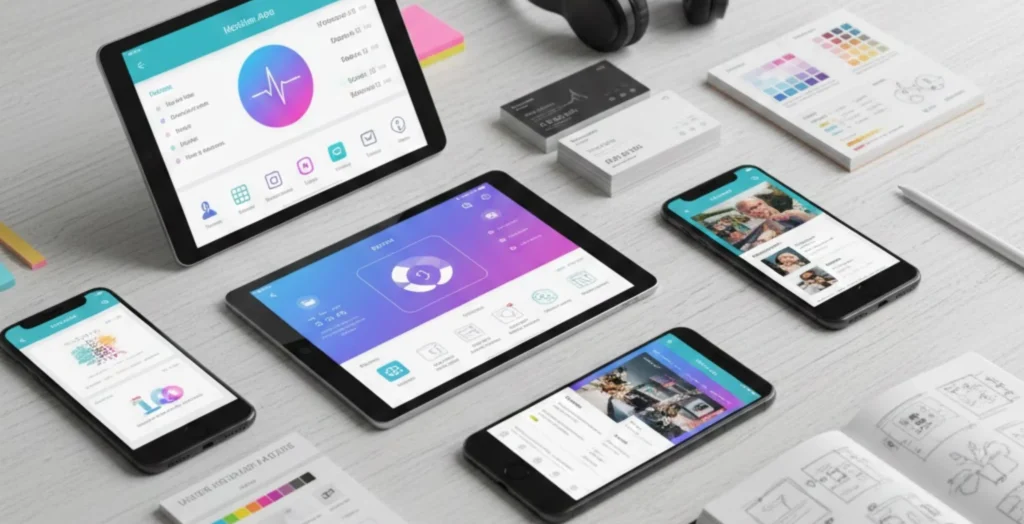
UI kits are ready-made design elements in the mobile apps that assist developers in speeding up their projects.
These packages have screens, icons, color schemes, and design aspects according to the current UX trends. As the world acts upon the idea of mobile usage, developers are demanding visually attractive and consistent interfaces to decrease the time to design.
UI kits that are fintech, healthcare, education, and AI-driven app-optimized will increase future. The sale of customised, industry specific UI packages provides sales designers with great recurrent income prospects.
Revenue: ₹60,000 – ₹3,50,000 per month
Pros:
- Essential for app developers.
- Saves teams major design time.
- Works for multiple industries.
- Attractive pricing opportunities exist.
Cons:
- Requires UI/UX skills.
- Trends change very quickly.
- Needs constant design refresh.
8. Stock Photos & Videos
The stock media libraries: photos, videos, drone shots, and backgrounds continue to be essential digital products when creators, brands, and marketers need high-quality images on a daily basis.
Create recurring income by selling packages or subscriptions on websites such as Shutterstock or your own. The niche content that is specific, authentic, and culturally diverse will be in demand.
Vertical stock videos will also sell in large numbers through short-form video platforms. The creators of stocks have the advantage of using the same files to make more than one sales.
Revenue: ₹40,000 – ₹3,00,000 per month
Pros:
- High reuse value per file.
- Works across many platforms.
- Needed for daily content creation.
- Excellent passive earning potential.
Cons:
- Requires photography equipment.
- The approval process can be rejected.
- Very competitive category online.
9. Social Media Templates
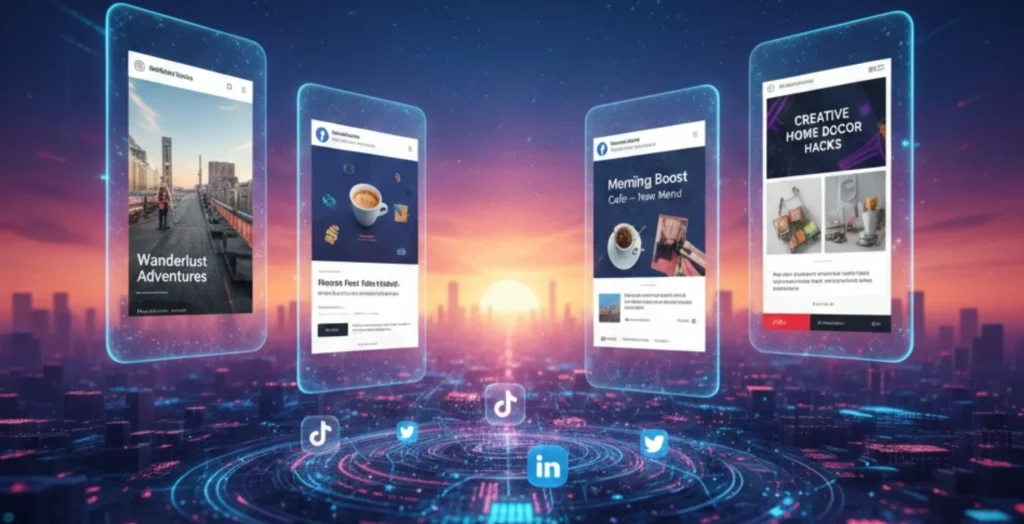
Instagram, LinkedIn, Pinterest, and Tik Tok ready-made post templates help businesses save a lot of time when producing the content. These templates consist of captions, layouts, highlight cover templates, reels templates and carousel designs.
As social media marketing grows fast in future, creators will be able to make good money selling packs specific to the niche to coaches, influencers, restaurants, or eCommerce brands.
Canva is easy to customise by non-designers, and this feature makes such templates appealing to all content-driven businesses, which leads to great demand.
Revenue: ₹50,000 – ₹2,50,000 per month
Pros:
- Strong demand from businesses.
- Easy to customise in Canva.
- Works well for niche targeting.
- Quick to create and upload.
Cons:
- Requires creative visual design.
- Trends change very quickly.
- Many competitors offer templates.
10. Music & Sound Effects
YouTube makers, filmmakers, gamers, and podcasters need royalty-free music loops, background loops, and sound effects. This segment will thrive in future as content production will be enormous.
Producers will be able to sell ambient music, transitions, movie sounds, commercials, and podcast introductions. Audio products provide great passive income since files created once will yield long term sales.
This is a competitive but high-earning category as new AI-enhanced tools allow musicians to create high-quality audio more quickly.
Revenue: ₹60,000 – ₹4,00,000 per month
Pros:
- High demand from creators.
- Reusable across projects repeatedly.
- Works well with bundle pricing.
- Great for long-term passive income.
Cons:
- Needs audio production skills.
- Heavy competition in marketplaces.
- Requires sound mixing knowledge.
11. Software & SaaS Tools
Lightweight SaaS solutions, browser extensions, and automation come with a digital tool that offers the benefit of automation, analytics, and productivity.
Even ordinary tools, such as invoice generators, AI assistants, calculators, or planners, can make a monthly recurring income. Micro-SaaS will take over as it is cheap to develop and can scale. Companies like straightforward ways of solving a given issue fast.
Software is one of the most lucrative digital categories because creators can make money by charging subscriptions, lifetime licenses, or add-ons.
Revenue: ₹2,00,000 – ₹15,00,000 per month
Pros:
- High subscription-based profits.
- Strong demand from businesses.
- Solves real user problems effectively.
- Scalable with minimal overhead.
Cons:
- Requires coding expertise.
- Needs customer support management.
- Regular updates are necessary.
12. Online Memberships
Membership sites provide premium content, community, coaching, templates, or lessons. They give long-term predictable revenue with recurring subscription revenue.
Niche memberships, including fitness communities, professional mentoring clubs, AI learning clubs, parent networks, or creator networks, will be successful in the year 2026. The consumers appreciate organized information, authentic relationships, and regular communications.
Membership plans enable creators to bundle various digital experiences such as courses, ebooks, and live classes to create continuous value.
Revenue: ₹1,00,000 – ₹6,00,000 per month
Pros:
- Generates recurring subscription income.
- Builds loyal engaging communities.
- Works across multiple niches.
- Bundles various digital products.
Cons:
- Requires regular content delivery.
- Needs active community management.
- High churn risk if inactive.
13. Digital Planners

Digital planners consist of interactive journals that are built in and hyperlinked on tablets and utilise digital apps, such as GoodNotes or Notability.
They are daily, weekly, and monthly trackers, self-care pages, habit logs, and study planners. Digital planners continue to be one of the most popular Etsy products due to their reusability and aesthetic appeal.
Minimalist and professional planners will be in demand in future specifically among students, business people and fitness enthusiasts. They have low cost of production and high profit margins.
Revenue: ₹40,000 – ₹2,00,000 per month
Pros:
- Very aesthetic and trendy product.
- Easy to create using templates.
- Popular among students professionally.
- Strong demand on Etsy marketplaces.
Cons:
- Requires advanced design skills.
- Competitors offer low pricing.
- Seasonal demand fluctuates often.
14. Printable Coloring Books
Older people and children frequently use coloring books to relieve mental health, creativity, and relaxation.
Digital coloring books enable consumers to print pages anytime or color them using tablets. Sellers may design thematic collections such as mandalas, affirmations, animals, festivals, or mindfulness prompts.
This niche will grow in the coming time because of the popularity of wellness content and at-home creative activities. Additionally, for artists and creators looking for innovative ways to showcase and sell their work, how canvas prints enhance interior spaces with style and personality offers insights on using canvas prints to add style and personality to interiors, which can help increase revenue. Artists can also increase revenue selling packages and monthly themed packages.
Revenue: ₹25,000 – ₹1,50,000 per month
Pros:
- High demand for wellness products.
- Works for kids and adults.
- Easy to create in themes.
- Good for monthly subscription packs.
Cons:
- Needs a unique illustration style.
- Competition is rapidly rising.
- Requires multiple themed sets.
15. ChatGPT Prompt Packs
The ready to use packs, which are highly optimized prompts, are provided in Prompt packs to offer the business, marketing, code, content, and personal development prompts.
As AI tools are a necessity in future, users would prefer well-structured prompts that are time-saving and enhance accuracy. The packs allow professionals to create better outputs immediately, and they are highly valuable.
Producers can provide niche-form prompts such as Instagram content prompts, email prompts, SEO prompts, or finance prompts, which enable highly monetisable production at a very low effort of creation.
Revenue: ₹80,000 – ₹4,00,000 per month
Pros:
- Extremely fast to create.
- Highly demanded by professionals.
- Works for multiple industries.
- Very high profit margin product.
Cons:
- Needs deep AI understanding.
- Can be easily replicated.
- Requires niche-focused expertise.
Challenges Related to Selling Digital Products
- High Market Competition: Digital products face intense competition as many creators offer similar solutions, making it difficult to stand out without strong branding and marketing.
- Frequent Piracy Risks: Digital goods are easily copied or shared illegally, requiring creators to invest in security measures to protect their work and revenue.
- Constant Need for Updates: Digital products must be updated regularly to stay relevant, fix issues, meet customer expectations, and keep up with industry trends.
- Dependence on Technology: Selling digital products relies heavily on platforms, tools, and internet stability, causing disruptions if systems crash or technical problems arise unexpectedly.
- Customer Trust Issues: Buyers may hesitate to purchase digital items without physical proof, requiring creators to build credibility through reviews, guarantees, and transparent communication.
- Complex Customer Support: Digital products often require technical assistance, demanding timely support, troubleshooting skills, and clear guidance to maintain customer satisfaction and avoid refunds.
- Refund and Chargeback Problems: Customers may misuse refund policies or issue chargebacks after receiving the product, creating financial losses and complications for digital sellers.
Ending Thoughts
In conclusion, exploring the 15 best digital products to sell in 2026 reveals how quickly the online market is evolving. Each product idea offers strong potential for growth, passive income, and global reach when paired with the right strategy. and knowing what content operations are and why they matter can help you manage, distribute, and optimize these digital products effectively. Whether someone chooses digital templates, online courses, AI tools, or subscription-based content, success will depend on creativity, consistency, and understanding customer needs.
Digital products continue to stand out for their low investment and high scalability, making them a smart choice for new and experienced entrepreneurs. With the right approach, it can become a year of strong digital success.
FAQs
What Makes Digital Products Profitable in 2026?
Digital products have low production costs, high scalability, and global reach, making them ideal for entrepreneurs looking to build sustainable income streams.
Which Digital Product is the Easiest to Start Selling?
Templates, ebooks, and printables are the easiest because they require minimal technical skills and can be created using simple design tools.
Do I need a Website to Sell Digital Products?
A website helps build trust, but you can also sell on platforms like Etsy, Gumroad, Shopify, or social media marketplaces.
Are Digital Products Suitable for Beginners?
Yes, beginners can start with simple products like planners, guides, or digital art, gradually expanding as they gain experience.