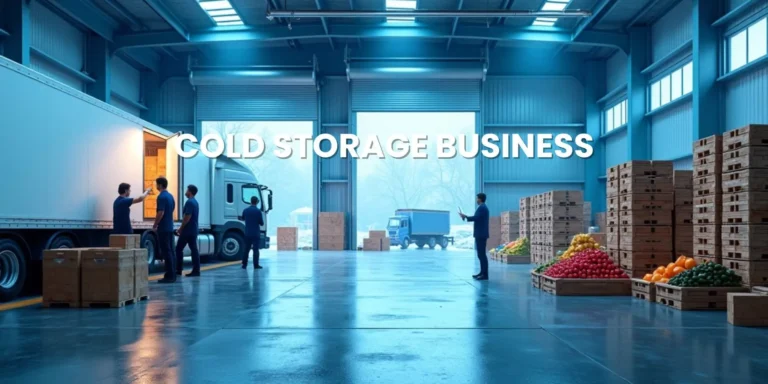
The Cold Storage Business chain infrastructure in India is growing at a very high rate to fulfill the increasing demand. The nation has more than 8,500 cold storage facilities that have an aggregate capacity of more than 37 million metric tonnes. The cold chain market that is estimated to be 13,300 crores in 2024 has a potential value of 31,000 crores by the year 2029, with a CAGR of 18.9. The stimulation of this growth is due to the rise in agricultural production, consumer demand on fresh produce, the rise in e-commerce food delivery, and government programs to encourage the infrastructure of food processing.
As India generates horticulture of about 310 million tonnes per year, and food wastes are estimated to be 16 percent since they lack cold chain infrastructure, the business potential is high. especially when exploring import export business ideas for expanding market reach. Its business covers various industries, such as agriculture, pharmaceuticals, dairy, and processed foods, and is, therefore, an important element of the Indian supply chain ecosystem.
In today’s blog, we will discuss the full details of Cold Storage Business, earnings, requirements to start in India.
What Is a Cold Storage Business?
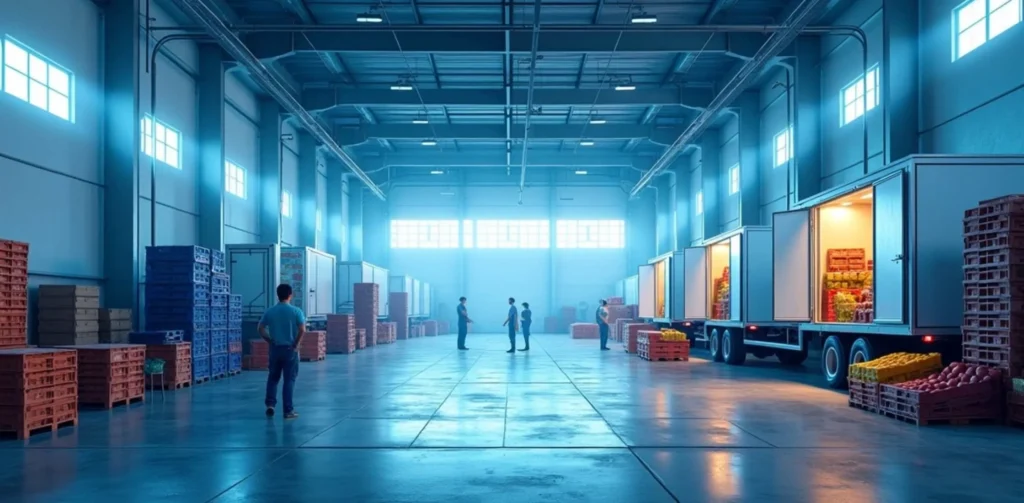
A cold storage company deals with the supply of temperature controlled warehouse services which keep perishable products such as fruits, vegetables, milk, meat, fish, drugs, and processed foodstuff. The facilities retain a certain range of temperature -25C to +15C according to the needs of the products to prolong the shelf life, avoid spoilage and ensure quality of the products throughout the supply chain.
Why Start a Cold Storage Business in India?
- Growing Agricultural Production: India is second in the world in terms of agricultural output with a production of above 310 million tonnes of fruits and vegetables each year. Nevertheless, about 16 percent of this produce goes to waste because of poor infrastructure of cold chain.
- Government Support and Incentives: The Indian government is quite active in promoting cold chains by schemes such as PMKSY (Pradhan Mantri Kisan Sampada Yojana) that provides 35-50 percent subsidy on capital investment.
- Rising Consumer Demand :The rising middle class, the rise in urbanization, and the transformation in consumption habits of India are factors that are pushing demand towards fresh high quality food products.
- Long-term Asset Creation: Cold Storage Business in India is not a startup activity such as many other businesses that need to invest in inventory because it is a long-term infrastructure asset that can be used to create a consistent rental revenue.
Is the Cold Storage Business Profitable?
Cold Storage Business in India is very lucrative especially when well-planned and implemented. Return on investment is expected to be 20-30 percent per annum after stabilization of the operations.
The profitability is anchored on aspects such as location, the use of the capacity, efficiency in operations, client mix, and the value-added services that will be offered. Multi-temperature warehouses with multiple products usually command higher margins compared to single commodity warehouses.
Cold Storage Business Investment & Cost in India
Startup Cost Breakdown
- Land and Construction: Depending on the place, there are huge variations in land costs, between ₹50-500 per square foot. Insulated structures are built at a cost of about 3,000-5,000/ft 2 based on specification. The average area occupied by a 1,000 capacity facility is 10 000 -15,000 square feet built up.
- Refrigeration Equipment: Refrigeration systems, compressors, condensers, and cooling panels, which are of industrial grade, occupy 30-40% of the total investment. The ammonia systems are cheaper with stringent safety measures, whereas the Freon systems are unsafe and inefficient, but costly.
- Electrical and Backup Systems: Backup power generators, solar panels (which gain prominence) entail a lot of investments in electrical installations with high capacity, transformers, generators and other equipment. Electricity tariffs of a medium facility may be over 3-5 lakhs a month.
- Material Handling Equipment: Forklifts, pallet jacks, storage racks, crates and automated handling systems enhance efficiency. This would cost 10-30 lakhs in terms of automation and size of facilities.
- Licensing and Compliance: Registration expenses, environment clearances, fire safety systems, FSSAI licensing, and quality certifications need to pay minimum 5-10 lakhs upfront and renewal and audit costs can be paid periodically.
Cost Estimates by Capacity
- Small (500 1000 tonnes): The overall cost of investment is between 1.5-3 crores. Applicable to entrepreneurs, local market, one-time farmers or a particular commodity. Reduced capacity utilization but high potential of revenue.
- Medium (1,000-5,000 tonnes): The cost of investment is 3-12 crores. Best in the majority of entrepreneurial situations, hence balanced in terms of risk and reward. Has the ability to cater to many client groups and product lines, which enhances capacity and sales.
- Massive (5,000 + tonnes): Costs ₹12-50 + crores per specifications and technology. Catering to institutional customers, export-driven companies and integrated supply chains operators. Also requires professional management, high level of technology and large working capital.
Cold Storage Business Government Subsidy & Support
PMKSY (Pradhan Mantri Kisan Sampada Yojana)
This flagship program offers capital subsidy of 35 percent in general localities and 50 percent in challenging terrain and states in the northeast that experience cold climate infrastructures. The program addresses integrated cold chain initiatives such as pre-cooling, cold storage, reefer trucks and ripening rooms.
The applicants will be required to hand in comprehensive project reports, show technical competence as well as pledge to generate employment. The scheme focuses on farmers producer organizations (FPOs), cooperatives and businesspersons in underserved areas.
Hundreds of cold storage projects have been given the green light by PMKSY since its inception, thus increasing the cold chain capacity in India. The benefits can be easily accessed using online application processes and single-window clearance mechanisms.
State Government Incentives
Other subsidies, interest subversions, and tax holidays are provided by most states to entice cold storage investments. In some of the states such as Punjab, Maharashtra, Gujarat and Andhra Pradesh, there are food parks and industrial areas where land is made available at concessional rates. Tariff subsidies also make electricity brands cheap since in some cases, they are 30-50. Certain states provide subsidies on capital investment of 15-25 on top of central government programs.
There are stamp duty waivers, speedy environmental approvals, and facility assistance (accessibility of roads, water, power connectivity) that further cut down on the establishment costs and time. There is a significant difference in benefits depending on the state and should be researched by entrepreneurs.
NABARD Financing
Special financing of cold chain projects is provided by National Bank of Agriculture and Rural Development (NABARD) with a competitive interest rate (usually, 8-12% per year). The banks can lend money with flexible repayment schemes using the refinance facility based on the cash flow of the business.
NABARD also offers technical assistance, feasibility study support as well as capacity building programs. Their venture capital unit invests in potential cold chain startups. The rural infrastructure development areas are what make the organization a perfect partner of cold storage entrepreneurs, especially those opening their facilities in agricultural areas where no other facilities are available.
Technology Upgradation Support
Various programs, by the government, encourage the use of cold storage technologies that are environmentally friendly and efficient in energy use. Solar powered cold storage, IoT based monitoring systems, investments in automation are all subsidized. The Bureau of Energy efficiency (BEE) offers technical support and certification of the energy efficiency facilities.
The carbon credit systems provide more income to cold storage processes that are green. These incentives are technology-oriented and minimize the active costs of operation in the long-term perspective and enhance the sustainability of the environment and competitiveness in the market.
Steps for Starting a Cold Storage Business in 2026
1. Conduct Market Research
Study the local demand for cold storage by analysing nearby farms, food processors, dairy units, meat suppliers, and pharmaceutical distributors. Evaluate competitor capacity, pricing, and seasonal demand patterns in your area. Proper research helps ensure high occupancy rates and reduces business risk.
2. Choose the Right Location
Select land close to agricultural hubs, wholesale markets, highways, or industrial zones. Ensure reliable 3-phase electricity, water supply, and good road connectivity. A strategic location reduces transportation costs and makes your facility more attractive to clients.
3. Plan Investment and Budget
Estimate the total project cost, including land, construction, refrigeration systems, insulation panels, power backup, and working capital. A small unit may require around ₹50 lakhs, while larger facilities can cost several crores. Always maintain a financial buffer for unexpected expenses.
4. Apply for Government Subsidies
Explore government schemes such as PMKSY, NHB, and NABARD that offer capital subsidies for cold storage projects. Subsidies can cover 35–50% of eligible costs, significantly lowering your investment burden. Ensure proper documentation and compliance to avoid delays.
5. Set Up Infrastructure
Install high-quality refrigeration systems, insulated PUF panels, temperature monitoring systems, and storage racks. Backup power systems, such as generators or solar panels, are essential to prevent product spoilage during outages. Proper infrastructure ensures operational efficiency and long-term reliability.
6. Obtain Licenses and Approvals
Register your business and secure necessary approvals, including GST registration, FSSAI license, trade license, fire safety clearance, and pollution control NOC. If you plan to store pharmaceuticals, you may need additional regulatory approvals.
7. Hire Skilled Staff
Recruit experienced refrigeration technicians, operational managers, and support staff. Efficient temperature monitoring and regular equipment maintenance are critical to maintaining storage quality and customer trust.
8. Secure Clients and Contracts
Develop partnerships with farmers, FPOs, traders, exporters, FMCG brands, and dairy companies. Long-term contracts help ensure consistent occupancy and predictable revenue flow throughout the year.
9. Focus on Profitability and Expansion
Maintain at least 70% occupancy to achieve steady income and faster return on investment. Control electricity costs, optimise operations, and consider adding value-added services such as ripening chambers or cold logistics to increase revenue streams.
Cold Storage Franchise Opportunities
| Opportunity | Model Type | Investment Approx. |
|---|---|---|
| New Frostys Cold Storage | Franchise with training support | ₹20 L – ₹1 Cr+ |
| Harnam Cold Storage Dealer / Distributor | Dealership | ₹2 L – ₹50 L |
| SR Fresh India / S R Cold Storage | Regional partner | Varies |
| RINAC Cold Chain Dealer | Equipment partner | Varies |
| Coldman Logistics Partner | Logistics / cold chain service partnership | Requires contact |
| Snowman / Indicold / Indraprastha Cold Storage | Cold chain business collaboration | Requires negotiation |
Established Brand Advantages
It provides instant market credibility and expertise in running operations through franchising with proven cold storage brands such as Snowman Logistics, Gateway Distriparks or regional players. Franchisors offer established business models, operating process, and quality control systems, and marketing systems.
This limits the entrepreneurial risk to a much lower level in contrast to going it alone. During the initial operations, existing client relationships are available as a result of established brands thus the capacity utilization is easy. Training programs make the franchisees knowledgeable of technical, operational, and safety requirements.
Profitability is however affected by franchise fees (which may range between 5-15 percent of investment) and continuous royalty (2-5 percent of revenue).
Operational Support and Technology
Most franchise deals are equipped with extensive operational support such as site selection, design of the facility, equipments and training of the staff. Competitive advantages are given through access to proprietary technology platforms in inventory management, temperature monitoring, billing and customer relationship management.
Bulk equipment purchases are also negotiated at a low cost by franchisors. Preventive maintenance programs and technical troubleshooting services reduce downtimes. Compliance support is used in order to comply with regulatory provisions and industry guidelines. This business support enables franchisees to concentrate on the acquisition of clients and the expansion of their businesses as opposed to dealing with the technicalities of complex operations.
Market Access and Networking
Franchisees have the advantage of national network of franchisor which consists of access to anchor clients, food processors, pharmaceutical companies, and retail chains. Corporate contracts which the independent operators find hard to get can be obtained via franchise networks. Visibility is boosted by being part of industry forums, trade show and business development initiatives.
Other franchises have common services such as procurement, insurance and marketing making it cheaper. Territorial boundaries could, however, curtail growth opportunities and franchisees should comply with brand standards that can at times inhibit flexibility in operations.
Investment and Returns
Generally the investments made in cold storage franchise are between 10-2 crores depending on the location and capacity. Under normal execution, break-even periods are usually realized in 3-5 years. Franchisors usually provide help in getting government subsidies and financing, which enhances the viability of the projects. Good capacity utilization is possible to yield expected returns of 18-25%.
Nevertheless, franchise deals should be thought through, and all requirements should be considered by the entrepreneurs, who should also estimate whether the fees charged by the franchisor to the franchisee are worth the assistance and business development offered. The independent operations may be more profitable in the long-term even though there are more initial challenges.
Cold Storage Business Challenges & How to Overcome
High Capital Investment and Cash Flow
Cold Storage Business in India involves a lot of initial investment in land, construction, equipment and licensing before it can achieve revenue.
Solution: Take advantage of government subsidies (35-50% under PMKSY), are borrowed with NABARD with longer term of repayments, and think about a gradual expansion in capacity. Begin with a small capacity with a high-margin product that could be pharmaceuticals or specialty foods. Adopt pre-operational marketing as a strategy to get anchor clients in advance of facility opening so that capacity would be filled as the facility opens.
Research the idea of a public- private partnership or joint venture with farmer cooperatives in order to share the weight of investment. Expensive equipment can be leased without consuming capital that is required in working capital.
Capacity Utilization Fluctuations
The agricultural production is seasonal and poses a problem in terms of utilization whereby there is full capacity during the peak seasons (post-harvest) and vacancies during the off-seasons.
Solution: Dispersal of clientele in agricultural products, pharmaceuticals, processed foods, milk, and ice cream that have varying seasons. Create multi temperature zones which will serve different products at a time. Bring value added services such as sorting, grading, packaging and transportation so as to enhance margins and client stickiness.
Sign yearly contracts with food processors and institutional clients with guaranteed utilization minimum. Geographic diversity, catering to various crop-growing areas with disparate harvesting rhythms, levels out seasonal variations.
Technical and Operational Complexity
Special skills, which are usually rare in the countryside, are needed to maintain accurate temperature regulation, keep refrigerant systems, comply with food safety regulations and avoid equipment malfunctions.
Remedy: Spend on thorough employee training based on NCCD courses and certification of equipment manufacturers. Introduce IoT-based monitoring tools with real-time alerts on the deviation of temperature, which will allow prompt corrective actions to be taken. Contract with equipment suppliers on preventive maintenance. Take into account the technological alliances with automation firms.
Get expert cold chain personnel hired initially, at least to develop operational excellence. Standard operating procedures in documents that maintain homogeneity in documents even when personnel change.
Regulatory Compliance and Quality Standards
There are various laws that Cold Storage Business in India will have to adhere to such as FSSAI, environmental clearances, fire safety, labor laws, and product specific licenses.
Remedy: Hire regulatory consultants to help in the planning process to make sure the facility design is in line with all requirements. Make investments in necessary certifications such as ISO 9001, HACCP, and FSSC 22000 which would raise the standards of credibility among high-end clients. Introduce effective records of temperatures and maintenance, and product tracking to conduct audit procedures.
Keep abreast with industry changes via industry associations. Look at compliance as a competitive advantage rather than as a burden because certified facilities are priced higher, and they are also appealing to their clients who are sensitive to quality.
Conclusion: Is Cold Storage Right for You?
Cold Storage Business in India presents a huge market in the rising economy in India especially to long term vision entrepreneurs with sufficient capital. The enterprise is suitable to individuals who can manage the initial complications to generate consistent returns on an infrastructure asset. To achieve success, there must be due market research, selection of the proper location, effective financing, and operational excellence.
With the help of government, entry becomes easier. Assess your risk tolerance, capital fund, technical experience and market exposure prior to investment. When executed in the proper plan, Cold Storage Business in India can provide a steady 20-30 percent returns and act as supplementary to the national food security.
FAQs
How much do you need to invest in Cold Storage Business in India?
Small-scale cold storage (500-1, 000 tonnes) has minimum investment of 1.5-3 crores which covers land area, construction, and equipment cost.
What is the amount of subsidy available to start cold storage?
In PMKSY, government subsidizes 35% and 50 percent of cold chain projects in difficult terrain and general areas respectively.
It must be cold storage business and what is the average profit margin in cold storage business?
Under normal resource management, cold storage facilities normally generate returns on investment of between 20-30 percent a year after it stabilizes with adequate capacity utilization.
What license do you need to commence cold storage in India?
Some of the important licenses are FSSAI registration, environmental clearance, fire safety certificate, trade license, and state of agriculture approval storage permits depending on the products stored.