In today’s fast-paced digital world, customer expectations are higher than ever. Customers want quick resolutions, 24/7 availability, and personalized service. This is where AI workflows in customer support step in, helping businesses streamline operations, reduce response times, and cut costs. But here’s the catch: customers still crave empathy and a human touch. Balancing automation with authenticity is the key to delivering exceptional customer experiences.
In this blog, we’ll explore how businesses can design AI Workflow for Customer Support that automates repetitive tasks without losing the human connection.
Why AI Workflow for Customer Support Matters
AI isn’t just about chatbots answering FAQs. It’s about creating intelligent workflows that handle common queries, predict customer needs, and escalate complex issues to human agents.
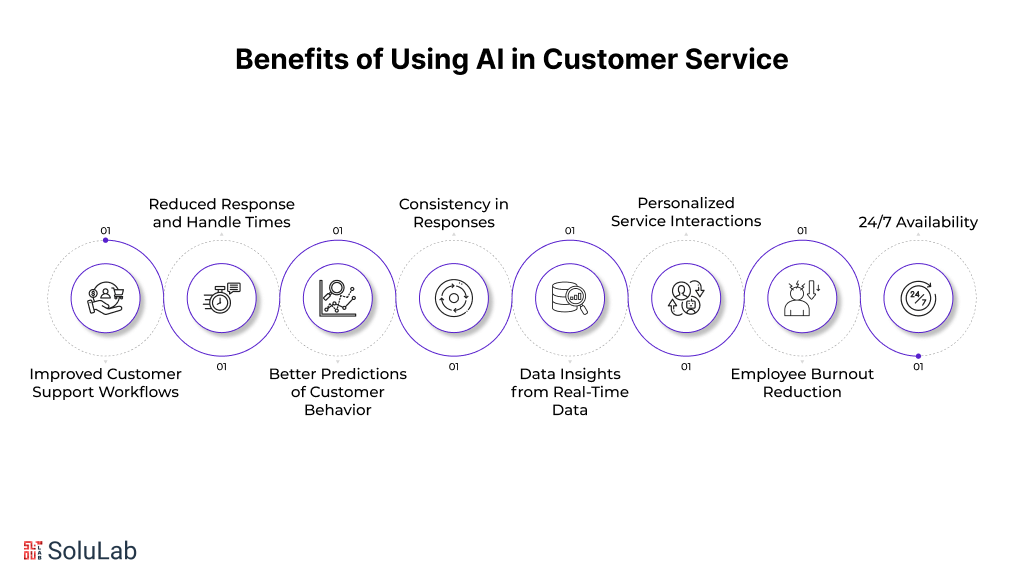
Some benefits include:
- Faster response times – AI can instantly reply to routine questions.
- Scalability – Serve thousands of customers simultaneously.
- Cost efficiency – Reduce workload on agents by automating repetitive tasks.
- Data-driven insights – AI learns from interactions to improve service quality.
However, relying too heavily on automation can make support feel robotic and frustrating. That’s why building a hybrid AI + human workflow is essential.
Building an AI Workflow Without Losing the Human Touch
Creating an AI workflow for customer support doesn’t mean replacing humans; it’s about enhancing efficiency while keeping empathy intact. The goal is to automate routine tasks without sacrificing the personal touch customers value most.
1. Automate the Basics, Personalize the Rest
AI is perfect for handling FAQs, order tracking, billing queries, or password resets. But when emotions are involved such as complaints, refunds, or escalations, ensure smooth handover to a live agent. Customers should never feel stuck in a chatbot loop.
2. Use AI as a “First Responder.”
AI acts as the first point of contact, quickly gathering information and categorizing issues. It ensures customers are routed efficiently to the right agent or solution. This reduces wait times and speeds up resolutions.
- Collect initial information
- Categorize the issue
- Route it to the right agent or department
If you want to visualize and refine these routing paths, you can use a flowchart generator to map each step clearly and ensure smooth handoffs between bots and human agents. This shortens resolution time and allows human agents to focus on high-value interactions.
3. Keep Conversations Contextual
AI-powered systems should remember past conversations, purchases, and customer preferences. This way, when an agent takes over, they already have the full context, reducing repetition and frustration.
4. Humanize AI Responses
Customers prefer natural conversations, not robotic replies. Train your AI with empathetic language models that use polite, conversational tones like “I understand how frustrating this must be” instead of blunt, generic responses. At the same time ensure the responses follow your brand guidelines as well.
5. Monitor & Improve Continuously
Customer support AI isn’t a “set-and-forget” tool. Continuously monitor user behavior, track customer satisfaction, review escalations, and fine-tune your workflows. Encourage agents to share feedback on AI performance so improvements remain ongoing.
Real-World Example: A Balanced Workflow
A customer contacts support about a delayed delivery. AI provides instant updates and handles routine queries, then escalates complex issues to a human agent who resolves them with empathy. This approach keeps support fast, efficient, and human-centered.
Imagine a customer contacts your brand about a delayed delivery.
- AI bot greets them and confirms the order number.
- It pulls real-time shipping updates and informs the customer.
- If the customer expresses frustration or requests a refund, the case is escalated to a live agent who picks up the conversation with empathy and authority.
- AI logs the interaction, updates the CRM, and suggests next steps for future training.
This workflow is efficient, fast, and still human at the core.
Best Practices for AI-Powered Support
When integrating AI into customer service, the goal should be to make interactions smoother and more effective, not robotic. Here are some best practices to keep your AI workflow efficient while still human-centric:
1. Always Provide a Clear “Talk to a Human” Option
Nothing frustrates customers more than being trapped in endless chatbot loops. While AI can solve routine issues, always give customers an easy way to connect with a live agent. This builds trust and shows you value their time and concerns.
2. Use AI to Support, Not Replace Your Team
AI should act as an assistant to your customer support agents, not a substitute. It can handle repetitive questions, gather initial details, and even suggest responses to agents. This frees up your team to focus on complex, high-emotion cases where empathy matters most.
3. Blend Automation with Emotional Intelligence
AI should never sound robotic or detached. Train your system to recognize sentiment and intent for example, escalating when a customer sounds upset. Adding empathetic phrasing like “I understand how frustrating this can be” can make interactions warmer and more human.
4. Train AI on Real Customer Interactions to Enhance Relevance
Generic AI scripts often fall short. Instead, feed your AI with actual customer conversations, FAQs, and historical support data. This ensures the responses are tailored to your brand’s tone, industry jargon, and customer expectations making them far more relevant.
5. Regularly Audit AI Responses to Ensure Quality
AI is not a “set and forget” tool. Over time, customer needs and language evolve. That’s why ongoing audits of AI conversations are vital. Regularly test the chatbot, review escalations, and analyze customer feedback. This helps identify gaps, prevent errors, and keep the workflow aligned with your support standards.
The Future of AI in Customer Support
AI workflows will only grow smarter, integrating with CRMs, predicting customer needs before they arise, and offering proactive solutions. But the human touch will remain irreplaceable in building trust, loyalty, and long-term relationships.
The winning formula? AI for efficiency, humans for empathy.
Smarter Integrations with CRMs
AI will seamlessly integrate with Customer Relationship Management (CRM) systems, enabling real-time access to customer history, preferences, and buying behavior. This will allow businesses to deliver personalized support at scale, whether through chatbots, free email automation, or live agent assistance.
Predictive Customer Support
Advanced AI will use data analytics to predict potential problems before they happen. For example, it might detect patterns that suggest a customer is likely to cancel a subscription or face product issues and proactively offer solutions. This shift from reactive to proactive customer service can significantly boost satisfaction and loyalty.
Proactive Solutions Through Automation
Imagine AI that automatically sends a troubleshooting guide when it detects recurring errors in a customer’s product usage, or schedules a callback from an agent when frustration is detected in chat. Such anticipatory support reduces friction and strengthens customer trust.
Human Touch: The Irreplaceable Factor
Despite these advancements, one truth remains: human empathy cannot be automated. Customers want to feel heard and understood, especially during complex or emotional situations. This is where human agents shine by showing compassion, creativity, and adaptability that AI alone cannot replicate.
The Winning Formula
The most successful customer support strategies of the future will rely on a hybrid model:
- AI for efficiency—handling speed, scale, and data-driven insights.
- Humans for empathy—delivering emotional intelligence, care, and problem-solving.
This balance ensures businesses can stay competitive while still offering customers a support experience that feels personal, reliable, and authentic.
Conclusion
AI is revolutionizing customer support by making it faster, more efficient, and scalable. Yet, technology alone cannot replace the human touch. The real value comes when AI handles routine tasks while human agents provide empathy, creativity, and problem-solving.
Businesses that combine automation with personal care can deliver support that is both quick and deeply meaningful. Regular monitoring, training, and intelligent workflows ensure AI remains effective and relevant.
Ultimately, the goal is not to replace humans but to empower teams with smarter tools, creating experiences that customers remember. In the world of AI-driven support, efficiency attracts, but empathy retains.