
Education has become digitalised, and there is no reverse. You can be a K-12 student, a college freshman or a lifelong learner, but it does not matter any longer because technology is your strongest tool in the classroom. The best edtech apps for students to use in 2026 will be smarter, faster, and more interactive than ever. These applications make learning interesting, available, and custom-made through AI-powered tutoring, gamification-based quizzes or virtual whiteboards.
Having hundreds of choices between iOS and Android, it can be extremely confusing to make the correct decision. This is exactly why we have prepared this ultimate guide to help you find the best tools that work, whether free to learn or spend on the premium features.
What Are EdTech Apps?
Educational Technology applications, also known as EdTech apps, are computer software applications that help facilitate, improve, or provide learning experiences. These applications can run on smartphones, tablets or computers and include all the fields of math, science, language learning, coding, and productivity.
The best ed-tech apps for students are those that integrate educational ideas with captivating design so that educators and students of all ages study smarter, monitoring their progress and communicating with teachers and colleagues – at any time, at any place.
Why EdTech Apps Are Important for Students
- Personalized Learning: Apps can follow the speed and level of skill of each student and make learning more efficient and targeted.
- Available everywhere: Students have the possibility to study both at home, in school, or anywhere without the need to have a classroom.
- Gamified Interaction: Students are engaged with interactive quizzes and rewards, which will help to decrease the study fatigue rate.
- Affordable: Numerous best applications are either free or relatively cheap which makes high-quality education much less expensive.
- Progress Tracking: Inbuilt analytics will allow students and parents to track progress and determine areas of weakness.
- Teacher-Student Collaboration: Asynchronous communication technology provides more convenience in the submission of work, feedback, and connection.
Top 12 Best EdTech Apps for Students in USA (2026)
1. Google Classroom
Rating: 4.6 / 5
Audience: K–12 students and teachers
Cost: Free for all users
Perfect for: Class management and assignments
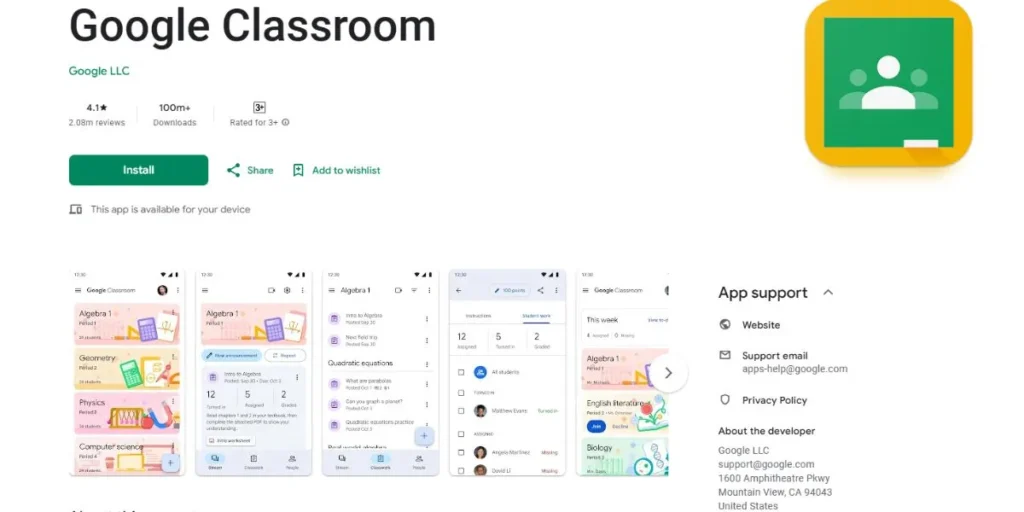
Google Classroom serves as the foundation of online education for millions of students in the USA. It is fully connected with Google Docs, Sheets, Drive, and Meet to form a full virtual classroom experience. Teachers are able to upload assignments, provide feedback, and grade work in a single location. Students will be able to send homework, monitor deadlines, and be able to communicate with teachers without any hassle. It is among the most effective EdTech programs among students of any grade.
Key Features:
- Assignment creation and submission
- Due date tracking and reminders
- Classroom announcements and discussions
- Google Drive integration
- Gradebook and feedback system
App Link: https://play.google.com/store/apps/details?id=com.google.android.apps.classroom
2. Khan Academy
Rating: 4.6 / 5
Audience: K–12 and college students
Cost: 100% free forever
Perfect for: Self-paced academic learning
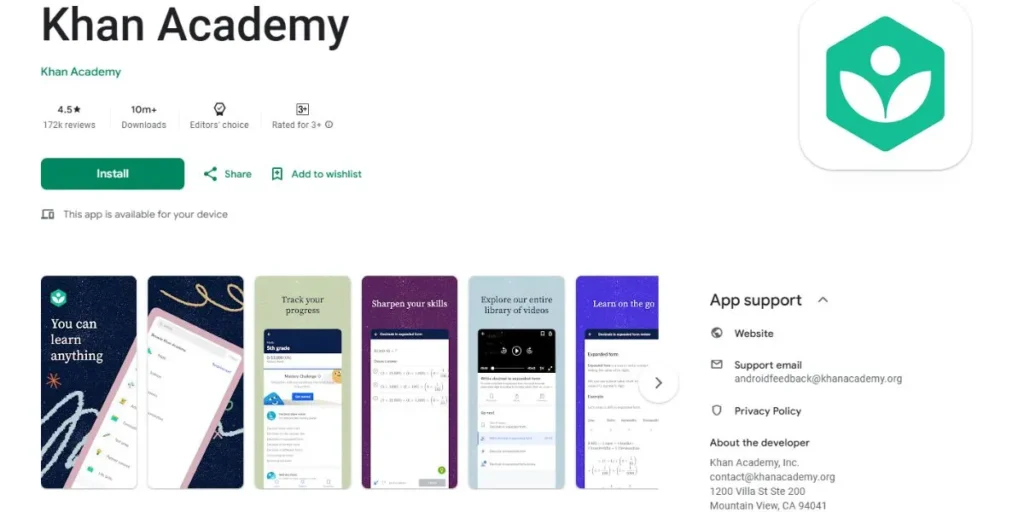
Khan Academy is also among the most reliable and popular learning sites in the world. It has thousands of video lessons, practice activities, and quizzes in math, science, history, economics, and other subjects, which enable students to study at their own pace. The mastery-based approach allows the student to master a concept before proceeding to others on the platform. It is always rated as one of the best EdTech apps for students who require guidance in a structured and curriculum-related free environment.
Key Features:
- 10,000+ instructional video lessons
- Practice exercises with step-by-step hints
- Mastery points and achievement badges
- Parent dashboard and progress reports
- SAT and LSAT preparation courses
App Link: https://play.google.com/store/apps/details?id=org.khanacademy.android
3. Duolingo
Rating: 4.7 / 5
Audience: All ages — language learners
Cost: Free; Duolingo Plus from $6.99/month
Perfect for: Learning a new language fast
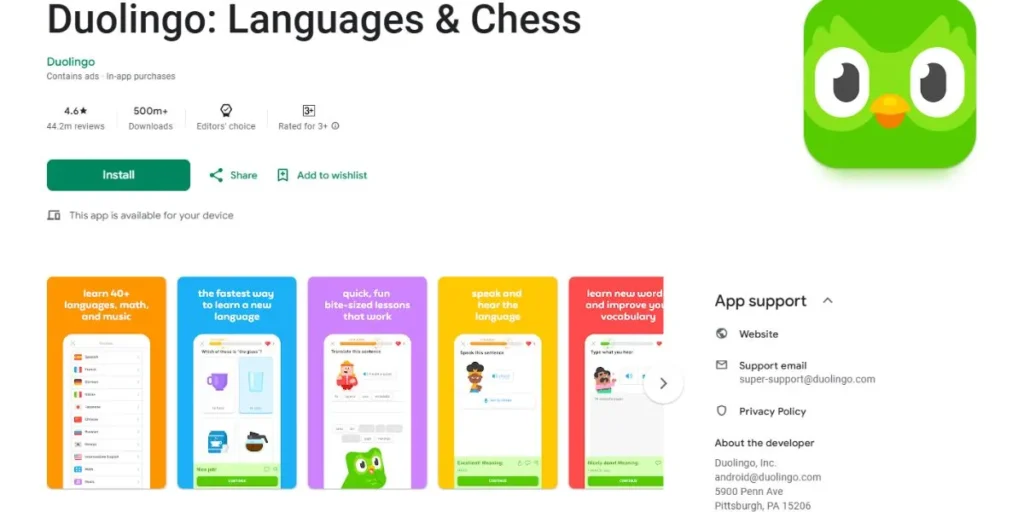
Dulingo has totally transformed the way language is learned because it is fun and game-like. It supports more than 40 languages, such as Spanish, French, Mandarin, Hindi, and Japanese, and has bite-sized lessons, streaks, and leaderboards to ensure that the learners come back every day. AI-based personalization will determine your areas of weakness and continue to reinforce them.
It doesn’t matter which of the two you are, be it a casual learner or a serious student, Duolingo will remain one of the best ed-tech apps for students all over the world will have at their disposal in 2026.
Key Features:
- 40+ languages available
- Daily streaks and leaderboard competitions
- AI-personalized lesson paths
- Speaking and listening exercises
- Stories and podcasts for advanced learners
App Link: https://play.google.com/store/apps/details?id=com.duolingo
4. Coursera
Rating: 4.5 / 5
Audience: College students and professionals
Cost: Free auditing; courses from $49
Perfect for: University-level online courses
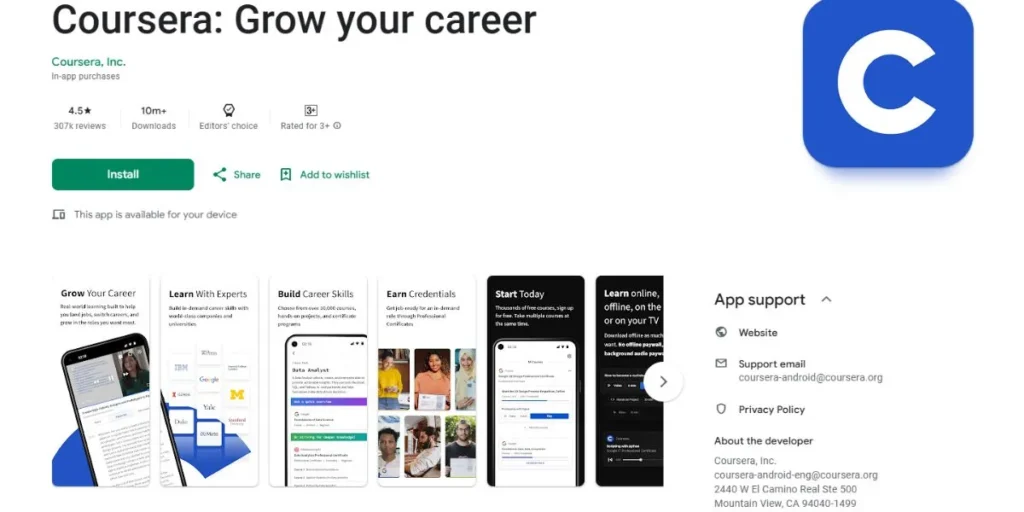
Coursera is a company that unites millions of students with the best programs of the leading universities such as Yale, Stanford, and Google. With or without a desire to get a certificate in data science, business, or graphic design, Coursera now puts higher education on your phone. Most of the courses are offered free, and students who want to obtain a certificate are charged.
Having more than 7,000 courses and 500+ degree programs, it will surely remain among the most sought-after EdTech apps for students to improve their academic or professional qualification in 2026.
Key Features:
- Courses from 300+ universities and companies
- Accredited certificates and degree programs
- HD video lectures with subtitles
- Peer-graded assignments and projects
- Offline video download support
App Link: https://play.google.com/store/apps/details?id=org.coursera.android
5. Canva
Rating: 4.8 / 5
Audience: Students of all levels
Cost: Free; Canva Pro from $12.99/month
Perfect for: Visual projects and presentations
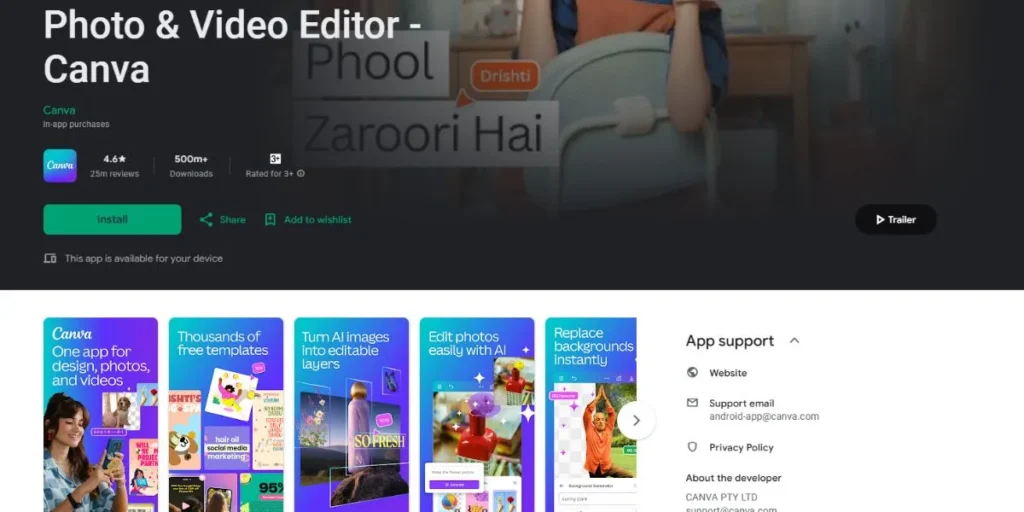
Canva is not only a design program but also a full-fledged creative platform among students. Canva has given everyone access to professional-quality design through school presentations and infographics, as well as posters, resumes, and reports. Thousands of customizable templates and a drag-and-drop interface allow even beginners to create gorgeous work in a few minutes.
Canva for Education is a free education version that is available to K-12 students and teachers. It is among the most ideal EdTech applications for learners who desire to be creative in their learning assignments.
Key Features:
- Over 1 million design templates
- Drag-and-drop design editor
- Real-time team collaboration
- Canva for Education free access
- Export to PDF, PNG, and MP4
App Link: https://play.google.com/store/apps/details?id=com.canva.editor
6. Notion
Rating: 4.5 / 5
Audience: High school and college students
Cost: Free; Plus plan from $10/month
Perfect for: Notes, planning, and organization
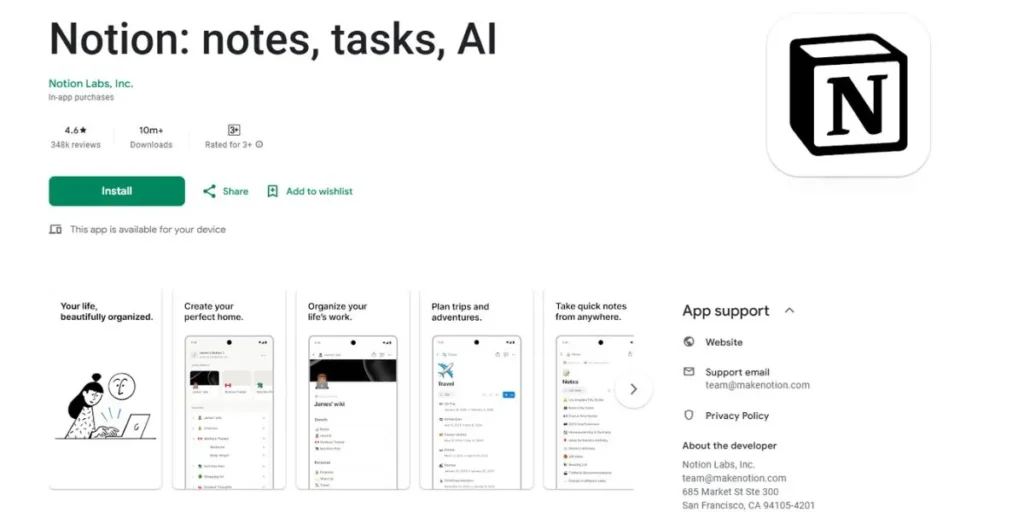
Notion is the final one-stop workspace of students who desire to be organised. You can make notes and create to-do lists and manage study schedules and create project wikis and even collaborate with classmates – in a single flexible app. The AI assistant within Notion will summarize notes, create outlines and even brainstorming ideologies.
Offering a free version that is generously configured to support individual students, Notion has gained significant popularity among the best ed-tech apps for students learning to use productivity and time management.
Key Features:
- Notes, databases, and wikis in one place
- Notion AI for smart summaries
- Study planner and task tracker
- Web clipper and third-party integrations
- Real-time collaboration with classmates
App Link: https://play.google.com/store/apps/details?id=notion.id
7. Quizlet
Rating: 4.6 / 5
Audience: Middle school to college
Cost: Free; Quizlet Plus from $7.99/month
Perfect for: Flashcards and exam preparation
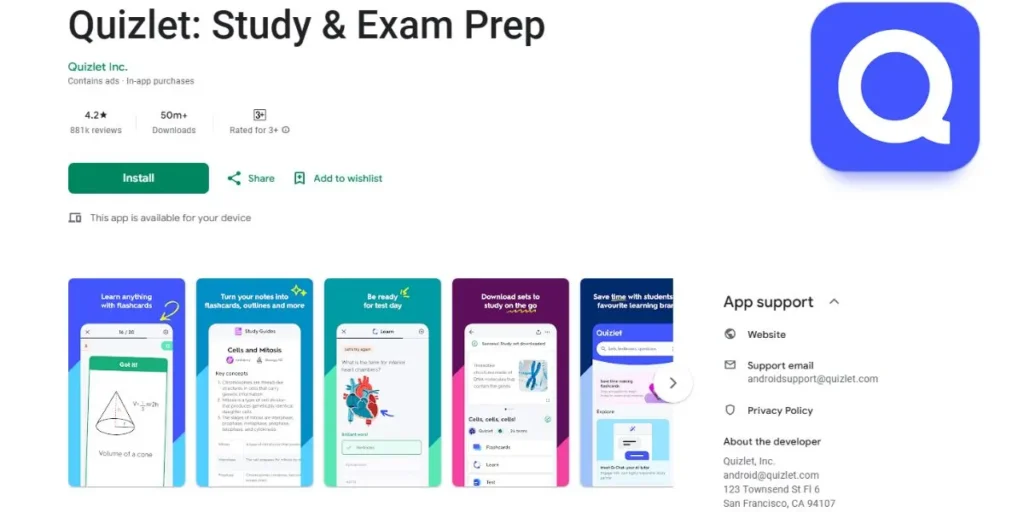
Quizlet has been a popular student tool throughout the last ten years and it remains one of the most efficient studying tools. They are able to build digital sets of flashcards, quiz with multiple features such as Learn, Match and Test, and find millions of ready-made study collections on any topic imaginable.
The application now uses AI-powered capabilities in Quizlet Plus, which allows the app to customize the review session based on the topics students find most challenging. It is still among the most helpful EdTech applications students can use to study quickly and with concentration at most.
Key Features:
- Digital flashcard creation and sharing
- AI-generated personalized quizzes
- Match game and Learn mode
- 500 million+ community study sets
- Performance tracking and weak area focus
App Link: https://play.google.com/store/apps/details?id=com.quizlet.quizletandroid
8. Kahoot!
Rating: 4.6 / 5
Audience: K–12 students and teachers
Cost: Free; Premium from $3/month
Perfect for: Gamified quizzes in class
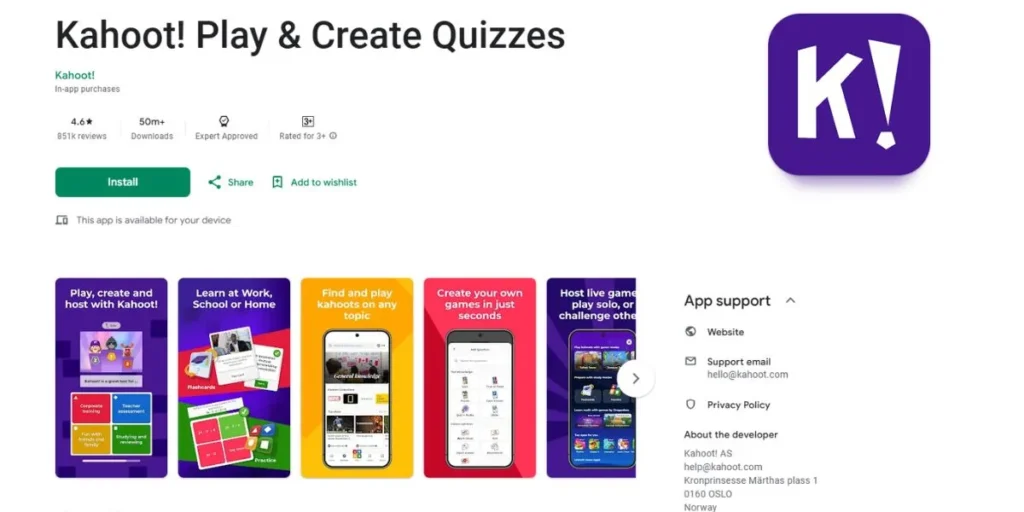
Kahoot! transforms the learning into an interactive, competitive game, which students will be extremely fond of. They consist of teachers who design quizzes known as kahoots, and students respond to them in real time using their devices to compete and take the first position in the leaderboard. Live competition is naturally more exciting and promotes knowledge retention and interest.
Kahoot! can be applied in the classroom, virtual meeting, and study groups across the globe. Being one of the most interesting EdTech apps for students in which students can engage, it will be ideal in making this experience of reviewing material something the students will enjoy.
Key Features:
- Live multiplayer quiz games
- Real-time leaderboard competition
- Play on any device or browser
- 300 million+ public kahoots available
- AI-generated quiz questions
App Link: https://play.google.com/store/apps/details?id=no.mobitroll.kahoot.android
9. Nearpod
Rating: 4.5 / 5
Audience: K–12 students and educators
Cost: Free; School plans available
Perfect for: Interactive lessons and VR field trips
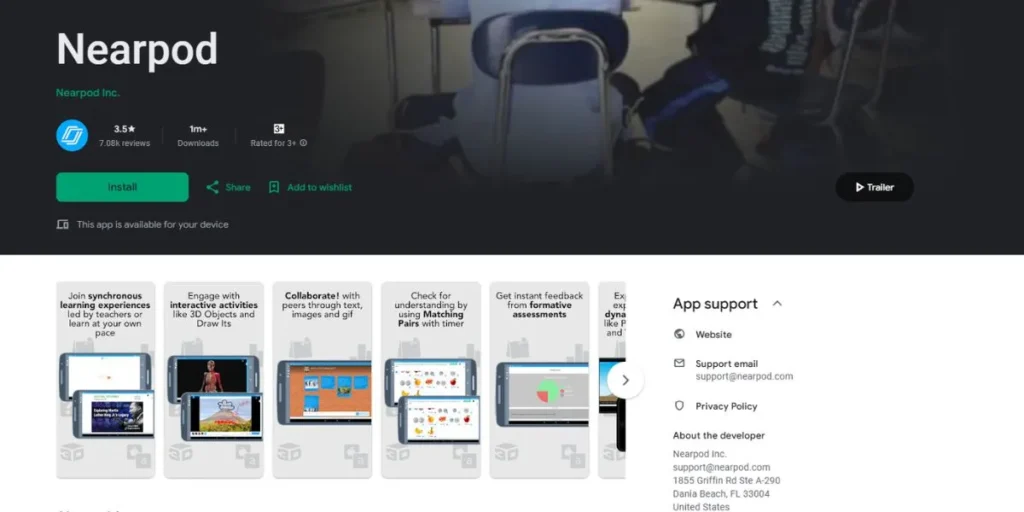
Nearpod converts the traditional slide presentations to engaging interactive learning. The teachers can directly integrate polls, quizzes, videos and even virtual reality field trips into their lessons, which greatly enhances the classroom sessions. Students can give responses instantly and the teacher is able to view the results instantly in order to change the teaching.
Nearpod also provides a huge collection of pre-created lessons that comply with the Common Core standards. The application is among the most excellent EdTech applications that can be used by students and teachers to make each lesson in the classroom exciting and quantifiable.
Key Features:
- VR field trips and 3D model exploration
- Real-time student response tracking
- Embedded video and multimedia lessons
- Collaborative boards and drawing tools
- Pre-built standards-aligned lesson library
App Link: https://play.google.com/store/apps/details?id=com.panareadigital.Nearpod
10. edX
Rating: 4.4 / 5
Audience: College students and adult learners
Cost: Free auditing; verified from $50
Perfect for: Professional certifications and degrees
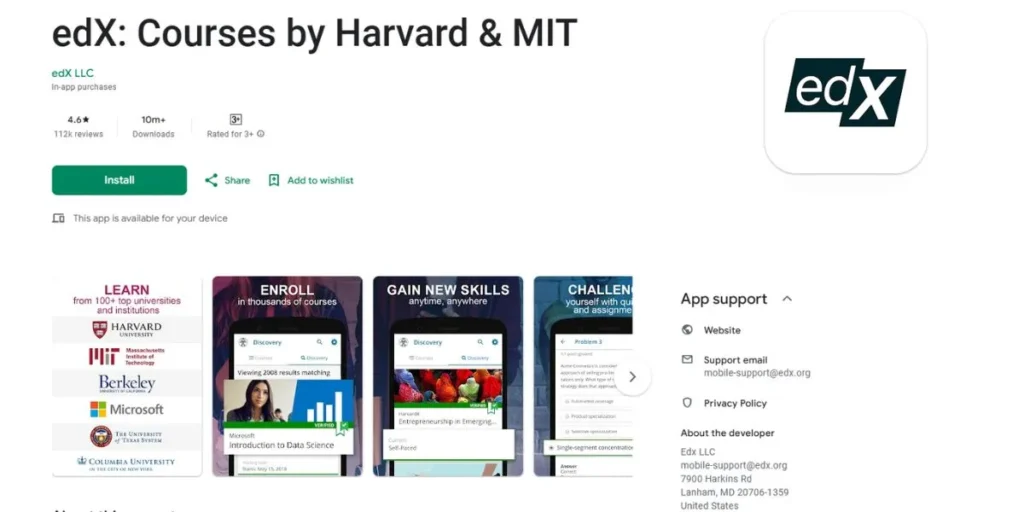
edX is a top online educational service founded by MIT and Harvard, offering online courses at 160 + institutions around the world. It offers courses in computer science, business, engineering, AI, and others, serving those students who demand internationally recognized qualifications. edX has become one of the best ed-tech apps for students who take career advancement seriously with several courses possible to be audited at no charge, and for those who wish to pursue higher education, they can earn university credits through a MicroMasters program.
Key Features:
- Courses from MIT, Harvard, Berkeley, and more
- MicroMasters and Professional Certificate programs
- Offline course content downloads
- Coding and data science bootcamps
- Multilingual course availability
App Link: https://play.google.com/store/apps/details?id=org.edx.mobile
Best EdTech Apps for Students (Free)
Seeking free alternatives? The following are the best free EdTech apps for students that can be used by students.
- Google Classroom: Free, perpetually free, with full assignment and grading system.
- Khan Academy: It is completely free; thousands of lessons in all the core subjects are offered.
- Duolingo (Free Plan): Learn any language by means of advertisements every day; no credit card is needed.
- Canva Education: 100% free to students and teachers at K-12 educational institutions with a school email address.
- Quizlet (Basic): The creation and access to millions of community study sets are free along with the opportunity to create flashcards.
- Kahoot! (Basic): The creation and participation of free quizzes, no limits on participation by student players.
- Nearpad (Free Plan): 40 students in a session; free interactive lessons.
- edX (Audit Mode): It is possible to audit most courses at no cost; only certification costs.
- Notion (Free Plan): Free workspace of full features and free of charge to an individual student.
- Coursera (Audit): Complete hundreds of college courses free, not paying a cent.
Best Apps for Teachers to Use in the Classroom
- Google Classroom: This is a simplified way to distribute assignments, grade and communicate with parents from a single location.
- Kahoot!: Introduces competition quizzes which students really get excited about through live quizzes.
- Nearpod: This allows interactive classes with real-time information, VR, and embedded quizzes.
- Quizlet Teacher: Assists in making your own flashcard sets and diagnostics tests (according to your curriculum).
- Canva in Education: It allows educators to create gorgeous lesson plans, handouts, and in-class displays within a very short period of time.
- Khan Academy (Teacher Dashboard): This enables assignment of specific exercises and a tracking of individual mastery of a student.
How to Choose the Best EdTech App
- State Your Learning Objective: Decide which aspect of your academics, language, coding, or productivity you require to be assisted with prior to downloading.
- Check Age Appropriateness: Be certain that the material and the level of difficulty of the app are appropriate to the grade or the level of the student.
- Weigh Cost vs Value: Make a comparison between the free plans and the paid premium plans to ascertain whether the premium features are worth the cost incurred every month.
- Test Compatibility: Make sure this app is compatible with your device, whether it is iOS, Android, or a desktop, at the time of commitment.
- Read Reviews: Check the ratings and comments of students and teachers to understand their real performance.
- Value Privacy and Safety: Consider, in particular, younger students, and confirm that the app does not violate the COPPA and FERPA standards.
Pros and Cons of the best ed-tech apps for students
Pros
- Learning anywhere, anytime: No physical classroom and a specific schedule are needed.
- High Engagement: Gamification, rewards and interactive material will make students much more motivated than textbooks.
- Individualized Learning: AI sets the lesson to a person’s pace, needs, and personal learning style to achieve higher results.
- Affordable Access: Free and low-cost plans provide access to quality education for all students without any consideration of income.
- Measurable Progress: Intrinsic analytics enable students, educators and parents to see the progress over time.
- International Plexus: Students can obtain top level teaching in Harvard, MIT, and Google on any device.
Cons
- Dependency on the Screen: Overuse of apps may cause digital fatigue, eye strain, and increases in attention span.
- Internet Need: Most applications need a good internet connection and therefore are not accessible to the rural students.
- Risk of Distraction: Students are able to deviate to social media or games during a session with learning apps.
- Premium Costs: Paywalls are commonly used to restrict the key features so that not every family can afford to obtain them.
- Privacy Protection: Student information to some apps is also a cause of profound FERPA and COPPA compliance.
- Less Human Interaction: Excessive use of apps has the potential to restrict the important social and emotional learning of human teachers.
Common Mistakes to Avoid
- Downloading Too Many Apps: Multitasking with too many apps can result in cognitive overload, instead use two or three good forms of tools.
- Missing Free Trials: There is no need to buy a premium without trying the free version to ensure that it suits your requirements.
- Overlooking Reviews: It is dangerous to use an app without reading student and teacher reviews.
- Lack of a Scheduled Program: The inconsistency of learning with the use of apps without a study plan makes it less effective.
- Ignoring Privacy Settings: Always check the data permissions, particularly on the apps that are used by children below 13 years of age.
- Failing to update apps: The old version of these apps contains bugs, security vulnerabilities, or lacks features that could influence the quality of learning.
Conclusion
The best ed-tech apps for students in 2026 can radically change the learning, studying and growing process. Google Classroom to organize the tasks, Khan Academy to learn the science, Duolingo to speak a different language, or Coursera to get a university certificate – the opportunity to use the right app may make the difference between the failures and success.
Begin with no charges, play around with features that suit your objectives, and develop a digital learning tool that can support your learning style. Your future education is in your hands, literally. So download, read, and become smarter today.
Explore More About:
FAQs
Which are the best ed-tech apps for students in 2026?
Khan Academy is regarded as the most popular free alternative, where thousands of free lessons on all the subjects are available at no cost.
Are educational technology applications safe among children?
The majority of good applications such as Google Classroom and Khan Academy are COPPA and FERPA, and they are safe among children under 13.
Is it possible to envision EdTech apps for Students substituting the traditional classroom teaching?
No -they should be utilized as supplements. Applications only improve the learning process and cannot entirely substitute the social and emotional worth of human teachers.
What is the best EdTech application among college students?
Coursera and edX are the best choice among college students because they provide university level courses and certificates in world recognized institutions.
Do EdTech apps work offline?
There are also apps such as Duolingo, Coursera, and edX that allow offline downloads, though the majority of them need a connection to the internet to be effective.
