

The creative economy has seen never-before growth, and handcrafted and artistic wares make billions in revenues every year on digital platforms. Although Etsy controls this market with more than 90 million active buyers, intelligent business people know that putting all eggs in one basket is a potential risk to business operations. Changes to platform algorithms, fees, and policy might take a toll on your revenue overnight. In pursuing Etsy alternatives, it is not all about having backup options but strategically diversifying your business, which can help you get 40-60 percent more sales based on the studies of multi-platform sellers.
The current online environment provides targeted art markets, robust e-commerce and social commerce environments, each with a specific customer profile of demographics and buyer behaviour. Regardless of the competition offered by Etsy, the opportunity to attract lower fees, a specific audience, or the sustainability of a long-term business, Etsy alternatives offer the means to more independence, more profit, and less risk of being dependent on a platform.
Why Look for Etsy Alternatives
- Less Competition: There are usually fewer sellers on most of the Etsy alternatives, which ensures you greater visibility and less market competition trying to capture the customer attention in your niche.
- Better Costs: Many of the platforms have lower prices and will enable you to make more profit on each sale and build your business.
- Improved Marketing Control: The alternative platforms tend to offer you better SEO tools, social media integration, and marketing features that would enable you to reach out to more customers.
- Diverse Audience: Each medium targets a different customer base, and thus, through these different media, you can reach various new customer groups easily.
- Platform Independence: A portfolio approach to various platforms limits brand dependence on policy modifications, or some account deactivation or algorithm change in a single marketplace.
- Specialized Features: Most Etsy alternatives include industry-specific features, superior analytical tools, or personalization based on specific varieties of creative businesses.
Comparison Table
| Platform | Best For | Pricing Starts From | Transaction Fees |
| Amazon Handmade | Established sellers | $39.99/month | 15% referral fee |
| ArtFire | Vintage & handmade | Free | 3.5% + $0.30 |
| Bonanza | All categories | Free | 3.5% final value fee |
| Aftcra | American-made goods | Free | 7% commission |
| Zibbet | Multi-channel selling | $4/month | 0% on own site |
| Folksy | UK handmade items | Free | 6% + $0.30 |
| Big Commerce | Professional stores | $29/month | 0% transaction fees |
| Shopify | Custom stores | $29/month | 2.9% + $0.30 |
| Facebook Shops | Social commerce | Free | Payment processing fees |
| Instagram Shopping | Visual products | Free | Payment processing fees |
Best Etsy Alternatives for Sellers
1. Amazon Handmade
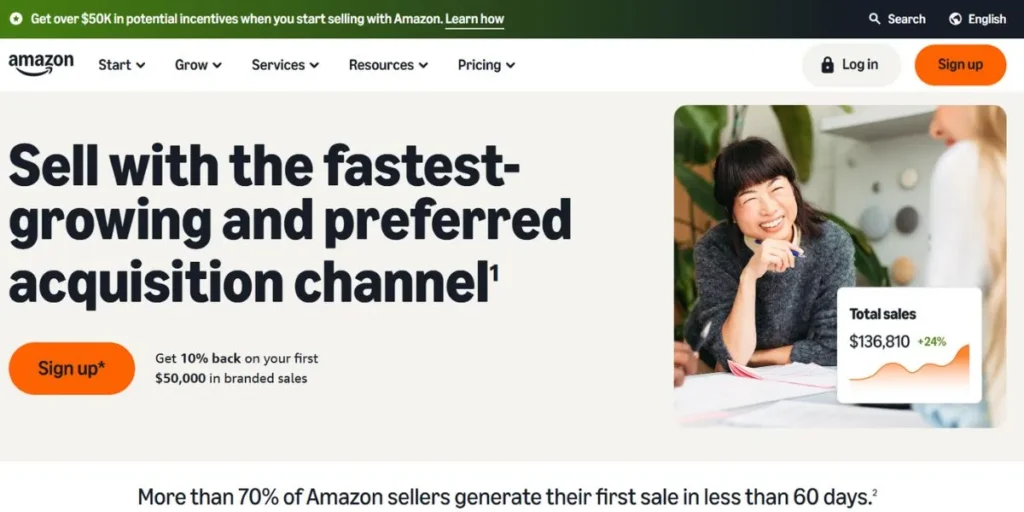
Amazon Handmade is a subcategory of the giant Amazon marketplace, with artisan sellers of handmade goods only. It was opened in 2015 and uses the unbelievable logistics infrastructure and base of clients, as Amazon has more than 300 million active clients. The system must be appraised with a stringent procedure to ascertain quality requirements. The third use case targets sellers of products as they can leverage Amazon’s trusted brand name, mature fulfillment services, and rich seller tools. It has a high level of customer support and one with good analytics and a connection to the Amazon advertising ecosystem, which aids artisans in scaling their companies successfully.
Pros:
- Millions of customers all over the world are on Amazon
- High-quality fulfillment choices, such as the FBA (Fulfillment by Amazon)
- Good customer trust and brand awareness
- Analytics and professional seller tools
Cons:
- Professional accounts are expensive every month
- Tight process of application and rules
- Close rivalry among competing Amazon sellers
- Not much customization of your brand presentation
Why Choose This: Selling on Amazon Handmade is best for those sellers who want to reach the biggest possible online customer base and are ready to invest in professional selling tools.
Best For: Established sellers committed to staying stocked regularly, as well as providing a high level of customer service and shipping in line with Amazon customer satisfaction policies.
Pricing: Professional selling plan, month to month at 39.99 per month, with 15 percent commissions on your sales.
2. ArtFire
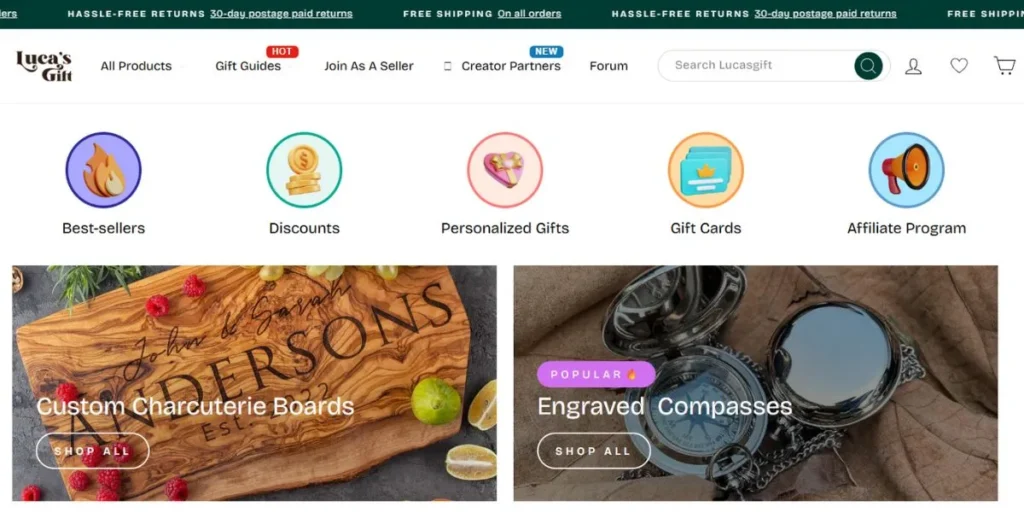
ArtFire markets itself as a worldwide source of handmade, vintage, and craft supplies, whereas it also has a community-based service to smaller markets with a customized seller experience. The platform was founded in 2008, and it focuses on establishing real connections between sellers and buyers by engaging with interactive activities such as seller profiles and customer reviews. ArtFire offers all-inclusive seller tools such as inventory controls, promotional tools, and social media interconnections. It has a more personal seller community than large marketplaces, so it does not have as many sellers (or as much competition) on many types of products at once, so customer interactions are more personal.
Pros:
- Good community functions and vendor backup
- No listing to open accounts
- In-built promotional tools and social capability
- An interface that is simple to use and is well customizable
Cons:
- Few users in comparison to large platforms
- Low marketing reach and SEO potential
- Integrated shortage of sophisticated selling functions
- Less mobile optimization
Why Choose This: This is a good platform to use in case sellers are interested in customer interaction and a more personal, friendly selling atmosphere.
Best For: New sellers who are interested in a welcoming community and established sellers who seek extra sales routes.
Pricing: Free basic membership, 3.5 percent transaction fees, and 30 ce30-centransaction fee.
3. Bonanza
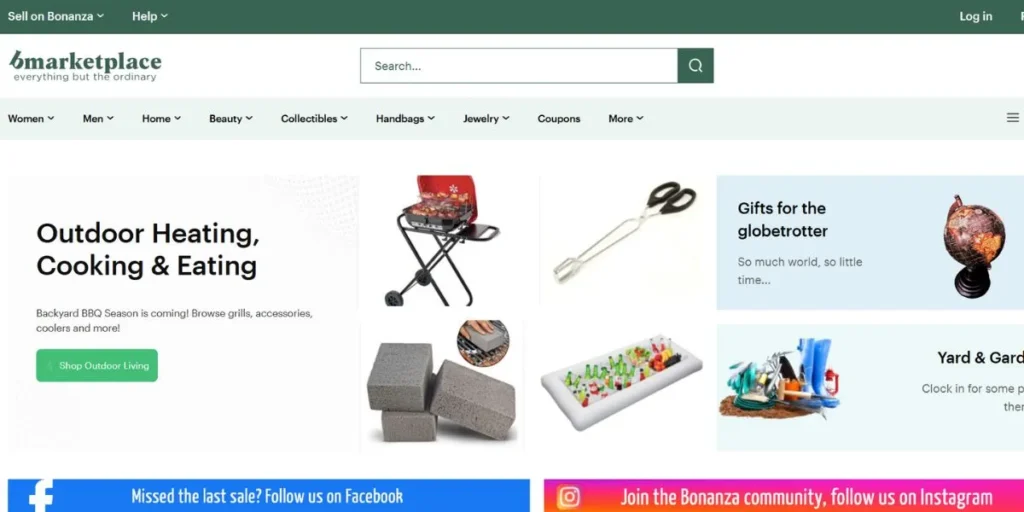
Bonanza is a friendly marketplace, easy to use and affordable to sell, perfect to use the sentence in your own words with no fees, given the positioning as the selling experience you deserve, and carries tools for novices and advanced users. Founded in 2008, the portal deals with over 50,000 sellers and generates millions of visitors every month who seek unique products of different categories. You can connect other large selling platforms in Bonanza, and that includes importing listings on eBay and other platforms as well. The platform offers sellers advanced SEO tools, advertising options, and detailed analytics that enable users to optimize their listings and increase exposure in search results.
Pros:
- Very low processing charges relative to other players
- Simple connectivity to other selling sites
- A good search engine optimization property
- Sensitive customer service
Cons:
- Local traffic as opposed to large marketplaces
- Poor specializations of homemade products
- Lower brand awareness among consumers
- A reduced number of incorporated marketing tools
Why Choose This: Bonanza should be used by sellers with the aim of high profit margins and low platform charges.
Best For: Sellers who are conscious in terms of cost and wish to test a new market without any large upfront investment.
Pricing: Listing is free, and when a sale is complete, a 3.5 percent final value fee is charged.
4. Aftcra
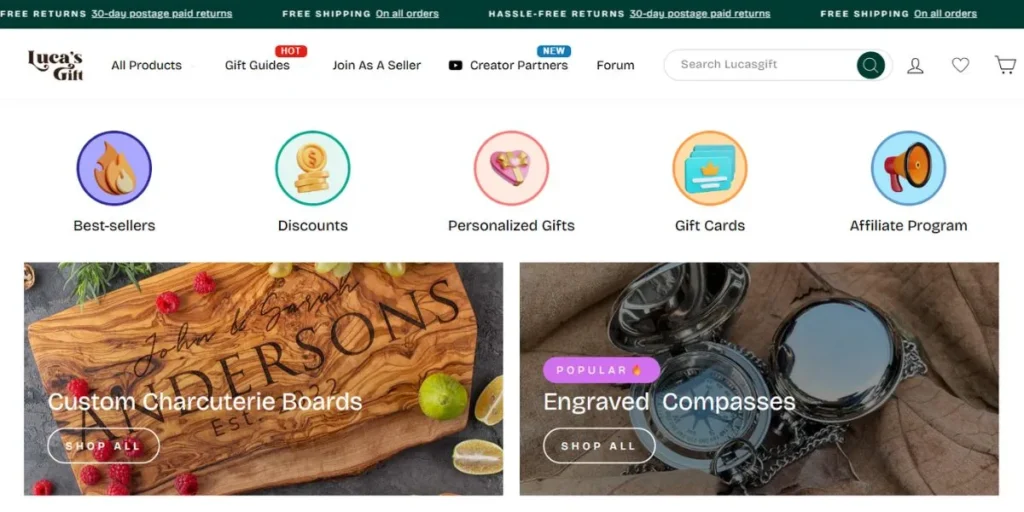
Aftcra only sells American-crafted handmade products, which gives clients a patriotic place to shop and thereby attracts those customers who specifically want to buy American-made merchandise. The site was started in 2011 in Arkansas and helps the “Buy America” campaign by pairing consumers and artisans in each of the 50 states.
Each seller on Aftcra is carefully vetted to be sure that products are made in America, by citizens or permanent residents. The site provides educational content on American artisanship, extensive information on sellers and local tales on them, and marketing services whereby the artisans can orient themselves and grow their brands in the process, helping to showcase domestic production and more local economies.
Pros:
- Isolation only on products by American workers limits rivalry
- A good brand image attracts patriotic consumers
- Quality support and seller resources in the community
- There are no listing fees
Cons:
- Only sellers in the US are permitted
- Less number customer base than in the general marketplaces
- Fewer opportunities for international selling, Fewer payment and shipping methods
Why Choose This: Aftcra is ideal to be used by American artisans who wish to highlight that their products are made in America.
Best For: US manufacturers of handmade products who would like to attract patriotic customers.
Pricing: Free advertising and 7 percent on sale.
5. Folksy
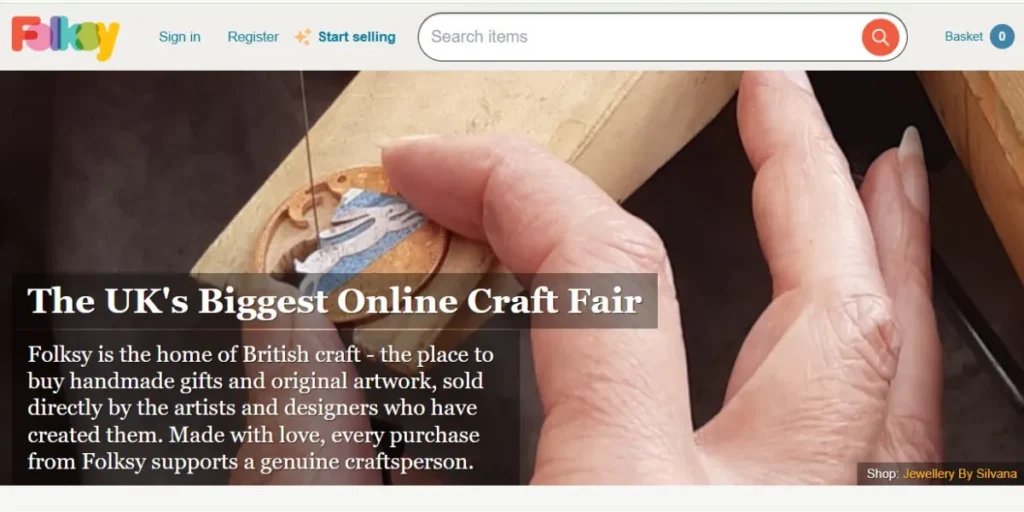
Folksy is a marketplace based in the UK, centered purely on handmade and vintage, and interested in offering a local solution to British sellers and buyers who are fans of true British quality craftsmanship. The site was introduced in 2008 and puts forward British design and historic manufacturing methods, collaborating with local artists all over England, Wales, Scotland, and Northern Ireland. Specializing in one-off and locally made items, Folksy stocks a hand-curated range of designer handcrafted items, vintage, and craft supplies. It has excellent service, an elaborate description of the sellers with details of the makers, and documentation of the customs and arts and crafts of Britain in order to keep its heritage.
Pros:
- Good UK presence
- Competition is less than that of international platforms
- Refer to British-made products
- Fair price structure
Cons:
- The UK market is only largely
- Less customer base as compared to global platforms
- Lower-level tools of selling
- Poor availability of international shipping facilities
Why Choose This: Folksy offers a superb experience to the UK-based sellers interested in concentrating on their home market.
Best For: British creators and retro sellers who want to sell to British buyers.
Pricing: It is free to list, and the transaction fees are 6% + $0.30.
6. Big Commerce
Big Commerce is an all-inclusive e-commerce platform that enables you to craft your very own professional internet store, complete with all-out custom and integration opportunities. The platform was created in 2009 and now serves more than 60,000 merchants globally and handles annual sales in the billions.
BigCommerce provides enterprise-level functionality such as advanced SEO, multi-channel selling options, and powerful analytics with no transaction fees. The platform will give it hundreds of professional themes, large API integrations, and scalable hosting infrastructure. It helps in selling internationally by allowing multi-currency, automatic tax rates, and an extensive shipping management system for expanding companies.
Pros:
- Absolute ownership of your brand and the experience of customers
- Sales with no transaction fee
- Wide range of apps marketplace and integrations
- Analytical tool-kit, Professional marketing, SEO
Cons:
- Subscription monthly obligation, Non-automated marketplace traffic
- Demand for a higher technology level
- There is a need to manage your marketing fully
Why Choose This: It is best suited to sellers who are prepared to establish their brand and own the entire customer journey.
Best For: Existing sellers that are prepared to invest in creating their own e-commerce space.
Pricing: The pricing is as low as $29/month and does not involve extra transaction fees.
7. Shopify

One of the most popular e-commerce companies worldwide is Shopify. The company offers all the tools to create, customize, and grow your online shop with professional capabilities. Shopify was launched in 2006, and today over 1.7 million businesses use Shopify globally, whereby more than hundreds of billions of sales are transacted in a year.
The platform offers a whole lot of apps ecosystem with thousands of integrations, professional themes, and other improved marketing tools. Shopify supports multi-channel platforms, strong analytical tools, inventory management, and customer relationships. The platform enables cross-border business with multi-lingual features, currency exchange, and local payment mode features to succeed in international business.
Pros:
- Much customization and app ecosystem
- Great mobile-friendliness
- A sophisticated analysis and reporting
- Good SEO and marketing capabilities and tools
Cons:
- Transaction fees in addition to the monthly fees
- No traffic to begin with in its marketplace
- May get costly in add-ons
- Needs marketing investment to be visible
Why Choose This: Shopify is suited to those more serious businesspeople who want to take their business up to the next level and make it a high-end, professional e-commerce store.
Best For: Driven sellers who prefer total control over their online store and those willing to spend on their growth.
Pricing: Obviously, the entry-level Basic plan costs 29/month and 2.9% + $0.30/transaction.
8. Storenvy
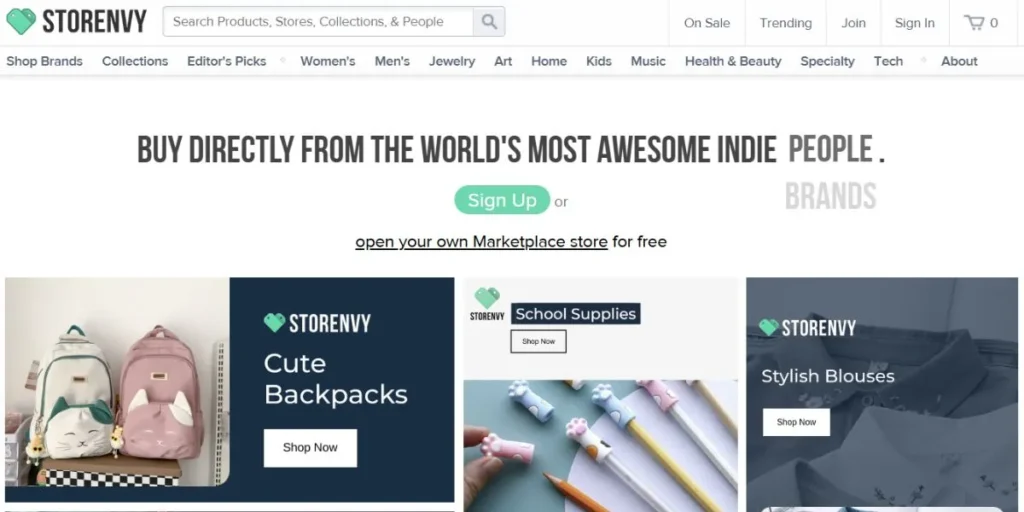
With Storenvy,you can take advantage of the benefits of your online store but allow others to discover your products in a marketplace setting, providing a hybrid selling option that is all its own. They launched in 2010, and they are serving thousands of independent sellers and creative entrepreneurs seeking an alternative to the traditional marketplaces. Storenvy offers free store-building tools, integration with social media, and an in-store marketplace to spread products further.
The platform lays an emphasis on community by offering features of seller collaboration, tools of customer engagement, and social commerce functionality. Storenvy provides mobile-friendly stores, simple access to analytics, basic ordering, and inventory management features ideal for start-up creative businesses that want a low barrier to entry to e-commerce.
Pros:
- Free basic store design
- In-built marketplace to get extra exposure
- Simple implementation in social media
- Basic plans have no transaction fees
Cons:
- Poor customization with the help of options
- Fewer users than large platforms
- Basic analytics/reporting
- The small quantity of payment processing tools.
Why Choose This: Storenvy is good at supporting non-profit sellers that need to get the exposure of a marketplace, as well as the branding of their shop.
Best For: New sellers who want to dip their toes in the online business without making much of an investment in the beginning.
Pricing: Free basic package with paid plans of $5 per month.
9. Tictail (Now Square Online)
Square Online (previously). Tictail offers free e-commerce websites and is supported by the Square payment processing ecosystem and business tools. The platform (which became part of Square in 2020) brings together the design-centered nature of Tictail with the proven payment and business management systems at Square. Square Online provides business templates and drag-and-drop customization, and easy omnichannel selling using point-of-sale systems sold by Square.
The platform offers inventory management, customer understanding, marketing solutions, and integration with social media. Square Online offers a free and paid version, meaning that businesses of all sizes, be it start-ups or established retailers, can access end-to-end e-commerce without the technical burden.
Pros:
- Have a fully free basic plan
- Integration with the payment and POS systems of Square
- Straightforward site designer
- Free plan with no transaction fees
Cons:
- Customizations are limited in the free plan
- Free stores branding by Square
- No inbuilt market traffic
- Simple SEO and marketing functions
Why Choose This: Square Online is a great option for sellers who desire to have a professional web page free of monthly costs.
Best For: Small sellers looking to have an uncomplicated and free e-commerce solution with expansion in mind.
Pricing: Free plan is provided with premium plans starting at 12$/month.
5 Etsy Alternatives for Artists
10. Saatchi Art
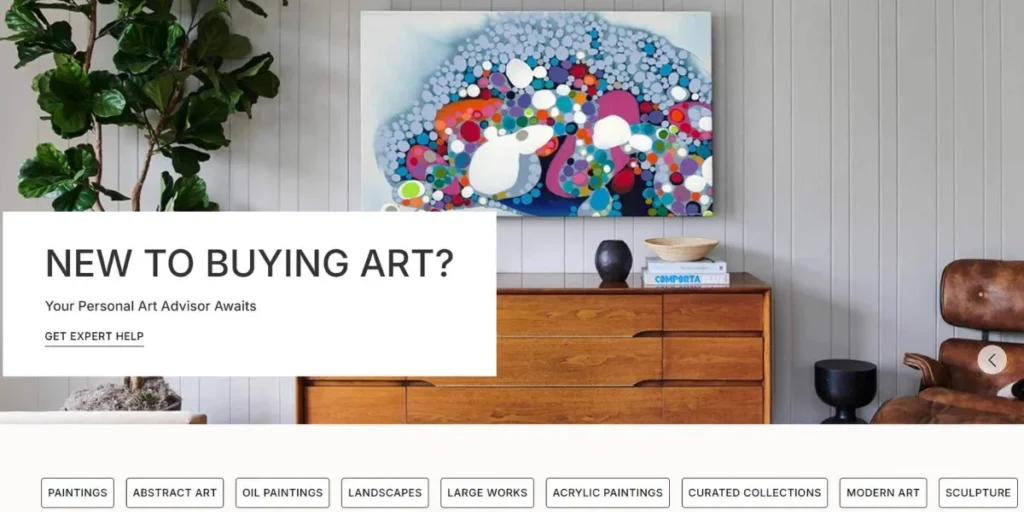
Saatchi Art is an exclusive online art gallery that links artists to art collectors globally, emphasizing original paintings, sculptures, and photography in a curated manner. The platform launched in 2006, with the power of Charles Saatchi’s legacy gallery, to sell millions of dollars of art to art collectors in more than 100 countries. Saatchi Art has professional curators who select submissions, and thus, there high-quality work of art and the saleability.
That platform grants full support to artists with an accent on professional photography, marketing, and ideal collector matching by artistic taste. When it comes to the establishment of lasting relationships between artists and serious collectors through international shipping, authentication services, and specialized packaging, which ensures that the artwork will arrive via packaging to avoid damage during transit or shipping, Saatchi Art can address the need.
Pros:
- Art market with serious collectors of high quality
- Presentation/marketing assistance professional
- International shipping is managed world around
- Quality through a curator review process
Cons:
- Very exclusive application process
- Large commission rates (30-35%)
- Specialization in fine art restricts the variety of products
- Slow time for payment processing
Why Choose This: Saatchi Art is ideal as it offers an opportunity to serious fine artists who need to sell to the high-end collectors and galleries only.
Best For: Fine art artists who make their original images in paintings, photography, and sculpture to sell to collectors.
Pricing: No fee to us, and the commission on sales is 30-35 percent.
11. DeviantArt
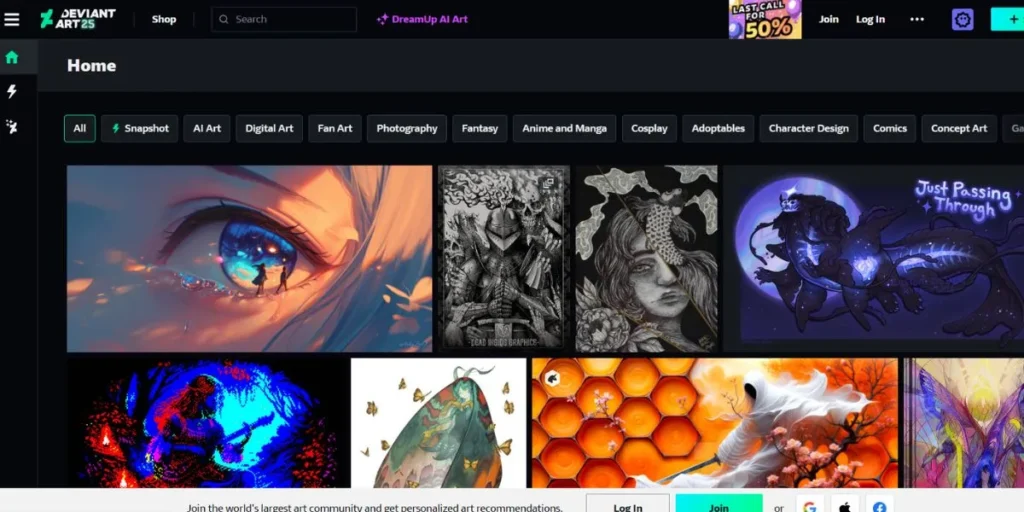
DeviantArt is a large art community on the Internet, spanning the globe, and providing both social tools and marketplace tools to enable users to sell their art in prints and digital downloads. It was launched in 2000, and it has registered over 44 million members and displayed over 370 million works of art in different categories. DeviantArt also offers hosting of portfolios, social networking, critique systems, and monetization options to its registered artists via its print-on-demand and digital download marketplace.
It provides support to multiple areas of the arts, such as digital art, traditional media, photography, and literature, as well as crafts. DeviantArt provides educational capabilities, competition, and community-based challenges to allow artists to hone their skills and simultaneously create an audience and relationships across the globe.
Pros:
- Large art community worldwide
- Good social networking capabilities
- Various sources of income (prints, electronic, commissions)
- Complimentary basic membership
Cons:
- A lot of competition from millions of artists
- Reduced the average price of sale
- Little attention to the fine arts
- Revenue share print sale
Why Choose This: DeviantArt is suitable because of the following: DeviantArt is very suitable for digital artists and illustrators who intend to gather a following to make money from their work.
Best For: Digital artists, illustrators, and designers who are gaining their reputation and following.
Pricing: All memberships are free, and revenue is shared based upon sales (usually 80/20).
12. Fine Art America
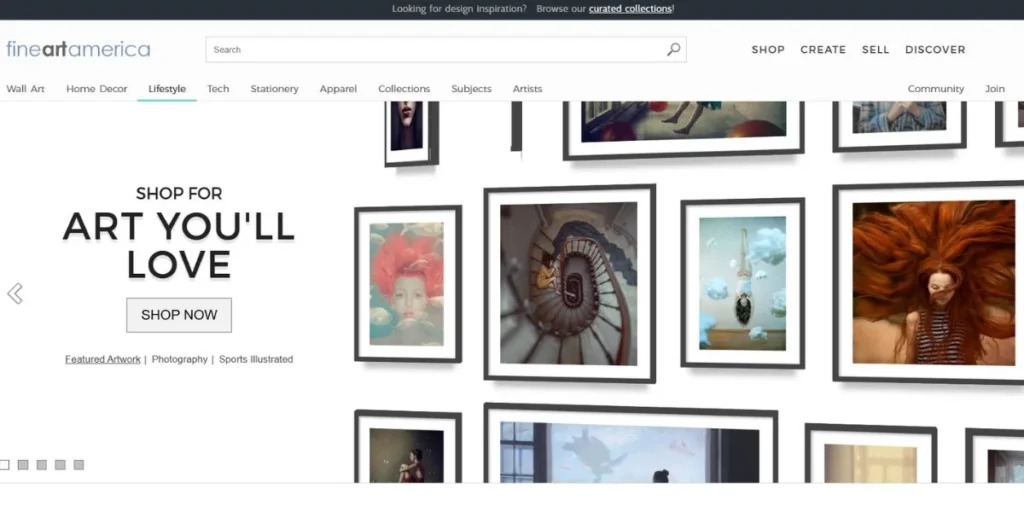
Fine Art America is a print-on-demand company as well as a marketplace that enables artists to sell prints and original pieces without even having an inventory. Established in 2006, the site has grown to serve over 500,000 artists and has printed products for over a million customers around the globe. Fine Art America does all the fulfillment work, such as printing, framing, packaging, shipping, customer service, and the artist can just focus on creating art.
The platform supports more than 60 different kinds of products, such as canvas prints, framed paintings, phone cases, and house decor. Artists would reap the benefits of international marketing, quality printing services by professionals, as well as complete analytics in monitoring their sales and customer trends, and profitability, but not lose their copyrights on the publishing platform.
Pros:
- No start-up or inventory needed
- Large selection of print materials on offer
- Global shipping and customer handling managed
- User-friendly interface with decent analytics
Cons:
- Less profit on print-on-demand
- Inability to manage customer experience very well
- A lot of competitions between artists
- Commission of all sales
Why Choose This: Fine Art America is a good option when an artist wishes to sell prints but does not want the burden of inventory storage and shipping.
Best For: Creators who would like to make money off their work by offering numerous products printed on paper and home decor.
Pricing: No basic membership fee with varying commission fees that start at 15-30 percent depending on the product.
13. Artplode
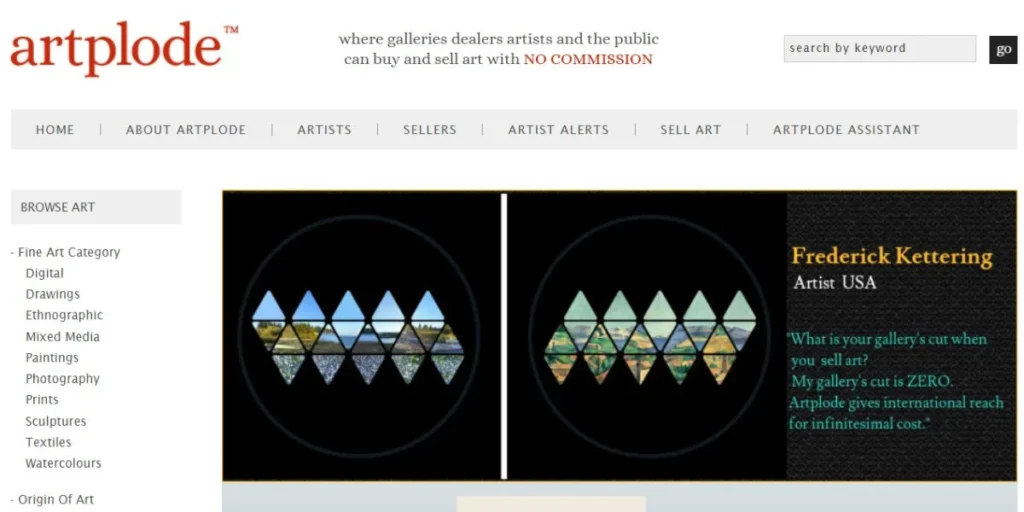
Artplode is a newer site created specifically to target independent artists and their art; this site is customized to the needs of the art community to feature original artwork. Recently started as an artist-first marketplace, Artplode focuses on the welfare of the artists with nominal commission rates and artist-friendly policies.
The site focuses on direct artist to collector relationships and offers an extensive portfolio tracking platform and a built-in social networking structure, and educational material on the art business. Artplode provides secure copy payment processing, coordination of international shipping, and marketing to assist the rising and established Artists with environmentally sound careers. By continuing to nurture curative standards to quality alongside affordability to artists at any phase in their career, the site provides a supportive community atmosphere to creative professionals.
Pros:
- Features and community directed at artists
- Cheaper rates than most of the competitors
- Artist-to-collector Bridges
- Expanding a less competitive site
Cons:
- Lower volume of customers on the newer platform
- Poor geographic panel marketing now
- Reduced more sophisticated selling tools
- Also, establishing the brand identity
Why Choose This: Artplode works well when artists are early users on an emerging platform with artist-friendly policies.
Best For: Independent artists selling original work and those who want to operate in the smaller marketplaces that are more personal.
Pricing: Fair price policy, which can be seen on registration.
14. ArtWeb
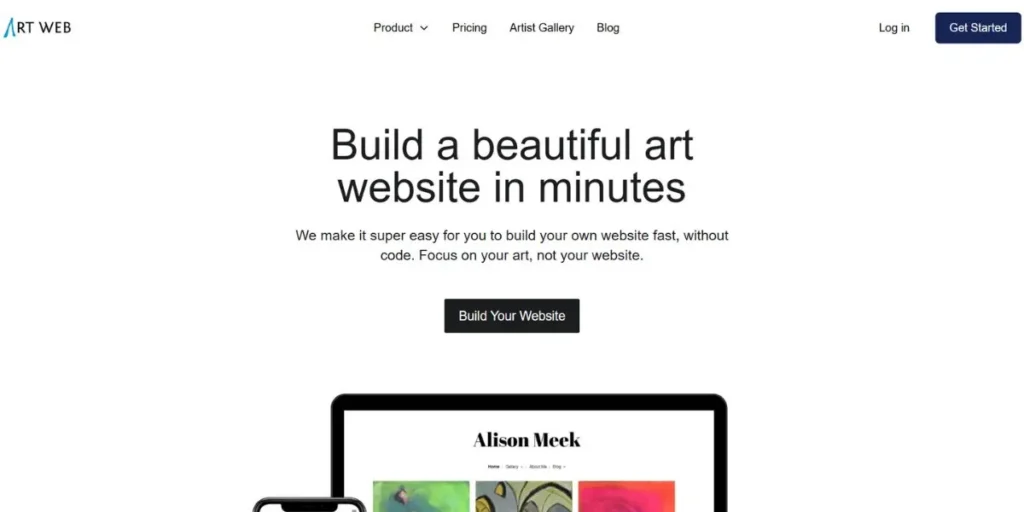
ArtWeb offers professional site-building tools and portfolio management to artists and aims to assist artists in creating a branded online portfolio. ArtWeb was founded as a dedicated site builder for visual artists with all the necessary features to display works best. The platform offers templates for the professional portfolio, incorporation of e-commerce, optimization of SEO, and marketing tools of the art world.
Some of the features that ArtWeb facilitates are virtual gallery spaces, client management systems, tracking commissions, and incorporation with social media platforms. The platform accommodates different mediums of art and offers learning material on online marketing of art, pricing, and collector relations, and holds absolute power to control its brand display and customer information.
Pros:
- Software for professional portfolio presentation
- Artist website SEO Research
- E-commerce functions:
- Support and features of artists
Cons:
- Monthly subscription needed
- There is no market traffic built in
- It is self-marketing required
- Restricted to business involving artwork
Why Choose This: This should be the art website of choice for professional artists who desire an advanced, branded web presence.
Best For: You have a well-established career that you want to build on by investing in your professional website and brand.
Pricing: It has subscription rates that range from around 20 dollars each month, providing several price points.
Free or Low-Cost Etsy Alternatives
15. Facebook Marketplace / Facebook Shops
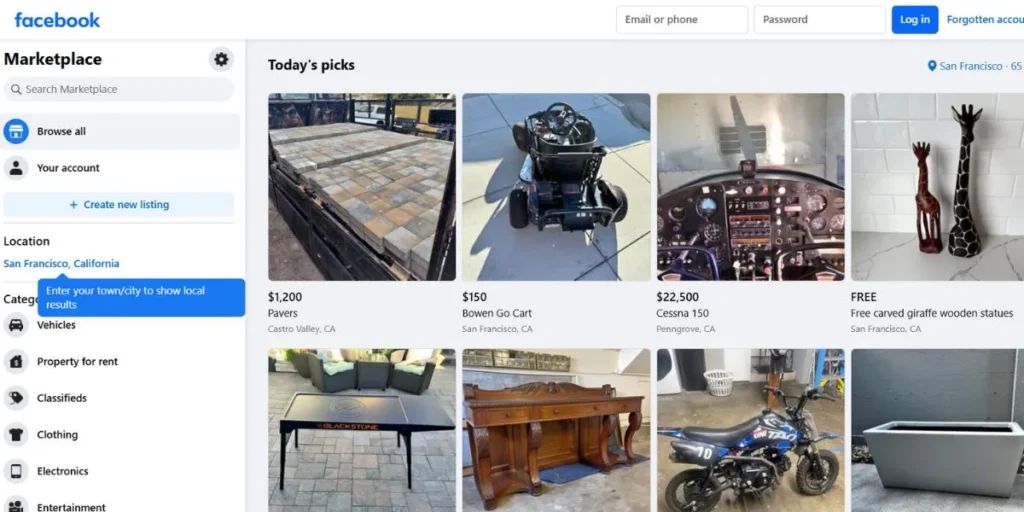
Facebook Marketplace and Shops leverage Facebook’s massive user base so that sellers can connect with customers through social commerce. Facebook has more than 2.9 monthly active users, meaning that businesses that need to reach the greatest people can bank on Facebook. Facebook Shops: it allows brands to create customizable shops across Facebook and Instagram on the product catalogs and collections for seamless shopping experiences.
Targeting can be as specific as demographics, interests, and behaviors on the platform because of the advanced targeting that can be achieved with Facebook’s complex advertising scheme. WhatsApp Business and Messenger can be connected to Instagram Shopping, enabling the possibility to contact the customer with an omnichannel experience and not to lose the social context of the shopping experience.
Pros:
- Reach of billions of users of Facebook across the globe
- Free of cost to establish and operate the simple functions
- Superior targeting and marketing conditions
- Cross-selling with Instagram
Cons:
- Contingent on the ecosystem and policies at Facebook
- Needs management of social media
- Compared to specific e-commerce sites, less professional visuals are given
- Catering to a customer via a social platform
Why Choose This: Facebook Shops perform great with sellers who are social media users and wish to engage with their current following and monetize.
Best For: Sellers who want to use the existing Facebook user base, in the case of social media-savvy sellers selling with a visual product.
Pricing: It is free to install, with payment processing being the only cost (2.9 % + $0.30).
16. Instagram Shopping
Instagram Shopping turns your Instagram account into a store, which your followers can directly shop with a seamless experience on the app. Featuring more than 2 billion monthly active users, Instagram is a textless platform that is highly visual and ideal in terms of presenting products in photos and videos, as well as in Stories and Reels. Its services include product tagging of posts, Shopping Stories, Shop tabs on the profiles, and connection with the ad ecosystem of Facebook to improve reach.
Instagram Shopping helps to curate commerce using different content types such as user-generated content, influencer collaborations, and live shopping events to generate interesting commerce experiences. The platform offers comprehensive analytics, inventory management tools, and customer insights to enable businesses to make the most of their social commerce strategies and lead to a genuine brand community.
Pros:
- It is suitable for attractive products
- Instant fit with Instagram content
- It is free to set up and use
- A brilliant tool to develop brand awareness and involvement
Cons:
- Visual content marketing only
- Demands continuous content making
- Affected by changes in the algorithms of Instagram
- Not as applicable to complex products that need descriptions in detail
Why Choose This: Instagram Shopping is an ideal choice for visually-oriented companies that can demonstrate their products using strong visual imagery.
Best For: Fashion, jewelry, images, home decor, and other goods that are easy to capture with a camera.
Pricing: Free platform, but there are standard payment processing fees when it comes to transactions.
Factors to Consider When Choosing an Etsy Alternative
- Target Audience Fit: Research how the inherent customer of the platform aligns with your ideal buyer in terms of demographics, shopping habits, and the price sensitivity of the purchase.
- Fee structure analysis: Search all the costs involved, whether it be listing fees, transaction fees, payment processing, and subscription expenses, to know the real profitability on each platform.
- Traffic of the platform: Consider the number of monthly visitors and the level of searches and seller competition relevant to this marketplace to determine how visible your products may become.
- Brand Control Level: Do you desire more control in how you present your brand, the customer experience, and the control of the data you own versus the convenience and traffic your brand receives in the marketplace?
- Technical Requirements: Evaluate your technical capabilities and schedule availability to manage the platform, including basic entry listing to advanced website editing, as well as support requirements.
- Integration Capabilities: seek systems that have been able to integrate with your current inventory management, accounting, email marketing, and other business systems.
How to Transition from Etsy to Another Platform
- Research and Testing Stage: Begin by conducting a deep research on possible Etsy alternatives and testing just 1-2 platforms on a smaller list of products to be transitioned later.
- Slow Inventory Migration: Start by listing your top-selling products in new sites without having to forego your Etsy store, since having a disrupted revenue stream.
- Customer Communication Strategy: Keep your current customers updated on new sales avenues via newsletter, social media, and Etsy correspondence in case of cross-platform relationships.
- SEO and Marketing Adaptation: Optimize your product listings to align with the search engine of each platform; create platform-specific marketing on each site to be as visible as possible.
- Analytics and Performance Tracking: Track the sales, traffic sources, and customer behavior using platforms to ensure the most profitable channels are employed in your business.
- Professional Presentation Consistency: One of the pointers towards a stronger brand recognition and trust is ensuring consistency of the branding identity, product shots, and customer service levels across all platforms.
Conclusion
Investigating Etsy alternatives gives some thrilling prospects to creative business people with the capability to grow their income sources and find alternatives to the resistance of dependence on platforms. Regardless of the types of art marketplace that you select, be they a highly technical art marketplace, three-sixty e-commerce systems, or social commerce venues, they all have distinct selling points that could be used to supplement or substitute your Etsy stall.
The first factor to success is knowing the target audience, pricing accurately, and choosing the platform that suits your business and technical abilities. Always keep in mind that most experienced sellers employ several different Etsy alternatives at the same time to reach the maximum number of people and reduce their potential loss. Don’t overcommit and start with small scales, experiment, and over time, scale your presence across the websites that give the best outputs to your particular products and business model.
FAQs
Can I sell on multiple platforms simultaneously?
Most Etsy alternatives do support multi-platform sales, but you must be careful not to oversell and end up with products that cannot be delivered.
Which platform has the lowest fees?
Facebook and Instagram Shopping are free, and Bonanza transaction charges are among the lowest at 3.5%.
Do I need technical skills for these platforms?
Simple sites such as Facebook Shops do not translate to high levels of technical expertise, whereas bespoke e-commerce sites may need extensive levels of setup knowledge.
How long does it take to see results on new platforms?
Outcomes have been all over the board, although the majority of sellers report early traffic in 2-4 weeks and significant sales in 2-3 months.
Should I completely leave Etsy for alternatives?
Consider keeping an Etsy presence but diversifying, because unexpected platform hiccups can put established sources of revenue in jeopardy.
