

The Information Society has created an incredible overhaul of the digital learning environment, adapting the way teachers work with students and trainers with trainees. Although Kahoot has continued to lead in the area of gamified learning, it does not possess a variety of interactive capabilities that have led to the creation of new platforms with more opportunities. A new way of learning means having tools that are flexible, customizable, and can engage more than a standard quiz.
The modern teachers and business instructors need an all-in-one solution with real-time communication, analytics and diverse modes of shot varieties for producing memorable education. With advanced Kahoot alternatives available, educators are empowered with effective solutions to improve classroom interactions, increase engagement, and attain improved learning experiences using interactive technology.
Why Look for Kahoot Alternatives?
- Slow Customization – The tight template design helps to limit the creative opportunities of Kahoot in designing quizzes, as well as how to brand the quiz to have your own personalized learning journey.
- Pricing Limulations – Advanced features are not cheap and are unaffordable to small institutions with very limited means and budget-conscious educators.
- Basic Analytics – Reporting – Reporting functions are not incredibly deep and fail to give the insight needed to assess learning at a broad level as well as track student progress in specific cohorts.
- Limitations of the game format –Requires the same type of quiz, which is monotonous and can limit long-term performance or ability to fit many different learning styles and preferences.
- Technical Limitations – Inability to connect with either the current learning management system or educational applications slows down the workflow and the user experience.
- Scalability problems – Scalability issues arise when dealing with a significant number of participants that negatively impact user experience and their learning capabilities within close educational periods.
10 Best Kahoot Alternatives in 2025
1. Quizizz
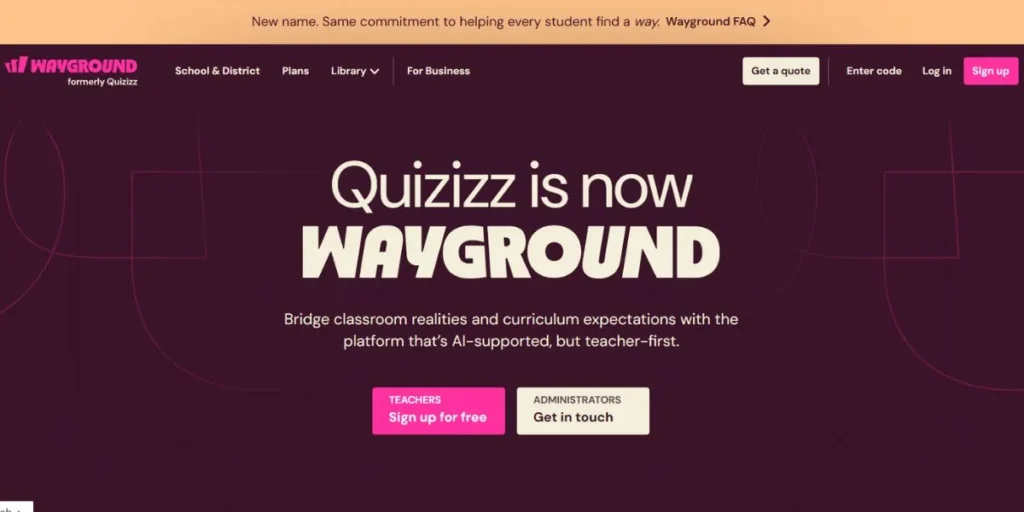
Quizizz transforms the interactive learning process with self-paced quizzes that do not create anxiety but ensure interest and engagement, with no time constraints. Individually graded questions with immediate feedback allow the student to move up through the question and obtain a better understanding of the material and be less bothered by the anxiety. It combines a gamification approach and intellectual rigor along with memes, music, and user-reconfigurable themes that were reflective of a contemporary learner.
Key Features
- Individual student mode of the quiz at his or her own pace.
- A high degree of meme and multimedia integration regarding participation.
- Intense Question Bank which has Million Quizzes.
- Advanced analytics dashboard showing performance of individuals and classes.
Pros:
- Eases test anxiety via self-paced study method.
- Using multimedia materials will provide students with motivation during sessions.
- Homeworks which is not strict helps to extend the learning beyond the classroom.
Cons:
- Poor real time competition against live quiz sites.
- Premium subscription is required to use the advanced features to the full extent.
- Complex interactive content can be time-consuming to create questions.
Best For: Teachers want to provide students with self-paced, interesting quiz activities, regardless of their ages.
Website Link: https://quizizz.com
2. Mentimeter
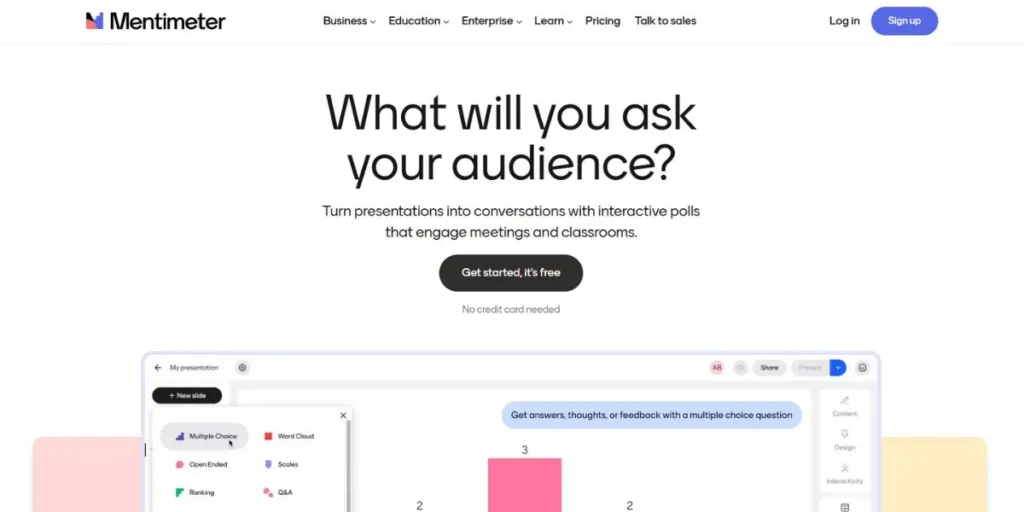
Mentimeter can convert presentations into experiences via live polling sessions and word clouds, as well as question-and-answer. The slide deck is an open-source alternative that supports PowerPoint and Google Slides perfectly, allowing a presenter to receive real-time feedback on the audience without interrupting the flow of the presentation. Its high-tech polling systems can be configured to accept any type of question, such as multiple choice, as well as open-ended responses, making it one of the most engaging kahoot alternatives available today.
Key Features
- Live polling and visualization of results in real time.
- Audience response word cloud generation.
- Smoothly integrated powerpoint and Google slides.
- Several types of questions such as scales, rankings, open text.
Pros:
- Integration of professional presentation improves the current workflow.
- There are beautiful real-time visualizations that attract the attention of the audience.
- Sustains quantum numbers of attendees to conferences and major events.
Cons:
- Little gamification content as opposed to quiz based sites.
- Extra features are locked behind a subscription paywall.
- Needs the availability of the internet to work and function.
Best For: Ideal use by experienced presenters and teachers who would like to incorporate some interactivity into their presentation.
Website Link: https://www.mentimeter.com
3. Slido
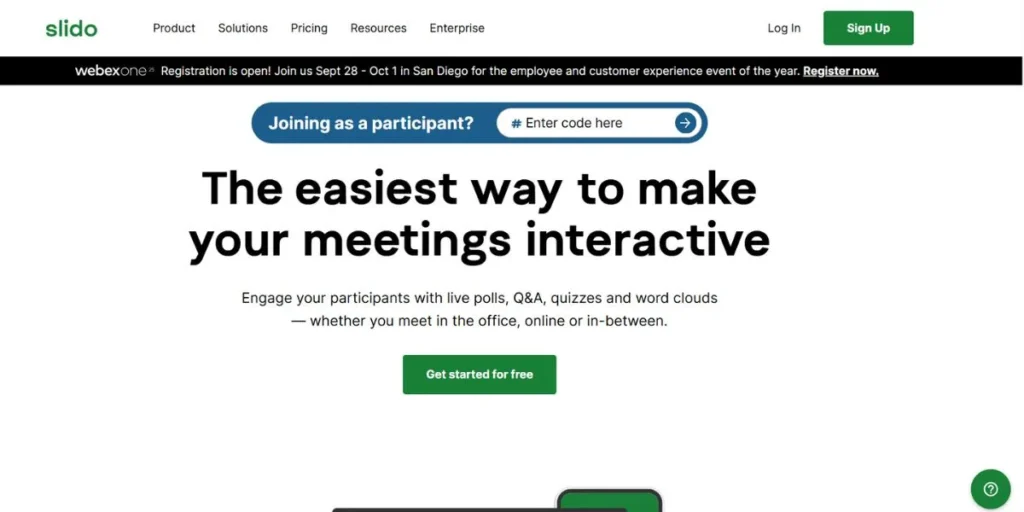
Slido is a software company that focuses on interaction with the audience via live questions and answers, polls, and interactive presentations. The platform pursues excellence in company setups, webinars, and mass events with audience participation as a source of value. Professional dialogue is valuable with its moderation features and its anonymity in question posting will prompt involvement of audience members who will be unwilling to ask questions otherwise.
Key Features
- Live Question and Answer with the ability to vote questions on and moderate.
- Unidentified submissions of questions promoting contributions.
- Zoom, Teams, and other conferencing system integration.
- Real audience feedback in real time through poll results.
Pros:
- Very good moderation tools will keep the presentation professional.
- The level of audience participation is high with anonymous participation.
- Effortless video-conferencing coverage on remote learning settings.
Cons:
- Lack of interactive capabilities through game based learning compared to learning platforms.
- More depth in analytics is offered on a premium basis.
- Not quite as appropriate in a traditional classroom quiz.
Best For: Training or meeting planners on a large scale.
Website Link: https://www.slido.com
4. Quizlet
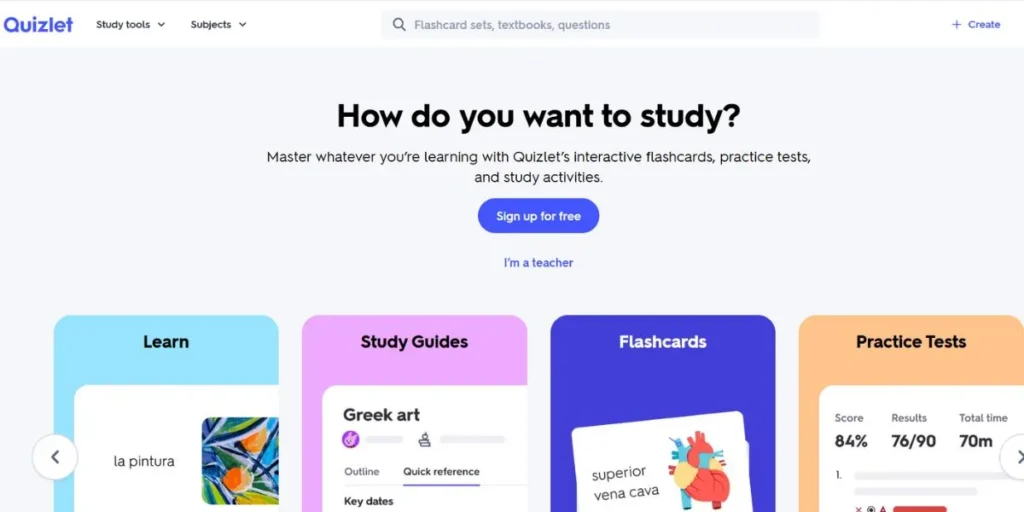
Quizlet specializes in learning aids that involve both flashcards and practice tests and matching games to memorize material. Its adaptive learning systems detect what it does not already know and automatically reconfigure the difficulty level. The site allows learning sessions, flashcard study groups, and development of communities around a specific topic that can be offline and mobile-friendly.
Key Features
- DFS Adaptive spaced repetition flashcard system.
- Several study types such as games, exercises.
- Learselling groups studying together on a worldwide learning.
- Study plans offline with the ability to have an unbroken study time.
Pros:
- Spaced learning is scientifically shown to improve long term memory.
- Large subject library repertoire is vanishing in all fields of study.
- Mobile optimization allows people to study on any device easily.
Cons:
- Lacks live multiplayer competitiveness.
- The free version has advertisements which can be a distraction to learning.
- A small range of question format varieties compared to all-purpose quiz websites.
Best For: For students and teachers who are interested in memorization and long term retention.
Website Link: https://quizlet.com
5. Gimkit
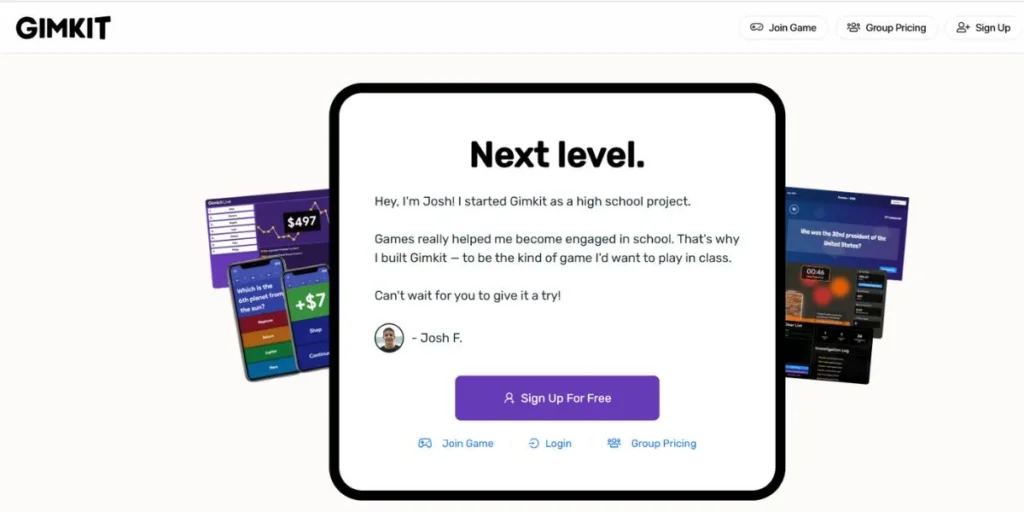
Gimkit is a quiz game where students use money earned by solving quiz questions to buy power-ups which can be used to perform better. This type of economic system, not seen in other systems, provides a strategic depth to an answer of any question and places students in a position to risk and to be rewarded. The mechanics of the kit store of the platform generate an investment in repeated engagement, which is why Gimkit is often considered among the most engaging kahoot alternatives.
Key Features
- Virtual money system by full power-up purchase.
- Several types of play such as team work activities.
- Removable store kit that can be adjusted.
- Live leaderboards with ratio scorecard.
Pros:
- Gamification depth enables a student to feel more engaged.
- Currency mechanics is a subject with economic thinking taught along with the subject content.
- Peer learning and communication are achieved through team learning and communication.
Cons:
- More complicated gameplay can overload more inexperienced students at first.
- Lack of broad-based free features like other education quiz sites.
- Takes time to explain to students who do not understand aspects of strategy.
Best For: teachers in middle and high school interested in incorporating elements of strategic gaming into the learning process.
Website Link: https://www.gimkit.com
6. Blooket
The game is played in Blooket with different types of game preference changing the regular quiz into a game with a storyline. For tower defense and battle royale games, students are quizzed to continue through every gaming situation. The various strategies needed in each game mode keep students busy exploring under different experiences amid an attractive visual layout and user friendly interfaces.
Key Features
- Several special game titles such as Tower Defense and Gold Quest.
- Question sets that are customizable and cannot be imported.
- Interactional interface featuring attractive graphics and animation.
- The host controls game difficulty and game pace.
Pros:
- Diversity in game types avoids tons of emulated learning.
- Beautiful design is appealing to students and shows them interest.
- Easy question import helps busy teachers to save time.
Cons:
- Complex rules in a game can lead to a loss of focus on educational material.
- Scant higher-order analytics of fine learning assessment.
- There are some game modes that consume more time when compared to regular quizzes.
Best For: The group of teachers at the elementary and middle school level who find other desires with regard to gaming in school.
Website Link: https://www.blooket.com
7. Canvas LMS

Canvas LMS offers full course management, along with gradebook management and communications, instead of mere quizzing. Its in-built quiz facility supports several different types of questioning with sophisticated security measures against instances of academic misconduct. The platform performs excellently in the institutional settings that still need central oversight of learning, making it a reliable choice among kahoot alternatives for schools and universities.
Key Features
- Formative gradebook by weighing categories and rubrics.
- High level quiz security with lockdown browser support.
- Combination of communication systems such as announcements and messages.
- Student and instructor mobile app available everywhere.
Pros:
- Full-scale learning management system, not limited to the quizzing feature.
- A powerful gradebook system is efficient at tracking all student progress.
- Enterprise level security offers academic integrity of all assessments.
Cons:
- Sophistical user interface could baffle the users using the interface easy access to quiz.
- Increased cost model intended to be used by an institution.
- Fewer gamification functions than expert quiz websites.
Best For: Institution of learning that requires a fully functioning learning management application incorporating assessment tools.
Website Link: https://www.instructure.com/canvas
8. Quizalize
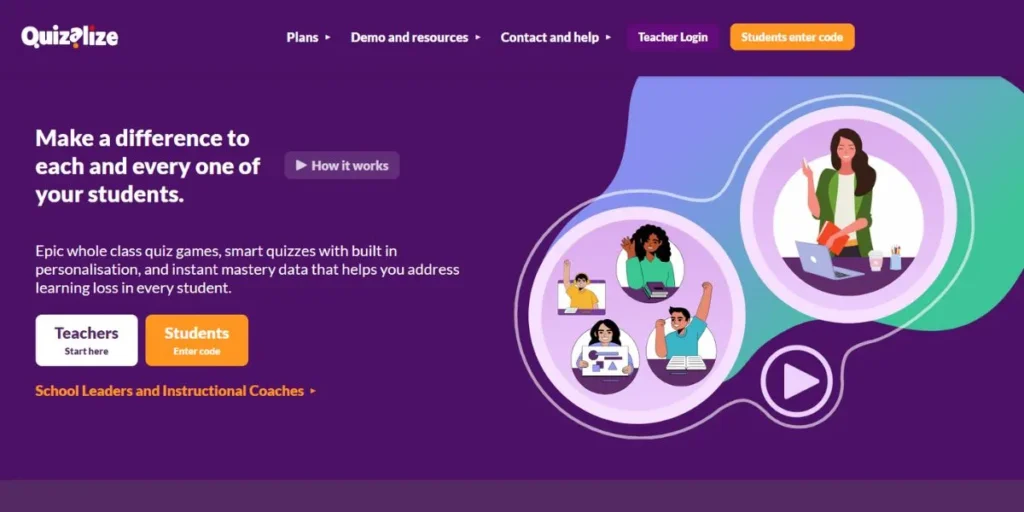
Quizalize is a learning tool that combines quizzing, with sophisticated analytics that give educators insight into the performance of single students, as well as the patterns of comprehension across classes. The mastery based advancement feature of the platform not only keeps the students competent before advancing but the competitive aspect keeps them engaged with the platform using the automated assignment options which respond to student performance.
Key Features
- Individual student competency Mastery-based progression tracking Mastery-based progression tracking individual student competency
- Critical analytics that points out learning PM and deficits.
- Spinning leaderboards that can have an individual or team score.
- Automated homework assignment on the basis of performance data.
Pros:
- Mastery tracking offers comprehensive knowledge prior to moving on to the topic.
- In-depth analytics give action points to improve instruction.
- Time-saving automated capabilities make the experience of every student unique.
Cons:
- The interface design is not as contemporary as the more recent sites.
- Little variety of games devoted the main attention to the traditional types of a quiz.
- Setting up complexity may not come easily to less technology-educated teachers.
Best For: Rigid teachers who require explicit analysis of how students learn.
Website Link: https://www.quizalize.com
9. Socrative
Socrative focuses on simplicity in generating short formative activities and exit tickets to get learning feedback instantly. You can send teachers polls, quizzes and space races in real time with little preparation, making it convenient to use when you want to utilize spontaneous assessment. The student response system on the platform presents prompt information on levels of comprehension.
Key Features
- Fast formative assessment development with little set up time.
- Competitive learning added by Space Race game mode.
- Instant result information is shown on the fly for a fast reply and discussion.
- Easy student login system that needs only room codes.
Pros:
- Wireless LAN Minimal configuration allows quick understanding and assessing evaluation while on the spur of the moment.
- Whether in mindfulness or just in a clean interface, learning is centered on the content.
- The free version has basic classroom requirements.
Cons:
- Poorer enhanced facilities as compared to more elaborate platforms.
- Simple graphics and interface design are obsolete.
- Reduced number of gamification alternatives decreases potential of students engagement over long-term.
Best For: Teachers that need basic assessment tools to provide swift feedback.
Website Link: https://www.socrative.com
10. Baamboozle
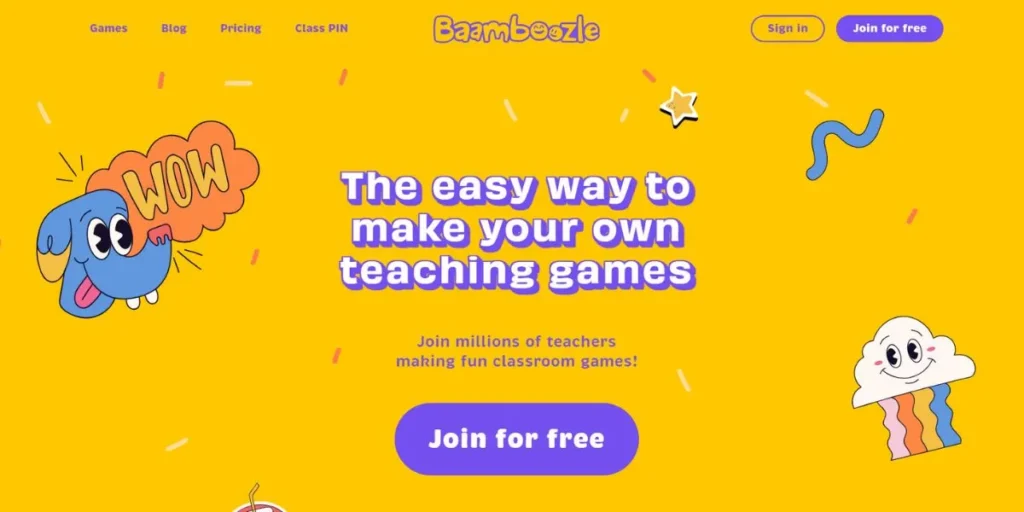
Baamboozle builds multi-player quiz games where participants can customize their point structures and power-ups to make the experience fun and enjoyable to learn. Being involved in the game, when the team with more correctly guessed photos are declared the winners, and when they strategize on their powers-ups can potentially change the flow of the process quite distinctly. Its focus on collaboration and team approach makes the platform perfect in creating classroom communities, and it is often highlighted as one of the most collaborative kahoot alternatives.
Key Features
- Competition in a team and cooperative discussion of answers.
- The added power-up feature to quiz games.
- Individually adjusted point values regarding the level of difficulty of a question.
- Ready-designed collections of quizzes in the different academics.
Pros:
- Collaboration between teams develops community in a classroom and peer learning.
- The Power-up strategy would create an additional level of depth to the question answering.
- The free platform is very advantageous to cost-cutting teachers.
Cons:
- Low individual assessment capacity is team oriented.
- Simple analytics do not include fine-grained learning tracking.
- Limited sophisticated capabilities of base educational services.
Best For: Teachers who would like to develop teamwork via competing quizzes.
Website Link: https://www.baamboozle.com
Kahoot Alternatives Free for Large Groups?
- Since Quizizz allows unlimited participants (both live and self-paced) it is ideal when having a large-scale activity, such as in a school-wide event or large classroom.
- The free version of Mentimeter supports participant counts up to 50 individuals and includes extra-basic polling capabilities, which is enough to support a medium-sized presentation and conference.
- Slido provides a large range of free limits in conferences, including Q&A, and free live polls, which encourage high numbers of participants.
- AhaSlides delivers interactive presentations to a large audience free from premium prices, all allowing one to interact with a big crowd.
- The space race at Socrative can serve an entire classroom of learners at a time, enabling competition in learning among more than just a single student.
- Baamboozle facilitates team games with up to 2 or more players per team, and can easily accommodate very large groups of players through co-operative gameplay.
Difference Free vs. Paid Kahoot Alternatives?
Free Versions:
- Simple quiz generation with common types of questions and limited possibilities in editing and changing features to achieve some basic educational purposes.
- Limited size (usually 50-100 simultaneous pledges) of participant groups during live productions.
- Minimal analytics with simple information about performance without technical information about learning trends.
- – Barebone models devoid of fancy branding or our theme-creation engine to project institutional identity.
- Simple game versions that are lacking the interactivity and involvement options of premium of the product.
- Presence of advertisements that might interfere with education flow and user experience in the course of education.
Paid Versions:
- Incorporated dynamic and interactive features in questions with the aim of providing better learning effects and advanced multimedia.
- Infinite number of participants that allow institution-wide and massive assessment and do not have any capacity limitations.
- Extensive analytics reporting and performance tracking with learning data to guide instructions.
- Premium branding features to add personalized themes and organizational identity implementation on all content.
- Premier game features that provide different experiences and increased gamer engagement tactics that can keep students interested over the long term.
- Dedication to education without distracting advertisements at any moment during the learning lessons.
How to Choose the Best Kahoot Alternative?
- When thinking of your main use case is it classroom based education or corporate training, or large scale events that need varying feature sets and capabilities.
- Scale the participant capacity requirements against platform constraints to your typical audience levels and projected concurrent traffic/user needs.
- Measure the level of analytics that is necessary to establish whether the simple feedback is adequate or when only the detailed tracking is an adequate condition of the learning assessment.
- Reflect on budgetary implications related to Free functionality versus costly services as well as institutional criteria that qualify educational technology investments.
- Analyze integration requirements based on current technologies such as LMS, video conferencing, or presentation software to provide a smooth working process.
- Review user interface feature to make the site meet your technical comfort with researcher and student population demands.
Conclusion
The interaction landscape of learning is ever growing to provide the educator with more opportunities than ever before. These Kahoot substitutes offer various styles of engagement, such as a creative gaming component or thorough analytics and professional presentation option. To be successful requires alignment of platform strengths to particular education aims, audience traits and technical needs. Cooking up a list of mean-cheap problem solving solutions to both classroom needs and high-scale facility-level innovations to measure the hydrate of establishments, the modern day offerings are convincing templates that produce better learning units.
Relative to the characteristics of the platforms and how it may serve its purpose to meet the requirements of the learners, teachers get the opportunity to suggest the learning tools that have the potential to transform the process of learning and allows students to become as engaged as possible in a learning process more online.
FAQs
Are there perfect free alternatives to Kahoot that they set well with?
Yes, Quizizz, Blooket, and Baamboozle are powerful free systems that have features that can be used in the classroom, and no subscription is necessary.
What is the best Kahoot variation when hosting a large corporation?
Obirika Mentimeter and Slido are used in a more professional environment, where it is impossible to have such presentations as easily and are more highly moderate.
Will my quizzes on Kahoot work on other sites?
Quiz imports on most platforms are possible in multiple formats, but some might require recreation by hand, based on the type of question.
What is the alternative with the most student analytics?
Quizalize and Canvas LMS contain large analytics where progress is tracked at the description level and the visualization of gaps in the learning process is possible.
Which is the most appropriate Kahoot alternative with elementary students?
Blooket and Gimkit are age-related gaming features with colorful interfaces targeted to younger education that still have a value.
