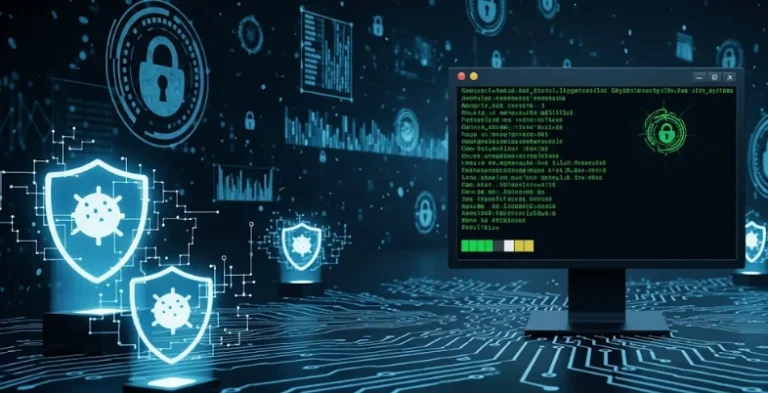
Many people believe Linux is virus-proof, but that’s no longer true in 2025. As more users and companies switch to Linux for servers and desktops, hackers are also paying more attention. In fact, a 2024 report by VMware showed a 40% rise in Linux-targeted attacks, and 70% of cloud malware now goes after Linux servers (CrowdStrike, 2024).
Linux is powerful, but it’s not invincible. Even personal devices can be affected by phishing, ransomware, or malicious USBs. That’s why having a good antivirus for Linux is now more important than ever.
In this article, we’ve picked the 10 best antiviruses for Linux that protect your system without slowing it down.
Why You Should Use Antivirus on Linux
- Linux is no longer ignored by hackers, especially with its dominance in servers and cloud environments.
- Phishing attacks and cross-platform malware can still infect Linux desktops and laptops.
- Infected USBs and shared networks can carry threats that bypass basic defenses.
- Linux-based mail and file servers are common targets for distributing malware to Windows systems.
- Modern antiviruses for Linux offer real-time protection without slowing down your system.
What to Look for in a Good Linux Antivirus
- Real-time scanning to block threats as they appear, not just during scheduled scans.
- Low system impact, so it doesn’t slow down performance, especially on older machines.
- Compatibility with popular distros like Ubuntu, Debian, Red Hat, and CentOS.
- Regular updates to stay protected from the latest threats and vulnerabilities.
- Command-line and GUI support for both beginners and advanced users.
List of Top 10 Best Antiviruses for Linux
1. Bitdefender GravityZone Business Security for Linux

Bitdefender GravityZone is an enterprise-level security package that, in addition, offers formidable security to Linux systems as well. This was mainly created to work best in business environments and it provides the best protection to include behavior-based detection, high end heuristics and real time file scans. Bitdefender is an antivirus solution considering the zero-day threats based on machine learning models, which makes it a highly stable tool to protect Linux servers and the endpoint.
The software works well with cloud and virtual environments and it is most suitable with hybrid infrastructure. It offers a centralized control management where one can make security configuration of all machines on the network as well as Linux based systems. It is oriented towards users in an enterprise environment but it is also a powerful detection-oriented lightweight product that can be used by tech-savvy individual users.
Top Features:
- Advanced heuristic and behavior-based detection
- Real-time file scanning and rootkit detection
- Centralized management for all endpoints
- Optimized for performance and low resource usage
- Machine learning-based malware detection
Website: https://bitdefender.in/
Pricing:
| 1 Year | 2 Years | 3 Years |
| $9.89 | $25.37 | $15.46 |
2. ClamAV

ClamAV is one of the open source and free antivirus engines, popular on linux systems, particularly in mail servers to scan the incoming mails. As the most simplistic and light-weighted antivirus tool, ClamAV is a default choice of people who prefer to find a customizable antivirus tool. It has a multi-threaded scanner daemon, command line utilities to scan files on demand, and automatic updates of the virus database.
The thing that makes ClamAV shine is its flexibility. Its ability to support numerous file formats as well as a scalable architecture has led to developers and system administrators incorporating it into bigger security pipelines. Although it is not graphically based (i.e. it does not have a graphical user interface (GUI)), its command-line interface is highly abled, and fully controlled scanning and configuration capabilities are available.
Top Features:
- Open-source and completely free
- Regular virus signature updates
- Command-line scanner and mail gateway integration
- Multi-threaded scanning for performance
- Supports file formats like RAR, Zip, Tar, Gzip, and others
Website: https://www.clamav.net/
Pricing: Free
3. ESET NOD32 Antivirus for Linux

ESET NOD32 is a trusted name in the cybersecurity world, and its Linux version offers the same level of excellence. Tailored for desktop users, ESET NOD32 for Linux brings real-time protection, advanced heuristics, and automatic updates to your system. Its user-friendly interface makes it ideal for home users who want reliable protection without digging into command lines.
One of its key strengths lies in its low system footprint. It runs quietly in the background, using minimal system resources while offering comprehensive protection against viruses, worms, and spyware. ESET’s ThreatSense engine ensures rapid detection and protection against known and emerging threats. The software also features anti-phishing protection and device control to prevent unauthorized access via USB or external devices.
Top Features:
- Real-time protection with advanced heuristics
- User-friendly GUI for easy management
- Anti-phishing and web access protection
- Low resource consumption
- Regular automatic updates
Website: https://www.eset.com/
Pricing:
| Essential | Premium | Ultimate |
| $38.31 | $45.30 | $62.86 |
4. Sophos Antivirus for Linux

Sophos is also another premium antivirus that offers enterprise-level protection to Linux users. Whether running Linux as a server or desktop installation, Sophos provides real-time scanning of malware, on-demand scanning, and threat analysis. It is designed to intercept and seclude the most elusive of threats by employing deep learning and cloud-based analytics, making it an excellent choice for protection from malware.
The command-line interface supports scripting and automation as well and is available in Sophos Antivirus for Linux. Its application enables an administrator to deploy, monitor endpoint Linux systems using centralized administration by the use of Sophos Central. It has advanced features, but it is not heavy and slow and hence it possesses features that make it fit to even the older systems.
Top Features:
- Real-time and on-demand malware scanning
- Deep learning-based detection engine
- Command-line tools for advanced users
- Centralized cloud management
- Supports on-access scanning for multiple file systems
Website: https://docs.sophos.com/central/customer/help/en-us/PeopleAndDevices/ProtectDevices/ServerProtection/SophosProtectionLinux/index.html
Pricing: Free
5. Kaspersky Endpoint Security for Linux

Kaspersky is an industry leader in the cybersecurity market, and the same can be said about its Linux product. Kaspersky Endpoint Security Linux offers effective protection against network-threats and malware of all types. It is applicable in both large and small companies and it includes real-time protection, application control and web threat shield tools in-built.
Among its distinguishing characteristics is the fact that it is compatible with SIEM systems coupled with the fact that it can be utilized in a virtualized setting. Kaspersky applies high-level heuristics and signature-based detection as well as behavior monitoring to impede already identified threats and threats that are unknown. It is enterprise-oriented; however, the fact is that security-minded users can effectively utilize it due to its configuration properties.
Top Features:
- Real-time threat detection and response
- Integration with SIEM and centralized security platforms
- Application and device control
- Works well in virtualized and hybrid environments
- Automated deployment and management
Website: https://support.kaspersky.com/KES4Linux/12.0.0/en-US/245017.htm
Pricing:
| Essential | Advanced | Premium |
| $5.59/yr | $7.69/yr | $9.09/yr |
6. Comodo Antivirus for Linux

Comodo Antivirus in Linux, it offers the strength of end-point security supported by the multi-layered defensive architecture of Comodo. It caters to home and Enterprise Linux users, and has an easy to use GUI and effective command- line interface. Comodo employs cloud-based character analysis to identify zero-day items and unknown malware and is thus most appropriate in situations where systems need real-time flexibility and immediate reaction times.
Among its strong points, one can refer to the possibility to scan email in real time and also to safeguard Linux-based mail servers against spam and phishing attacks. It is also provided with on-access and on-demand scanning, management of quarantine, and scheduling scans. Though in the recent past Comodo has reduced its support with Linux, the antivirus has remained active and continues to thrive in most server settings owing to its exceptional containment mechanism and signature detection.
Top Features:
- Cloud-based behavior analysis for unknown threats
- Real-time and on-demand malware protection
- Email scanning for mail servers
- Intuitive GUI and command-line controls
- Sandboxing for suspicious files and apps
Website: https://www.comodo.com/
Pricing:
| Free | Full |
| $0 | $29.99/yr |
7. Avast Core Security for Linux

Avast, the company which provides free antivirus software on Windows, similarly has a potent enterprise-oriented product, Avast Core Security, offered to Linux users. It is optimized primarily to be used on servers and offers multi-threaded malware scanning, network security and email server integration. It has a scalable infrastructure that makes it a better option in cases of businesses that have large or expanding Linux networks.
Avast Core Security comes with command line services and can easily be set up to secure file servers, mailing servers, and even the web servers. It facilitates automatic versioning of the security so that your system is safeguarded against the new threats. Advanced logging, reports, and email alerting of the software also make it suitable to system administrators who need to see any possible vulnerability at all times.
Top Features:
- Enterprise-grade antivirus engine
- Compatible with Linux file, mail, and web servers
- Automatic signature updates and configurable alerts
- Low resource usage with multi-threaded scanning
- CLI tools for seamless integration and automation
Website: https://www.avast.com/en-in/business/products/linux-antivirus#pc
Pricing: Available on request
8. F-Secure Linux Security

F-Secure Linux Security is designed to meet the demanding needs of corporate Linux environments. It offers a strong layer of protection against viruses, spyware, and rootkits while providing a seamless experience for Linux users. The software focuses on performance, minimal system overhead, and compatibility with Red Hat, CentOS, Ubuntu, and other major Linux distributions.
F-Secure provides both on-access and manual scanning capabilities. It’s also highly configurable and supports centralized management using F-Secure Policy Manager. This is especially helpful for enterprises looking to control multiple Linux endpoints through a single console. The antivirus integrates well into existing security systems and can be scripted for automated security workflows.
Top Features:
- Centralized security management with Policy Manager
- On-access and manual scanning
- Compatible with most enterprise Linux distros
- Rootkit detection and removal
- Designed for performance and scalability
Website: https://community.f-secure.com/
Pricing: Available on request
9. Dr.Web Antivirus for Linux

Dr.Web is a Russian-made antivirus solution that provides powerful protection for Linux users. It supports both desktop and server environments and is known for its proactive defense mechanisms. Dr.Web uses a combination of signature-based and non-signature-based detection methods to ensure comprehensive coverage against both known and emerging threats.
One of the most appreciated features is its anti-rootkit and anti-spyware modules, which detect even deeply embedded malware. Dr.Web’s control center allows for centralized administration, making it a great option for corporate users. With constant updates, low memory consumption, and compatibility with various distributions, Dr.Web continues to be a solid choice for security-conscious Linux users.
Top Features:
- Anti-rootkit and anti-spyware modules
- Centralized management for enterprise users
- High detection rates with non-signature methods
- Regular updates with minimal system impact
- Suitable for both servers and desktops
Website: https://products.drweb.com/home/linux/
Pricing:
| 1 Year | 2 Years | 3 Years |
| $32.55 | $61.85 | $83 |
10. Trend Micro ServerProtect for Linux

Trend Micro ServerProtect is an effective antivirus tool which has been designed specifically to secure Linux file servers and network storage. It has real time scanning to prevent the spread of viruses, spyware and other malware in your network. ServerProtect can easily operate at a massive enterprise level and hence is practical by companies, which rely on Linux appliances to store their data that is important.
Among its principal strengths is a centralized management that enables system administrators to configure, observe and implement any of the protected servers with the use of a solitary console. Moreover, it also provides comprehensive reporting and updates on patterns that occur automatically so that the system is always secure against new threats. Although it is enterprise-oriented, it has powerful features that make it one of the ideal picks by anybody who may be using Linux to operate servers in production.
Top Features:
- Real-time scanning and malware blocking
- Centralized web-based management console
- Automatic pattern file updates
- Detailed logging and reporting tools
- Compatible with major Linux server distributions
Website: https://docs.trendmicro.com/en-us/documentation/serverprotect-for-linux/
Pricing: Available on request
Conclusion
In conclusion, even though Linux is known for being secure, it’s not completely safe from viruses, malware, or cyberattacks. Hackers are concentrating increasingly on Linux as more individuals and businesses use it for desktops, servers, and cloud services. Because of this, Linux users are now wise to have a strong antivirus program.
The correct antivirus software can safeguard your data, increase system security, and provide you with peace of mind, regardless of whether you’re in charge of a home computer or a commercial server. These solutions are dependable, lightweight, and designed to tackle today’s dangers without causing your system to lag, making them among the best available in 2025.
FAQs
Can Linux get viruses or malware like Windows?
While Linux is more secure by design, it’s not immune. Modern malware, rootkits, and ransomware are now being designed to target Linux systems too.
Will antivirus slow down my Linux system?
Most modern antivirus tools are optimized for Linux and run in the background with minimal impact on performance. Choosing lightweight options is key.
How often should I scan my Linux system?
It’s a good idea to run a full system scan weekly and enable real-time scanning if available. Regular scanning helps catch hidden threats early.