Starting a Subway franchise in India can be a smart business opportunity in 2026, especially amid growing demand for quick-service, healthy food options. Subway is one of the world’s most recognized food brands and already has 700+ outlets across India.
The Subway franchise cost in India usually ranges from ₹70–85 lakh for a kiosk model and ₹1.1–1.3 crore for a full-scale outlet in a prime location. This investment generally includes franchise fees, store setup, equipment, and initial operational support.
With India’s QSR market valued at over ₹5.5 trillion and growing steadily, many investors are exploring Subway as a profitable franchise option. With the right location and management, the expected break-even period is around 24–30 months, making it a strong option for new entrepreneurs.
About the Brand
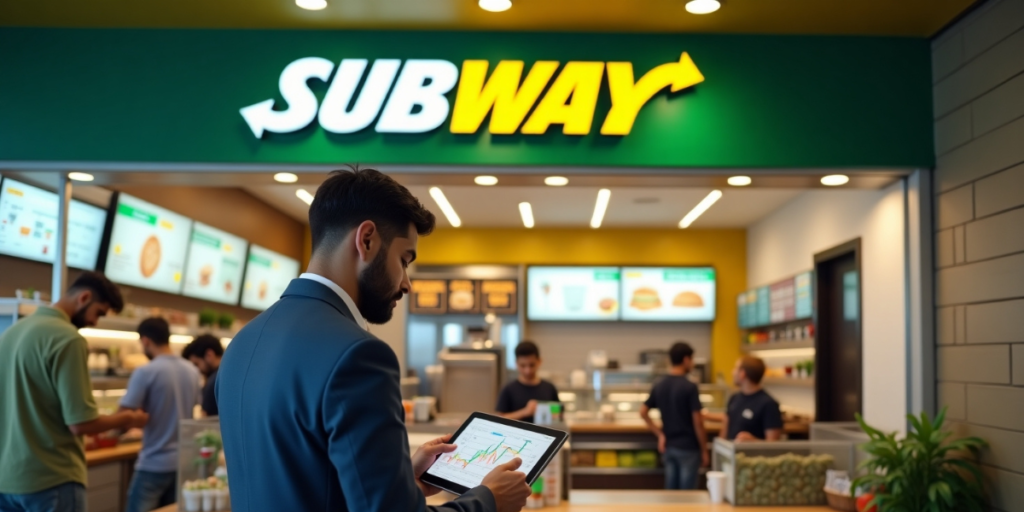
Founded in 1965 by Fred DeLuca and Dr. Peter Buck, Subway has grown into one of the world’s largest sandwich chains, operating 37,000+ restaurants across more than 100 countries and territories as of 2026. Known for its made-to-order sandwiches, wraps, and salads, Subway has built a strong global reputation in the quick-service restaurant (QSR) industry.
Since entering India in 2001, Subway has expanded to 1,000+ outlets across 165+ cities as of April 2026. The brand serves customers in Tier-1, Tier-2, and Tier-3 markets, showing strong nationwide growth. Subway has gained wide acceptance in India through its customizable menu, fresh ingredients, and products tailored to local tastes. Vegetarian options, paneer-based subs, and Indian-inspired flavors have helped the brand connect with a broad customer base.
The Subway franchise cost in India offers an attractive business opportunity for entrepreneurs, supported by Subway’s efficient operating model, flexible store formats, and strong brand recognition. Franchise options include kiosks, food court outlets, and full dine-in stores, allowing investors to choose based on budget and location.
With rising demand for convenient, healthier food choices in India, Subway remains a promising franchise option in 2026 for investors seeking a globally trusted, scalable food business.
Subway Franchise Models in India
Subway has 3 franchise formats in India, each tailored to various budgets and locations.
Kiosk Format will be effective in malls, airports, or food courts and will cost ₹70-85 lakhs. It requires less space – most commonly 200 300 sq ft – and it is suitable for spaces with a heavy footfall.
The Traditional Store is the conventional one, needing 90-110 lakhs and an area of approximately 400-600 sq ft. It is appropriate for ones in high street and in business settings.
Premium Location Store costs 1.1-1.3 crore and is targeted at the metro cities or high-end malls. By 2026, almost 47 percent of Subway franchisees in India will have more than one outlet, reducing unit costs by 12-15 percent through resource sharing.
Subway Franchise Cost in India: 2026 Breakdown
Investment Comparison Table – Subway Franchise Models
Cost Component | Kiosk Format | Traditional Store | Premium Store |
Franchise Fee | ₹15–18 lakhs | ₹15–18 lakhs | ₹15–18 lakhs |
Store Setup / Renovation | ₹15–20 lakhs | ₹25–35 lakhs | ₹35–45 lakhs |
Equipment Package | ₹12–15 lakhs | ₹18–22 lakhs | ₹22–28 lakhs |
Initial Inventory | ₹2–3 lakhs | ₹3–4 lakhs | ₹4–5 lakhs |
Signage & Branding | ₹2–3 lakhs | ₹4–6 lakhs | ₹5–7 lakhs |
Legal & Admin Fees | ₹1–2 lakhs | ₹2–3 lakhs | ₹2–3 lakhs |
Security Deposit (Real Estate) | ₹5–8 lakhs | ₹8–15 lakhs | ₹15–20 lakhs |
Working Capital (3 months) | ₹8–10 lakhs | ₹10–12 lakhs | ₹12–15 lakhs |
Total Estimated Investment | ₹70–85 lakhs | ₹90–1.1 crore | ₹1.1–1.3 crore |
The costs of opening a Subway franchise cost in India vary widely, depending on several factors; the most important ones are the location, store format, and size. To commence, a prospective franchisee needs to know the details about the total investment needed to carry on with the business.
1. Franchise Fee
The principal initial cost of subway franchising in India concerns the franchise entry fee, typically defined as the initial entry into the Subway system. This fee allows you to operate under the Subway name and access the company’s proprietary systems.
- Standard Franchise Fee: INR 15-18 lakh, with minor variance from one territory to another
- Reduced Fee for Other Units: INR 12-15 lakh for existing franchisees for the opening of the other site
- Payment Terms: 50% on application approval and 50% before training commences
- What It Covers: License to the brand, training assistance, opening support, and access to the proprietary Operations Manual.
This franchise fee accounts for approximately 20-25% of the total franchise cost in India; however, it is non-negotiable and standardized across territories, with minor adjustments based on the region.
2. Initial Investment
The other significant aspect of subway franchise cost in India, apart from the franchise fee, is the initial investment to set up a physical restaurant:
- Store Construction/Renovation: ₹25-35 lakhs (more in premium locations)
- Equipment Package: ₹18-22 lakhs (sandwich prep units, refrigeration, POS systems included)
- Initial Inventory: ₹3-4 lakhs
- Signage and Branding: ₹4-6 lakhs
- Legal and Admin Fees: ₹2-3 lakhs
- Real estate security deposit: ₹8-15 lakhs (refundable, varies significantly by location)
- Working Capital (3 months): ₹10-12 lakhs
The ranges of franchise costs that result from the initial costs of setting up a subway in India are usually as follows:
- Kiosk Format: ₹70-85 lakhs
- Traditional Store: ₹90-110 lakhs
- Store in Premium Location: ₹110-130 lakhs
These numbers represent investments that have been turned into completed projects and vary widely based on real estate requirements in different cities. For instance, the costs of a subway franchise in an Indian metropolitan city, such as Mumbai or Delhi, may be 20%-30% higher than those in a tier-2 city.
3. Ongoing Costs
Like all subway franchises in India, after the initial capital outlay, the franchisee will have to incur continuous operating expenses:
- Royalty Fee: 8% of gross sales (payable weekly)
- Advertising Fee: 4.5% of gross sales (owe unto national or local marketing)
- Real Estate Lease: Typically 8-12% of sale or fixed rental (whichever is higher)
- Labor Costs: Approximately 15-18% of revenue
- Food and Paper Costs: 28-32% of revenue
- Utility and Maintenance: 4-6% of revenue
- Technology and POS Fees: ₹20,000-30,000 per month
- Insurance: ₹1.2-1.5 lakhs every year
Such ongoing expenses must, therefore, be included in business planning beyond the initial subway franchise cost in India to ensure that such operations are sustainable.
Subway Franchise City-wise Investment
City | Format | Estimated Total Investment | Key Cost Driver |
Delhi (NCR) | Traditional / Premium | ₹1.05–1.35 crore | High real estate & security deposit |
Bangalore | Traditional / Premium | ₹95 lakhs–1.25 crore | Rising rental costs in tech corridors |
Chennai | Traditional | ₹90 lakhs–1.15 crore | Moderate real estate, strong vegetarian demand |
Mumbai | Premium | ₹1.15–1.40 crore | Highest real estate costs in India |
Pune | Traditional / Kiosk | ₹80 lakhs–1.10 crore | Growing student & IT crowd |
Hyderabad | Traditional | ₹88 lakhs–1.15 crore | Expanding QSR market in HITEC City |
Tier-2 Cities | Kiosk / Traditional | ₹70–95 lakhs | Lower rent, growing urban demand |
Profitability & ROI Potential
Potential for Profitability
The this franchise cost in India indicates an opportunity for good returns depending on market conditions:
- Average annual revenues: ₹75-90 lakhs for standard sites; over ₹1.2 crore for prime sites
- Standard EBITDA margins: 15-18% after all deductions
- Break-even point: 24-30 months (depending on site location and investments)
- Annual net profits: ₹12-18 lakhs for average ones; above ₹25 lakh for good ones
The overall financial projections show that with good management, the franchise cost in India is recoverable in 3-5 years of operation, which is quite impressive in comparison to other investment options.
Subway Franchise Monthly Income
The Subway franchise in India is a good investment, as the cost of the outlet that has been established in India can generate a substantial income monthly.
The gross revenue of a typical store is 6-7.5 lakhs/month. The metro city high-end stores will be able to fetch ₹10 lakh or more every month. Once royalty payments (8 percent) and advertising expenses (4.5 percent) are made, rent, employee salaries, and food, the net monthly profit will be 1-1.5 lakh in ordinary stores and between 2-2.5 lakh in high-performing stores.
Market Demand
Support for the ROI potential concerning Subway franchise cost in India comes from various factors:
- Category Growth: From 2022, the QSR sandwich category has grown at a CAGR of 12.7%
- Health Trend Aligning: 68% of urban Indian consumers prioritize health in food
- Delivery Growth: Since 2022, delivery orders have increased by 83%
- Strength of Vegetarian Menu: 65% of the Subway menu in India is vegetarian, meeting an important market need
- Digital Ordering Adoption: Digital accounts for 42% of orders, reducing reliance on front-of-house labor.
Factors Influencing ROI
There are many variables that affect how much subway franchise cost in India.
- Location Quality: Premium locations command higher rents but revenue is 30-40% more
- Operational Efficiency: Top-performing franchisees maintain food costs 2-3% below average
- Multi-Channel Strategy: Stores with strong delivery integration can show a 15-20% higher revenue
- Local Marketing Execution: Effective local marketing can boost sales by 8-12 percent
- Staff Retention: Less Turnover equals 5-7% more Profitability
- Multi-Unit Ownership: Running a number of units can, thus, ameliorate returns on subway franchise cost in India owing to shared resources.
How to Apply for Subway Franchise
- Initial Inquiry Submission: The franchise process at Subway begins when prospective franchisees submit their inquiry through the official franchise website, providing personal details, specifying their desired location, and providing proof of financial capability that meets the franchise cost standards in India.
- Preliminary Qualification: Prospective candidates must pass initial financial evaluation steps to obtain the Franchise Disclosure Document, which contains all information about the franchise cost in India and operational processes.
- In-Depth Application: The candidate phase requires submitting thorough applications that include complete financial statements, business experience documentation, and proposed site information for assessment by both regional development agents and Subway’s national franchise group.
- Discovery Day Participation: Qualified applicants participate in Discovery Day at regional offices, where they receive mandatory, detailed presentations on operations, meet with existing franchisees, and discuss the franchise cost in India with franchise consultants.
- Location Selection and Approval: Candidates must obtain and present suitable location proposals to the real estate team for final approval, alongside the financial qualification process.
- Contract Execution and Fee Payment: The franchise agreement and the initial payment for the subway franchise in India become official upon candidate approval, upon execution of the franchisees’ contracts, and payment of their fees.
Subway Franchise India Contact
- Official Franchise Inquiry: Subway Franchise Contact Us
- Master Franchise Holder: Culinary Brands India Private Limited
- Vendor Partnership Email: partner@subway.in
Support and Training from Subway
The Subway franchise India cost investment is complemented by a very strong support system meant to extract the franchise maximum benefits from it.
Initial Training Program
- The comprehensive training course lasts two weeks at regional training centers and covers operational procedures, food preparation, stock management, and point-of-sale systems.
- Additional in-store experience in an already-functioning Subway for one week
- Supplementary training and education related to business management, focusing on financial controls and staff management
- Learning modules for online education maintenance
Opening Support:
- Here, you will have a specialized opening team at your doorstep for a period of 7 to 10 days as on-ground support for opening.
- In addition, a well-laid opening checklist and guide will be available for procurement purposes.
- Marketing support for grand openings and events is also something provided.
- Hiring and training assistance is provided for the finalization of staff.
Ongoing Operational Support:
- The consultation visit happening for Franchise Business usually occurs not less than quarterly.
- Emergency technical helpline is available, 24 hours a day and 7 days a week.
- Performance checks are done within every month and improvement suggestions are provided.
- Access to proprietary operations management software.
Marketing Support:
- National marketing programs financed via the portion of the advertising fees for the subway brand in India
- Templates and materials for local marketing
- Digital marketing support including guidance for social media
- Promotion calendars for specific markets
Supply Chain Assistance:
- Central purchasing through approved vendors can verify and control quality and costs
- Inventory management systems with training
- Regular updates and innovations in products
- Emergency supply procedures
Business Development:
- On-going annual business reviews and action planning for performance enhancements.
- Comparative valuation with peer stores for generation of actionable insights;
- Programs to enhance profitability;
- Guidance for multi-unit expansion for the successful operators.
Is It Worth the Investment?
- Strong Financial Performance: With 15-18% EBITDA margins and annual revenues of ₹75-90 lakhs, Subway franchises achieve ROI within 3-5 years—outperforming fixed-income investments and typical retail returns of 8-10%.
- Market Growth Potential: The sandwich segment grows at 12.7% annually, surpassing the food service sector by 4.4%. Meanwhile, India’s QSR market is set to reach ₹7.7 trillion by 2030, offering strong expansion opportunities.
- Recession-Resistant Model: Subway’s value-driven pricing helped it limit sales decline to just 4.2% in 2020, while premium restaurants saw a 22-28% drop, proving its resilience in downturns.
- Health Trend Advantage: With 68% of urban Indians prioritizing health-conscious choices, Subway aligns well with consumer demand, ensuring long-term market relevance.
- Operational Efficiency: Requiring only 8-12 staff per location, Subway simplifies management and cuts costs compared to full-service restaurants, which typically need 25-35 employees.
- Scalability & Cost Savings: Nearly 47% of franchisees operate multiple outlets, leveraging shared resources to achieve 12-15% cost reductions, demonstrating strong growth potential.
With its solid financials, market demand, and scalable model, Subway presents a compelling investment opportunity for aspiring franchise owners.
Conclusion
Investing in a Subway franchise in India offers a strategic entry into the resilient food service industry.
With the Subway Franchise Cost in India ranging from ₹70-130 lakhs, it remains a more affordable option than many international QSR brands while maintaining strong market appeal.
India’s food service sector is on track to reach ₹7.7 trillion by 2030, creating lucrative opportunities for well-managed franchises to generate strong financial returns. Serious investors will find the Subway Franchise Cost in India justified by its cost-effective structure, proven operational model, and alignment with health-conscious consumer trends.
Additionally, the 20-year franchise agreement provides long-term security, while successful operators can scale through multi-unit expansion, making Subway an attractive choice for entrepreneurs in India’s growing food service market.
Check out the Pizza Hut Franchise cost in India
FAQs
Is Subway Making a Profit in India?
Yeah, and the statistics back it up.
The Subway franchise in India is structured to deliver a payoff in 3-5 years, provided normal operations continue. Average Subway stores report EBITDA margins of 15-18, while the best stores are over 20. Standard stores have an average net profit of 12-18 lakhs annually, while premium locations have net profits above 25 lakhs annually.
The QSR sandwich sector in India posted a 12.7% CAGR over 2022-2025, well above the CAGR of most food categories. With 65% of its menu vegetarian, Subway has a competitive advantage in the Indian market where Indian tastes are primarily vegetarian.
With digital orders increasing and delivery infrastructure improving even in tier-2 cities, Subway’s profitability in 2026 is optimistic across formats.
How much does a Subway franchise cost in India in 2026?
The approximate cost of a subway franchise in India varies between 70 and 85 lakh rupees to install kiosk and 1.1-1.3 crore rupees; setup, equipment, inventory and working capital of a premium store.
What is the royalty fee for Subway India?
Subway orders an 8% gross sales royalty payment at the weekly level and a 4.5% gross sales payment towards the advertising fund, which adds to the ongoing fees of 12.5%.
How long does it take to break even on a Subway franchise?
The majority of Subway franchises in India pay back within 24-30 months. High city sites can break even sooner than in lower-traffic locations in cities or towns – sometimes within 2024 months – because of increased foot traffic and revenue.
Can I apply for a Subway franchise online?
Yes. You can apply directly via Subway’s official website at subway.com/en-IN/OwnAFranchise. It takes 7-10 days to receive an initial response to the form.
Is the Subway franchise profitable in tier-2 cities?
Yes. Given their low real estate costs and urban demand, tier-2 city Subway outlets can break even in 2834 months and generate net profits of 85,000-120,000? per month.
What is the time duration needed to break even on a Subway franchise?
The break-even point takes between 24 and 30 months to achieve but premium locations reach this milestone more quickly than challenging locations need between 36 months.