
Bubble tea is still going global, transforming from a trend into a billion-dollar cultural movement. The bubble tea franchise business is booming, and in 2026, it’s about more than just sweet, chewy tea; it’s about an immersive, customizable experience, backed by a solid business. With the market projected to reach USD 8322.1 million by 2033 with a 12.7% CAGR, entrepreneurs are keen to jump on board.
Asia-Pacific remains the largest market shareholder (44%), but a huge part of the exciting market growth comes from the growing demand in North America and Europe, fuelled by young, dynamic consumers looking for flavor-packed, personalized fruit drinks. Similarly, exploring options like a lassi shop franchise can help entrepreneurs tap into India’s fast-growing beverage market with a culturally popular product. A pearl milk tea franchise offers a lower-risk way to make a quick profit from simple, highly profitable bubble tea, and whether you’re already a savvy business investor or are setting out for the first time, knowing the costs, top brands, and potential ROI is your first step. In this article, we will break down everything you need to know about the franchise to make an informed decision in 2026.
Bubble Tea Industry Growth
Consumer demand for unique and customizable beverages has propelled the bubble tea market’s significant growth, leading to a transformation as fruit-based drinks become widely popular and “healthier” options move into the mainstream. Here is a look at what is defining the market growth statistics for 2025 through 2034.
| Key Industry Growth Statistics | 2026–2034 Figures |
| Market Size (2025) | Valued at $2.83 Billion |
| Market Size (2026) | Projected at $3.03 Billion |
| Projected Market Size (2034) | Expected to reach $5.62 Billion |
| Growth Rate (CAGR 2026-2034) | Projected at 8.03% annually |
| Dominant Region (2025) | Asia Pacific holds the largest share at 44.06% |
| Fastest Growing Region | North America & Europe are expanding rapidly due to youth demand |
| Key Flavor Segment (2026) | Fruit flavors dominate the market, driven by nutritional value and taste |
| Key Product Segment | Black tea is growing significantly due to its antioxidant benefits |
Why Pearl Milk Tea Franchises Are Trending
The franchise system for bubble tea comes with unique benefits, offering a secure and creative investment that has made it a top choice for entrepreneurs. Here’s a breakdown of the factors contributing to its increasing popularity:
Reduced Risk and Established Operations
Opening a business in the bubble tea industry on your own carries significant risk. The beauty of a pearl milk tea franchise is that you are buying into a pre-tested business model that comes with the full support and know-how of the franchisor. From the shop design and layout to supplier chains and customer service protocols, an established franchise ensures you have a solid foundation to build upon, drastically minimizing your chances of failure.
Instant Brand Recognition
One of the primary challenges any new business faces is attracting customers in a crowded marketplace. Franchised bubble tea brands already have built-in brand recognition and, in many cases, established customer loyalty. New consumers will naturally gravitate towards a trusted, recognizable name, like Gong Cha or Chatime, over an unknown independent shop, giving you an immediate edge in acquiring customers.
Streamlined Supply Chain and Support
When you are a restaurant owner, one of your greatest pains is taking care of the inventory and finding a dependable supplier. As a franchise owner, this issue will be taken care of by the franchise network itself.
Extensive Training and Marketing
All franchisors invest their money into a comprehensive training program for the franchisees and their employees, covering everything from secrets to brewing the drinks, to serving customers well, and creating great relationships with them. Also, they are responsible for big-scale advertisement campaigns, media and marketing strategies and materials, which save the franchisor considerable time and money in not having to develop the brand and presence from scratch.
High Profit Potential with Low Overhead
A business such as a bubble tea shop usually takes less space than a traditional restaurant, requiring fewer employees and cheaper equipment to function. That makes the profit margin rather high, as the initial cost is so low. A $6 drink is roughly $1 to make, therefore giving a lot of leeway in terms of profit.
What is a Pearl Milk Tea Franchise?

A pearl milk tea franchise is a business structure where a person (the franchisee) pays for a parent company’s (franchisor’s) business name, recipes, and operating system in order to start a store selling products in their own right.
Instead of having to figure out the business themselves, they can make use of a company that has already refined their way of making and selling bubble tea, by having access to their secret recipes, training, marketing assistance, and general business strategy, which the franchisee receives in exchange for an initial fee and future royalties. In short, it is a way for an entrepreneur to quickly own a business without having to deal with the uncertainties that can come with new business endeavors.
Pearl Milk Tea Franchise Cost (2026 Breakdown)
The initial monetary input is one of the most important factors to consider before buying into a franchise, and there are numerous options and variants depending on the brand, location, and style of the business. Below is a typical breakdown of these costs in 2026:
| Cost Category | Estimated Range (USD) | Details |
| Franchise Fee | $15,000 – $50,000 | One-time fee for brand rights, training, and initial support. |
| Equipment | $10,000 – $40,000 | Tea brewers, sealers, ice makers, refrigerators, and POS system. |
| Interior & Rent | $20,000 – $100,000+ | Lease deposits, construction, furniture, signage, and decor. |
| Initial Inventory | $3,000 – $8,000 | First stock of tea, powders, pearls, syrups, cups, and straws. |
| Staff & Training | $5,000 – $15,000 | Initial training costs, uniforms, and first month’s payroll. |
| Total Estimated | $53,000 – $213,000+ | The total investment can vary widely based on brand and location. |
Cost Breakdown
- Franchise Fee: This initial fee you will have to pay in one sum will allow you to buy a brand’s franchise as well as get assistance from them on starting your business, which can cost between 15,000 and 50,000 U.S. dollars, depending on the brand’s success rate and how well recognized it is globally.
- Equipment: Certain equipment, such as automatic tea brewing and sealing machines, as well as fridges, ice machines, and blenders, is crucial for running a high-standard, fast-paced store. All this combined machinery can be acquired at a price between 10,000 and 40,000 dollars.
- Interior and Rent: One of the largest expenses is the cost of your commercial space. For instance, renting a small kiosk in a mall may be cheaper than renting a full restaurant in a commercial street. You are looking at a minimum investment between 20,000 and 100,000 dollars, but the final cost depends more on the size of the venue than on anything else.
- Inventory: Once you set up shop, you need to stock up. Initial inventory usually stands at about 3,000 to 8,000 dollars, enabling you to make sure there is no shortage during the first couple of weeks of operation while you adjust to the customer demand.
- Staff: While not part of the initial startup cost, you do need to make sure that you have enough working capital in order to cover staff salaries for at least the first three months. In most franchises, you hire around 3 to 6 staff members, for which an initial payment is needed for their training wages as well as for their uniforms. Thus, setting up staff can cost between 5,000 and 15,000 dollars, before considering payroll each month.
Pearl Milk Tea Franchise Price (India vs Global)
Entry costs to a pearl milk tea franchise vary widely across markets. Factors contributing to the cost difference include real estate costs, labor prices, brand positioning, etc. The table below is a comparison for potential investors between India and markets like the USA, UK, etc.
| Cost Component | India (INR) | India (Approx. USD) | Global (e.g., US/UK in USD) |
| Franchise Fee | ₹5,00,000 – ₹15,00,000 | $6,000 – $18,000 | $20,000 – $50,000 |
| Setup & Interiors | ₹8,00,000 – ₹20,00,000 | $9,600 – $24,000 | $30,000 – $80,000 |
| Equipment | ₹3,00,000 – ₹7,00,000 | $3,600 – $8,400 | $15,000 – $40,000 |
| Initial Inventory | ₹2,00,000 – ₹5,00,000 | $2,400 – $6,000 | $5,000 – $10,000 |
| Total Investment | ₹25,00,000 – ₹50,00,000 | $30,000 – $60,000 | $100,000 – $350,000 |
Top Pearl Milk Tea Franchise Brands in 2026
Finding the correct partner for your franchise is one of the most important decisions that you will ever make. Below are a few of the top brands that dominate the market, along with the relevant details to help you analyze which option would best suit your needs.
1. Gong Cha
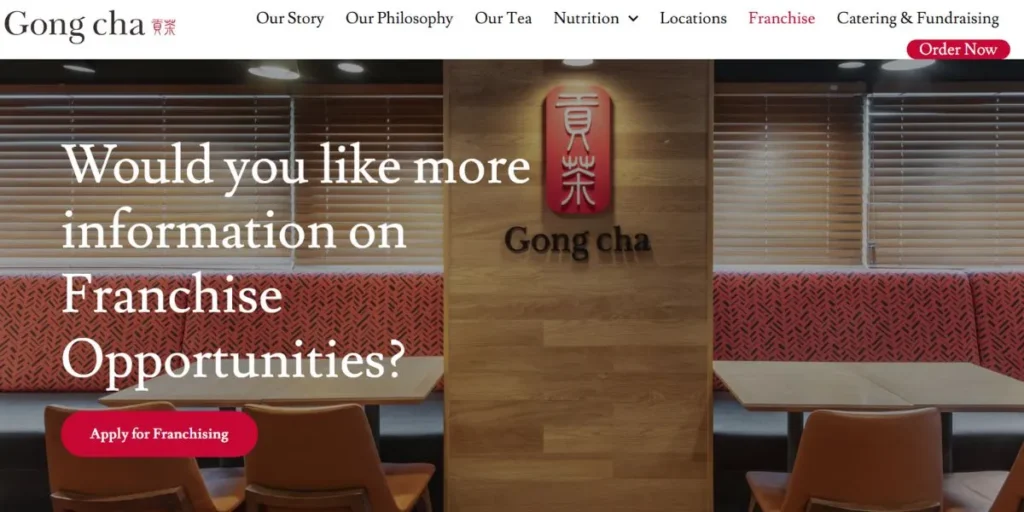
Gong Cha was founded in Kaohsiung, Taiwan, in 2006. The name of the company, Gong Cha, translates to tribute tea for the emperor, which signifies the quality of tea leaves that it uses. The brand opened its doors not only in Asia, but also in the USA. Gong Cha is famous for its flavor lock system to preserve the drink. The quality of their tea base and emphasis on natural flavor are what set it apart.
- Franchise fee: Around $25,000- $35,000
- Total Investment: $150,000- $350,000
- Net Worth Requirement: $350,000- $500,000
- Apply Link: https://www.gong-cha.com/franchise/
2. Chatime

Chatime is a brand that requires little to no introduction. This Taiwanese company, founded in 2005, is a world power when it comes to pearl milk tea franchises, with over 2,500 outlets worldwide. The reason for its huge success lies in its focus on R&D, its centrally supplied stores, and its global reach. The quality of their drinks is unmatched, with “One Taste, One Quality” as a principle to ensure that the taste of their drink in New York, Tokyo, and all other locations is the same.
- Franchise fee: $25,000- $40,000
- Total Investment: $150,000- $300,000
- Net Worth Requirement: $300,000- $500,000
- Apply Link: https://chatimefranchise.com/become-a-partner/
3. Kung Fu Tea
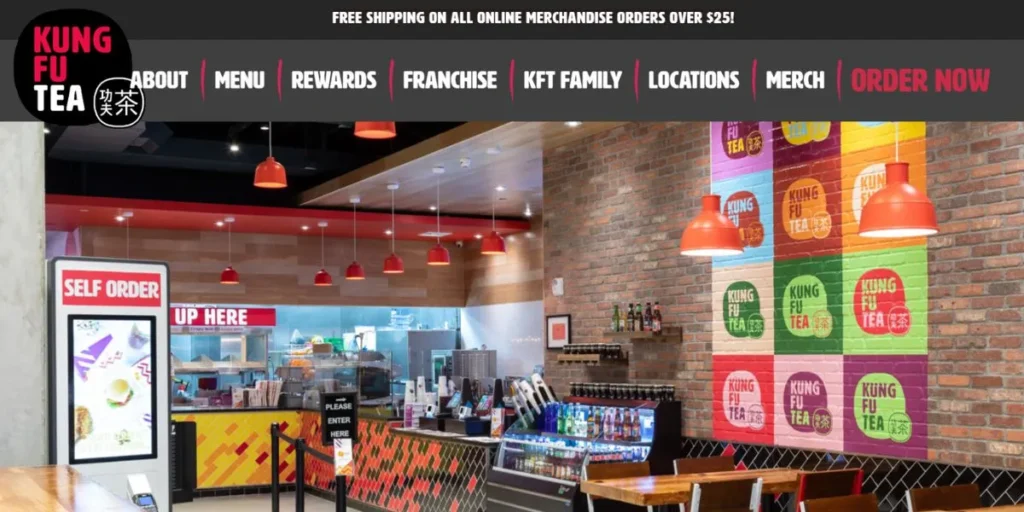
Founded by a group of friends in 2010 in New York City. Kung Fu Tea’s goal was to bring authentic Taiwanese tea to the USA, and it has done so very successfully, becoming one of the largest and most well-known bubble tea chains in North America. Known for their bold-flavored drinks, unique store designs, and emphasis on “prepared fresh, served fresh” policy, Kung Fu Tea has an extensive range of milk tea, slushes, and fruit tea flavors that are enjoyed by the masses.
- Franchise fee: $30,000- $40,000
- Total Investment: $140,000- $350,000
- Net Worth Requirement: $400,000
- Apply Link: https://www.kungfutea.com/franchise/
4. CoCo Fresh Tea & Juice
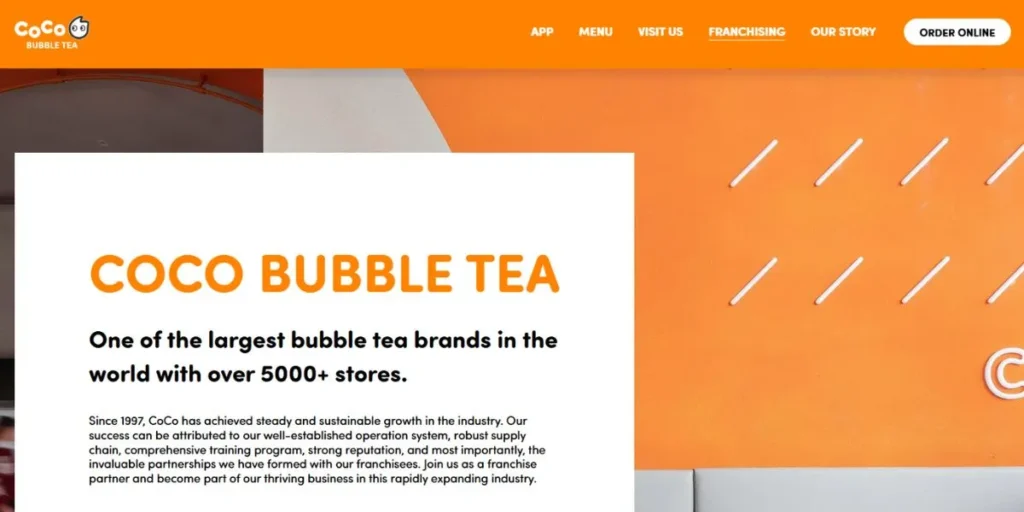
The world’s largest bubble tea franchise, CoCo, was founded in Taipei in 1997 and has opened an astronomical number of locations around the world, aiming to be a “global leader in the tea beverage industry.” They are well-known for their high-quality and consistency, with items like their “CoCo Lemon Slush” and signature milk teas being exceptionally popular. Due to their immense presence, CoCo is a very stable and well-researched business opportunity for a franchisee.
- Franchise Fee: $20,000-30,000
- Total Investment: $100,000-250,000
- Net Worth Requirement: $250,000-300,000
- Apply Link: https://cocobubbletea.com/franchising-2
Pearl Milk Tea Franchise Profit & ROI
Profitability is a key factor to consider for a pearl milk tea franchise. Your shop’s success will be highly dependent on where you choose to open your shop, the brand’s support, and how effectively you run the business. Here are key points of information that potential owners need to know.
- Net Profit Margins: On average, well-managed locations with optimal positioning can yield 10-20% net profit margins. Top-tier locations in high-traffic areas can achieve over 30% net profit.
- Average Payback Period: Your initial investment may be recouped in as little as 12-24 months, which is considerably faster compared to many other franchises.
- Unit-Level Economics: A single drink can cost between $0.50 to $1.20 for ingredients but sells between $5.00-$7.00, indicating a very healthy gross margin for this business.
- Sales Per Store: Popular locations in large cities might achieve 300-1000 transactions per day, while smaller-scale locations may expect 100-300 sales per day.
- Digital Sales Boost: Integration of delivery and online order systems can add another 20-30% of revenue.
Pearl Milk Tea Franchise Reviews (Real Insights)
Real feedback from franchisees gives the best glimpse into the real-world demands and rewards of running a pearl milk tea franchise. These reviews offer candid insights into the daily operations of such businesses. The section below presents real-life insights as well as significant risk factors:
- Brand Support: Many owners cited the high degree of franchisor support as a huge benefit in starting up, especially the initial training and ongoing marketing.
- Labor management: A lot of business owners report significant difficulties finding and keeping good employees. Keeping a high quality of drink as well as customer service also relies on an attentive staff.
- Location: It is an ongoing refrain from reviews-no brand can save a poorly-located shop. Owners stress the importance of thoroughly researching a location with plenty of foot traffic from your target audience.
- Consistency: Keeping drinks tasting exactly the way that customers expect them to be is a top priority. New owners may need to adapt to ensure precise recipes and measurements.
- Hidden Costs: Although there are many specified start-up costs, owners mentioned unforeseen expenses that can drain profits, such as marketing and increased utility costs.
Pros & Cons of Milk Tea Franchises
As with all business models, there are pros and cons to a milk tea franchise. Weighing the pros and cons, it will tell you if the Pearl Milk Tea franchise is the right business opportunity for you.
Pros:
- A proven business model: You are investing in a system that is tried and true, removing a lot of the guesswork and risk of starting a new business from the ground up.
- Strong brand recognition: The brand has been developed and marketed, and the recognition has been built. It will draw customers into your store who already know and love your brand.
- Operational support: The franchisor will help with site selection and development, design and leasehold improvements, initial and ongoing training, and supply chain logistics to simplify the launch of your business.
- High profit margins: The low cost of ingredients vs. the price you can sell it for results in very good gross profit margins and, therefore, very good net profit margins.
- Fast-growing market: The bubble tea market is in a growth phase. That means there is potential for business growth.
Cons:
- High investment cost: The franchise fee and cost of build-out can be substantial and may deter potential franchisees.
- Ongoing royalties: You’ll have to pay a fee to the franchisor forever, representing a percentage of your gross sales (typically 4-6%). This reduces your profit margins.
- Little creative control: You’ll be required to adhere to the franchisor’s guidelines regarding the menu, pricing, store layout, and suppliers, all of which limit your flexibility.
- Strict operational procedures: The business must follow a stringent set of operational guidelines. In addition to the pressure that these constraints can place upon a day-to-day business operation, the rigidity may be restrictive.
- Reliance on franchisor: Your success is tied to the overall health and reputation of the parent brand. If the franchisor makes a bad decision or faces a scandal, it can directly impact your local business.
How to Start a Pearl Milk Tea Franchise in 2026
The process of starting up your franchise is exciting and can be very rewarding! Here is a step-by-step guide to applying and opening your own pearl milk tea franchise.
- Research and Self-Evaluation: Before exploring any brand, analyze your personal goals, finances, and lifestyle. Your self-assessment needs to detail your budget, desired involvement (owner-operator vs. Passive investment), and target market, as this helps you to know which franchise business to pursue.
- Examine franchise options: Spend a few hours looking through the top pearl milk tea brands. Compare their initial investment costs, training, and operational support structures, menus, brand reputation, and values. Talk to franchisees who are already working with a franchise. This due diligence is very crucial to avoid surprises later on.
- Application and Qualification: Once you’ve chosen a brand, submit the appropriate application form. Franchisors will review your application based on your finances, credit history, and business experience to verify that you are a suitable candidate to represent the brand and to minimize future risks for the franchisor.
- Review the FDD (Franchise Disclosure Document): This document has been established by the franchisor to present all of the facts and figures of a particular franchise opportunity. A franchise attorney and an accountant are required to examine this legal document, as it will reveal crucial data about start-up costs, royalty fees, the franchisor’s financial performance, and details about the business’s legal aspects.
- Sign the Franchise Agreement and Get Funding: After a thorough review of the FDD and reaching a consensus on all the franchisor’s stipulations, you will need to sign the franchise agreement. This phase is also when you secure funding for the entire business, if necessary, and make the initial franchise payment.
- Site Selection and Build-Out: With guidance from your franchisor, find a suitable location for your business. Once you’ve agreed upon the lease, it’s time for the build-out, where the store is renovated and decorated according to the franchisor’s specifications and standard layout, and equipped with the right apparatus.
- Training and Grand Opening: Participate in a training program run by the franchisor that will cover all the fundamentals of running a pearl milk tea business, from preparing specific drinks to managing inventories and marketing techniques. Then, you will launch with your grand opening event, where the franchisor can assist you with your marketing endeavors to promote business.
Is Pearl Milk Tea Franchise Profitable in 2026?
Definitely, a pearl milk tea franchise is an extremely lucrative venture in 2026, particularly if investors choose an established brand with a great location. With the industry’s rapid growth, strong product margins, and a proven system, a Pearl Milk Tea Franchise offers a rock-solid business opportunity. Here are a few points backing it up:
- Net Margins are Attractive: Typically, franchise net profit margins are between 10-20%, while industry leaders can achieve over 30% post operational expenses.
- Market is Still Growing: The worldwide market is predicted to experience a CAGR of 8.03%, and new customers will continually enter the market, which increases product demand.
- Good Unit Economics: It is easy to earn from each drink because it can be made from $0.50-$1.20 and sold from $5.00-$7.00, which translates to high gross margins compared to many other food-related businesses.
- Fast ROI: With a typical break-even point of just 12 to 24 months, the investment pays back relatively quickly compared to other franchise models.
Future of Bubble Tea Franchise Business
The industry, however, is not static. As consumer tastes change and technology evolves, the future of the Pearl Milk Tea Franchise business will be marked by adaptability.
Trends shaping the business’s future include:
- Focus on Health: “Healthier” drinks, including low sugar, organic, and dairy-free options, are likely to become standard as customers turn towards these healthier alternatives. Brands that will succeed will provide plant-based milk, honey-based sweeteners, and fruit purees.
- Technology-integrated experience: Mobile ordering, loyalty apps, and self-service kiosks will become standard. Franchises will use AI to make personalized drink recommendations and streamline operations.
- Sustainability has gone from trending to required: Eco-friendly products, including compostable cups and plant-based straws, will be a major selling point for brands as customers seek more sustainable options, and the same goes for sustainably sourced ingredients.
- Expansion will go beyond big cities and reach suburbs and smaller cities: Competition in large cities is likely to increase in the coming years as all brands try to gain market share. It is anticipated that, to find market expansion and growth opportunities, they will head towards less competitive areas.
Conclusion
Investing in a Pearl Milk Tea Franchise in 2026 presents a golden opportunity for entrepreneurs to take part in the vibrant and thriving industry. By 2034, the industry is predicted to generate a total of $5.62 billion worldwide, making an investment highly profitable. The process will require an initial capital and full dedication, but will return with significant profit margins and quick returns on investment with good strategic planning, especially if backed with an established brand, a strong business plan, and an optimal location. For the ambitious investor, a Pearl Milk Tea franchise represents more than simply an investment; it is a chance to be a part of a cultural phenomenon on a global scale.
Explore More About:
FAQs
1. How much does it cost to open a pearl milk tea franchise?
Typically, this investment could cost between $50,000 and $350,000 dependent on the brand, format, and location. Franchises generally have a franchise fee of $15,000-$50,000.
2. What is the average profit margin for a bubble tea shop?
A well-managed bubble tea franchise could see net profit margins from 10-20% or up to 30% if the location proves popular.
3. How long does it take to break even?
An average payback period or return on investment for a successful bubble tea franchise is typically between 12 to 24 months.
4. Which is better: starting my own brand or buying a franchise?
Starting your own brand gives you complete control of the business, but it will be riskier as you have to build it from the ground up. However, franchising a bubble tea brand has been known to greatly reduce business risk as a proven system and brand name are already in place to use and promote.
5. What are the most profitable bubble tea franchise brands?
With their renowned brands, loyal customers, and effective support networks, popular franchise businesses such as Kung Fu Tea, Chatime, Gong Cha, and CoCo Fresh Tea & Juice are likely to stay at the forefront in terms of profitability.
6. What are the most important success factors in this business?
It is vital to find a prime location that attracts large numbers of pedestrians and choose strong and recognizable brands. Offering quality products consistently, providing excellent customer service, and effective marketing (mainly digital) will contribute to sustained growth.