
In Sanskrit, the Bhagwat Geeta Shlok does not only comprise of the verses written long back in time but a manual for spirituality that has been guiding countless people around the world till today. These are the shlokas that have been imparted by the lord himself, Sri Krishna, to Arjuna, who was fighting in the battle of Kurukshetra.
Whatever problem you might be having in life, whatever dilemma you might be struggling with or however much inspiration you need, the Bhagwat Geeta Shlok in Sanskrit will definitely solve your purpose in life. Consisting of 18 chapters along with 700 verses, this divine script still holds its significance in today’s era after more than 5,000 years.
In this blog, we will explore 200+ Bhagwat Geeta Shlok in the 2026 Edition.
Importance of Bhagwat Geeta Shlok
The Bhagwat Geeta Shlok in Sanskrit is of huge importance in terms of spirituality, morals, and practice. Given below are 6 of the important reasons why these shlokas are necessary in day-to-day living:
- Spiritual Awakening: The shlokas are spiritual awakening tools which help one connect with the divine consciousness of the universe.
- Clarity of Mind: The shlokas teach us how to control our feelings and remain calm and focussed during tough times.
- Strength of Morals: The shlokas impart values like honesty, righteousness, compassion, and non-violence in our behavior.
- Encouragement During Difficulties: Through these shlokas, we get encouragement to act without any attachments to the results, thus helping us move on after failures.
- Karma Philosophy: These shlokas make us realize that karma will always determine our destiny.
- Devotion: The shlokas make us devoted souls by teaching us Bhakti and surrender.
Top Bhagwat Geeta Shlok in Sanskrit — Most Popular Ones
This particular classification contains shlokas from the Bhagwat Geeta that are probably the most widely recited and revered all over the world. Such time-tested shlokas have inspired saints, soldiers, and ordinary individuals alike since time immemorial. Illustration: “Karmanye Vadhikaraste” (Chapter 2, Verse 47).
The Bhagavad Gita is a 700-verse Hindu scripture that provides a roadmap for living a life of purpose, duty, and spiritual realization. Here are 25 of the most impactful shlokas, categorized by their themes.

1. Chapter 2, Verse 47
कर्मण्येवाधिकारस्ते मा फलेषु कदाचन। मा कर्मफलहेतुर्भूर्मा ते सङ्गोऽस्त्वकर्मणि॥
- Hindi: आपका अधिकार केवल कर्म करने पर है, उसके फलों पर कभी नहीं। कर्मों के फल की इच्छा मत करो और न ही कर्म न करने में तुम्हारी आसक्ति हो।
- English: You have a right to perform your prescribed duties, but you are not entitled to the fruits of your actions. Never consider yourself to be the cause of the results of your activities, nor be attached to inaction.
2. Chapter 3, Verse 8
नियतं कुरु कर्म त्वं कर्म ज्यायो ह्यकर्मणः। शरीरयात्रापि च ते न प्रसिद्ध्येदकर्मणः॥
- Hindi: तू अपना नियत कर्म कर, क्योंकि कर्म न करने की अपेक्षा कर्म करना श्रेष्ठ है। कर्म न करने से तेरा शरीर-निर्वाह भी सिद्ध नहीं होगा।
- English: Perform your prescribed duty, for action is better than inaction. Even the maintenance of your body would not be possible without work.
3. Chapter 3, Verse 35
श्रेयान्स्वधर्मो विगुणः परधर्मात्स्वनुष्ठितात्। स्वधर्मे निधनं श्रेयः परधर्मो भयावहः॥
- Hindi: दूसरों के कर्तव्य को भली-भांति करने की अपेक्षा अपना कर्तव्य (स्वधर्म) चाहे वह दोषपूर्ण ही क्यों न हो, अधिक श्रेष्ठ है। अपने धर्म में मरना कल्याणकारी है, पराया धर्म भय देने वाला है।
- English: It is far better to perform one’s own duty, even if imperfectly, than another’s duty perfectly. Destruction in the course of performing one’s own duty is better than the danger of following another’s path.
4. Chapter 2, Verse 20
न जायते म्रियते वा कदाचिन् नायं भूत्वा भविता वा न भूयः। अजो नित्यः शाश्वतोऽयं पुराणो न हन्यते हन्यमाने शरीरे॥
- Hindi: आत्मा किसी भी काल में न तो जन्मती है और न ही मरती है। यह अजन्मा, नित्य, शाश्वत और पुरातन है। शरीर के मारे जाने पर भी यह नहीं मारी जाती।
- English: The soul is neither born, nor does it ever die; nor having once existed, does it ever cease to be. The soul is unborn, eternal, immortal, and ageless. It is not destroyed when the body is destroyed.
5. Chapter 2, Verse 22
वासांसि जीर्णानि यथा विहाय नवानि गृह्णाति नरोऽपराणि। तथा शरीराणि विहाय जीर्णान्यन्यानि संयाति नवानि देही॥
- Hindi: जैसे मनुष्य पुराने वस्त्रों को त्यागकर दूसरे नए वस्त्र धारण करता है, वैसे ही जीवात्मा पुराने शरीरों को त्यागकर दूसरे नए शरीरों को प्राप्त करती है।
- English: As a person puts on new garments, giving up old ones, the soul similarly accepts new material bodies, giving up the old and useless ones.
6. Chapter 2, Verse 23
नैनं छिन्दन्ति शस्त्राणि नैनं दहति पावकः। न चैनं क्लेदयन्त्यापो न शोषयति मारुतः॥
- Hindi: इस आत्मा को शस्त्र नहीं काट सकते, आग नहीं जला सकती, जल नहीं भिगो सकता और वायु नहीं सुखा सकती।
- English: Weapons cannot shred the soul, nor can fire burn it. Water cannot wet it, nor can the wind dry it.
7. Chapter 2, Verse 48
योगस्थः कुरु कर्माणि सङ्गं त्यक्त्वा धनञ्जय। सिद्ध्यसिद्ध्योः समो भूत्वा समत्वं योग उच्यते॥
- Hindi: हे अर्जुन! जय-पराजय की आसक्ति को त्यागकर और सफलता-असफलता में समान भाव रखकर अपने कर्तव्य का पालन करो। ऐसी समता ही योग कहलाती है।
- English: Perform your duty equipoised, O Arjuna, abandoning all attachment to success or failure. Such equanimity is called Yoga.
8. Chapter 6, Verse 5
उद्धरेदात्मनात्मानं नात्मानमवसादयेत्। आत्मैव ह्ययात्मनो बन्धुरात्मैव रिपुरात्मनः॥
- Hindi: मनुष्य को चाहिए कि वह अपने मन के द्वारा अपना उद्धार करे, खुद को नीचे न गिराए। क्योंकि मन ही मनुष्य का मित्र है और मन ही मनुष्य का शत्रु है।
- English: Elevate yourself through the power of your mind, and do not degrade yourself. For the mind can be the friend and also the enemy of the self.
9. Chapter 6, Verse 6
बन्धुरात्मात्मनस्तस्य येनात्मैवात्मना जितः। अनात्मनस्तु शत्रुत्वे वर्तेतात्मैव शत्रुवत्॥
- Hindi: जिसने अपने मन को जीत लिया है, उसके लिए मन सबसे अच्छा मित्र है। लेकिन जो ऐसा करने में असफल रहा है, उसके लिए मन सबसे बड़ा शत्रु बना रहता है।
- English: For those who have conquered the mind, it is the best of friends. But for those who have failed to do so, the mind remains the greatest enemy.
10. Chapter 4, Verse 7
यदा यदा हि धर्मस्य ग्लानिर्भवति भारत। अभ्युत्थानमधर्मस्य तदात्मानं सृजाम्यहम्॥
- Hindi: हे भारत! जब-जब धर्म की हानि और अधर्म की वृद्धि होती है, तब-तब मैं (ईश्वर) स्वयं को प्रकट करता हूँ।
- English: Whenever there is a decline in righteousness and a rise in unrighteousness, O Bharat (Arjuna), then I manifest Myself.
11. Chapter 4, Verse 8
परित्राणाय साधूनां विनाशाय च दुष्कृताम्। धर्मसंस्थापनार्थाय सम्भवामि युगे युगे॥
- Hindi: सज्जनों की रक्षा के लिए, दुष्टों के विनाश के लिए और धर्म की स्थापना के लिए मैं युग-युग में प्रकट होता हूँ।
- English: To protect the righteous, to annihilate the wicked, and to re-establish the principles of Dharma, I appear millennium after millennium.
12. Chapter 9, Verse 22
अनन्याश्चिन्तयन्तो मां ये जनाः पर्युपासते। तेषां नित्याभियुक्तानां योगक्षेमं वहाम्यहम्॥
- Hindi: जो लोग अनन्य भाव से मेरा चिंतन करते हुए मेरी उपासना करते हैं, उन नित्य निरंतर मुझमें लगे हुए भक्तों का योग-क्षेम (आवश्यकताओं की पूर्ति और रक्षा) मैं स्वयं वहन करता हूँ।
- English: To those who are constantly devoted to Me and worship Me with exclusive devotion, I provide what they lack and preserve what they have.
13. Chapter 9, Verse 26
पत्रं पुष्पं फलं तोयं यो मे भक्त्या प्रयच्छति। तदहं भक्त्युपहृतमश्नामि प्रयतात्मनः॥
- Hindi: जो भक्त मुझे प्रेम से एक पत्ता, एक फूल, फल या जल अर्पित करता है, मैं उस शुद्ध बुद्धि वाले भक्त के उस प्रेमपूर्ण उपहार को स्वीकार करता हूँ।
- English: If one offers Me with love and devotion a leaf, a flower, fruit or water, I will accept it.
14. Chapter 18, Verse 65
मन्मना भव मद्भक्तो मद्याजी मां नमस्कुरु। मामेवैष्यसि सत्यं ते प्रतिजाने प्रियोऽसि मे॥
- Hindi: अपना मन मुझमें लगाओ, मेरे भक्त बनो, मेरी पूजा करो और मुझे नमस्कार करो। ऐसा करने से तुम निश्चित रूप से मुझे प्राप्त करोगे। यह मेरा तुम्हें सत्य वचन है।
- English: Always think of Me, become My devotee, worship Me and offer your homage unto Me. Thus you will come to Me without fail. I promise you this because you are My very dear friend.
15. Chapter 18, Verse 66
सर्वधर्मान्परित्यज्य मामेकं शरणं व्रज। अहं त्वां सर्वपापेभ्यो मोक्षयिष्यामि मा शुचः॥
- Hindi: सभी धर्मों (कर्तव्यों) को त्यागकर केवल मेरी शरण में आओ। मैं तुम्हें सभी पापों से मुक्त कर दूँगा, डरो मत।
- English: Abandon all varieties of religion and just surrender unto Me. I shall deliver you from all sinful reactions. Do not fear.
16. Chapter 2, Verse 56
दुःखेष्वनुद्विग्नमनाः सुखेषु विगतस्पृहः। वीतरागभयक्रोधः स्थितधीर्मुनिरुच्यते॥
- Hindi: जिसका मन दुखों में विचलित नहीं होता, सुखों की लालसा नहीं रखता और जो राग, भय तथा क्रोध से मुक्त है, वह स्थिर बुद्धि वाला मुनि कहलाता है।
- English: One whose mind remains undisturbed amidst misery, who does not crave pleasure, and who is free from attachment, fear, and anger, is called a sage of steady wisdom.
17. Chapter 2, Verse 62
ध्यायतो विषयान्पुंसः सङ्गस्तेषूपजायते। सङ्गात्सञ्जायते कामः कामात्क्रोधोऽभिजायते॥
- Hindi: विषयों (इन्द्रियों के भोग) का चिंतन करने से मनुष्य की उनमें आसक्ति पैदा होती है। आसक्ति से इच्छा (काम) पैदा होती है और इच्छा पूरी न होने से क्रोध उत्पन्न होता है।
- English: While contemplating the objects of the senses, a person develops attachment for them, and from such attachment lust develops, and from lust anger arises.
18. Chapter 2, Verse 63
क्रोधाद्भवति सम्मोहः सम्मोहात्स्मृतिविभ्रमः। स्मृतिभ्रंशाद् बुद्धिनाशो बुद्धिनाशात्प्रणश्यति॥
- Hindi: क्रोध से सम्मोह (मूढ़ भाव) उत्पन्न होता है, सम्मोह से स्मृति भ्रमित होती है, स्मृति भ्रमित होने से बुद्धि का नाश होता है और बुद्धि नष्ट होने से मनुष्य का पतन हो जाता है।
- English: From anger comes delusion; from delusion loss of memory; from loss of memory the destruction of discrimination; from the destruction of discrimination, one perishes.
19. Chapter 2, Verse 71
विहाय कामान्यः सर्वान्पुमांश्चरति निःस्पृहः। निर्ममो निरहङ्कारः स शान्तिमधिगच्छति॥
- Hindi: जो मनुष्य सभी इच्छाओं को त्याग कर ममता रहित, अहंकार रहित और स्पृहारहित होकर जीता है, वह शांति को प्राप्त करता है।
- English: A person who abandons all desires and lives free from cravings, free from the sense of ownership, and free from egoism, attains perfect peace.
20. Chapter 4, Verse 39
श्रद्धावाँल्लभते ज्ञानं तत्परः संयतेन्द्रियः। ज्ञानं लब्ध्वा परां शान्तिमचिरेणाधिगच्छति॥
- Hindi: श्रद्धा रखने वाला मनुष्य, जो अपनी इन्द्रियों को वश में रखता है, ज्ञान प्राप्त करता है। ज्ञान प्राप्त करने के बाद वह शीघ्र ही परम शांति को प्राप्त होता है।
- English: A faithful man who is absorbed in transcendental knowledge and who subdues his senses quickly attains the supreme spiritual peace.
21. Chapter 6, Verse 17
युक्ताहारविहारस्य युक्तचेष्टस्य कर्मसु। युक्तस्वप्नावबोधस्य योगो भवति दुःखहा॥
- Hindi: जिसका आहार और विहार (मनोरंजन) संतुलित है, जो कर्मों में सही चेष्टा करता है और जिसका सोना-जागना नियमित है, उसका योग दुखों का नाश करने वाला होता है।
- English: He who is regulated in his habits of eating, sleeping, recreation and work can mitigate all material pains by practicing the yoga system.
22. Chapter 10, Verse 41
यद्यद्विभूतिमत्सत्त्वं श्रीमदूर्जितमेव वा। तत्तदेवावगच्छ त्वं मम तेजोंऽशसम्भवम्॥
- Hindi: जो भी ऐश्वर्ययुक्त, कान्तियुक्त और शक्तिमान वस्तु है, उसे तू मेरे ही तेज के अंश से उत्पन्न जान।
- English: Know that all opulent, beautiful and glorious creations spring from but a spark of My splendor.
23. Chapter 13, Verse 27
समं सर्वेषु भूतेषु तिष्ठन्तं परमेश्वरम्। विनश्यत्स्वविनश्यन्तं यः पश्यति स पश्यति॥
- Hindi: जो नष्ट होते हुए शरीरों के भीतर अविनाशी परमेश्वर को समान रूप से स्थित देखता है, वही वास्तव में सत्य को देखता है।
- English: He who sees the Supreme Lord as the only reality remaining the same within all perishable beings, he truly sees.
24. Chapter 14, Verse 19
नान्यं गुणेभ्यः कर्तारं यदा द्रष्टानुपश्यति। गुणेभ्यश्च परं वेत्ति मद्भावं सोऽधिगच्छति॥
- Hindi: जब कोई दृष्टा गुणों (सत्, रज, तम) के अतिरिक्त किसी अन्य को कर्ता नहीं देखता और गुणों से परे परमात्मा को जान लेता है, तब वह मेरे दिव्य स्वरूप को प्राप्त होता है।
- English: When one sees that in all activities no other performer is at work than these modes of nature, and when one knows the Supreme Lord, who is transcendental to these modes, he attains My divine nature.
25. Chapter 18, Verse 78
यत्र योगेश्वरः कृष्णो यत्र पार्थो धनुर्धरः। तत्र श्रीर्विजयो भूतिर्ध्रुवा नीतिर्मतिर्मम॥
- Hindi: जहाँ योगेश्वर कृष्ण हैं और जहाँ धनुर्धारी अर्जुन हैं, वहीं श्री (लक्ष्मी), विजय, विभूति और अचल नीति रहती है।
- English: Wherever there is Krishna, the Lord of all Mystics, and wherever there is Arjuna, the supreme archer, there will also certainly be opulence, victory, extraordinary power, and morality.
Bhagwat Geeta Shlok in Sanskrit with Meaning in Hindi
In this category, the Shlokas of the Bhagwat Geeta Shlok in Sanskrit, along with the Hindi meaning that is easy to understand for everyone. This way, people can learn about ancient Vedic knowledge through the easy understanding of the Hindi language. For instance, “Nainam Chindanti Shastrani”.

Here are 10 additional powerful shlokas from the Bhagavad Gita, beyond the common ones previously listed, with their Sanskrit verses and Hindi meanings.
1. On Fearlessness and Inner Strength
Chapter 2, Verse 3Sanskrit:
क्लैब्यं मा स्म गमः पार्थ नैतत्त्वय्युपपद्यते। क्षुद्रं हृदयदौर्बल्यं त्यक्त्वोत्तिष्ठ परन्तप॥
Hindi: हे पार्थ! नपुंसकता को मत प्राप्त हो, यह तुझे शोभा नहीं देती। हे शत्रुओं के दमन करने वाले! हृदय की तुच्छ दुर्बलता को त्यागकर युद्ध के लिए खड़े हो जा।
2. On the Power of Intelligence
Chapter 2, Verse 41Sanskrit:
व्यवसायात्मिका बुद्धिरेकेह कुरुनन्दन। बहुशाखा ह्यनन्ताश्च बुद्धयोऽव्यवसायिनाम्॥
Hindi: हे कुरुनन्दन! इस मार्ग में निश्चयात्मक बुद्धि एक ही होती है, किन्तु अस्थिर विचार वाले विवेकहीन मनुष्यों की बुद्धियाँ अनंत शाखाओं वाली और बहुत विस्तार वाली होती हैं।
3. On Leadership and Example
Chapter 3, Verse 21Sanskrit:
यद्यदाचरति श्रेष्ठस्तत्तदेवेतरो जनः। स यत्प्रमाणं कुरुते लोकस्तदनुवर्तते॥
Hindi: श्रेष्ठ पुरुष जो-जो आचरण करता है, अन्य पुरुष भी वैसा ही आचरण करते हैं। वह जो कुछ प्रमाण (standard) कर देता है, समस्त मनुष्य समुदाय उसी के अनुसार बरतने लगता है।
4. On Selfless Action
Chapter 3, Verse 19Sanskrit:
तस्मादसक्तः सततं कार्यं कर्म समाचर। असक्तो ह्याचरन्कर्म परमाप्नोति पूरुषः॥
Hindi: इसलिए तू आसक्ति से रहित होकर निरंतर कर्तव्य कर्म का भली-भांति आचरण कर, क्योंकि आसक्ति रहित होकर कर्म करता हुआ मनुष्य परमात्मा को प्राप्त हो जाता है।
5. On Overcoming Lust/Desire
Chapter 3, Verse 42Sanskrit:
इन्द्रियाणि पराण्याहुरिन्द्रियेभ्यः परं मनः। मनसस्तु परा बुद्धिर्यो बुद्धेः परतस्तु सः॥
Hindi: इन्द्रियों को स्थूल शरीर से श्रेष्ठ कहा जाता है, इन्द्रियों से श्रेष्ठ मन है, मन से श्रेष्ठ बुद्धि है और जो बुद्धि से भी अत्यंत श्रेष्ठ है, वह आत्मा है।
6. On Equal Vision
Chapter 5, Verse 18Sanskrit:
विद्याविनयसम्पन्ने ब्राह्मणे गवि हस्तिनि। शुनि चैव श्वपाके च पण्डिताः समदर्शिनः॥
Hindi: ज्ञानी जन विद्या और विनययुक्त ब्राह्मण में तथा गौ, हाथी, कुत्ते और चण्डाल में भी समान रूप से परमात्मा को ही देखते हैं।
7. On the Nature of Food and Temperament
Chapter 17, Verse 8Sanskrit:
आयुःसत्त्वबलारोग्यसुखप्रीतिविवर्धनाः। रस्याः स्निग्धाः स्थिरा हृद्या आहाराः सात्त्विकप्रियाः॥
Hindi: आयु, बुद्धि, बल, आरोग्य, सुख और प्रीति को बढ़ाने वाले, रसयुक्त, चिकने और स्थिर रहने वाले तथा स्वभाव से ही मन को प्रिय लगने वाले आहार सात्त्विक पुरुष को प्रिय होते हैं।
8. On God as the Support of All
Chapter 7, Verse 7Sanskrit:
मत्तः परतरं नान्यत्किञ्चिदस्ति धनञ्जय। मयि सर्वमिदं प्रोतं सूत्रे मणिगणा इव॥
Hindi: हे धनंजय! मुझसे श्रेष्ठ दूसरा कोई भी कारण नहीं है। यह सम्पूर्ण जगत सूत्र में मणियों के सदृश मुझमें ही गुंथा हुआ है।
9. On Forgiveness and Peace
Chapter 12, Verse 13Sanskrit:
अद्वेष्टा सर्वभूतानां मैत्रः करुण एव च। निर्ममो निरहङ्कारः समदुःखसुखः क्षमी॥
Hindi: जो पुरुष सब भूतों में द्वेष भाव से रहित, सबका प्रेमी और दयालु है, ममता से रहित, अहंकार से रहित, सुख-दुःख की प्राप्ति में सम और क्षमावान है, वह मुझे प्रिय है।
10. On Resolving Doubt through Wisdom
Chapter 4, Verse 42Sanskrit:
तस्मादज्ञानसम्भूतं हृत्स्थं ज्ञानासिनात्मनः। छित्त्वैनं संशयं योगमातिष्ठोत्तिष्ठ भारत॥
Hindi: इसलिए हे भारत (अर्जुन)! तू अपने हृदय में स्थित अज्ञान से उत्पन्न इस संशय को ज्ञान रूपी तलवार से काटकर योग में स्थित हो जा और युद्ध के लिए खड़ा हो।
Bhagwat Geeta Shlok in Sanskrit with Meaning in English
These Bhagwat Geeta Shlok in Sanskrit have been translated into English in an accurate manner, making the wealth of Vedic philosophy available to the whole world. They provide universal access to the divine instructions of Lord Krishna. For example, “Yada Yada Hi Dharmasya.”

Here are 10 additional, distinct shlokas from the Bhagavad Gita that offer profound insights into life, work, and the human mind, presented in Sanskrit with English meanings.
1. On Overcoming Procrastination and Doubt
Chapter 4, Verse 40Sanskrit:
अज्ञश्चाश्रद्दधानश्च संशयात्मा विनश्यति। नायं लोकोऽस्ति न परो न सुखं संशयात्मनः॥
English: But the ignorant, the faithless, and the doubting Self go to destruction. For the doubting soul, there is happiness neither in this world nor in the next.
2. On the Result of Uncontrolled Senses
Chapter 2, Verse 67Sanskrit:
इन्द्रियाणां हि चरतां यन्मनोऽनुविधीयते। तदस्य हरति प्रज्ञां वायुर्नावमिवाम्भसि॥
English: As a strong wind sweeps away a boat on the water, even one of the roaming senses on which the mind focuses can carry away a man’s intelligence.
3. On Freedom from Attachment
Chapter 5, Verse 10Sanskrit:
ब्रह्मण्याधाय कर्माणि सङ्गं त्यक्त्वा करोति यः। लिप्यते न स पापेन पद्मपत्रमिवाम्भसा॥
English: One who performs their duty without attachment, surrendering the results unto the Supreme Lord, is unaffected by sinful action, just as the lotus leaf is untouched by water.
4. On True Renunciation
Chapter 6, Verse 1Sanskrit:
अनाश्रितः कर्मफलं कार्यं कर्म करोति यः। स संन्यासी च योगी च न निरग्निर्न चाक्रियः॥
English: One who performs their bounden duty without depending on the fruits of action is a true renunciant (Sanyasi) and a true yogi, not the one who merely lights no sacrificial fire or performs no work.
5. On the Power of Habit and Nature
Chapter 3, Verse 33Sanskrit:
सदृशं चेष्टते स्वस्याः प्रकृतेर्ज्ञानवानपि। प्रकृतिं यान्ति भूतानि निग्रहः किं करिष्यति॥
English: Even a person of knowledge acts according to their own nature. All living beings follow their nature; what can repression or forceful restraint accomplish?
6. On the Vision of a True Seeker
Chapter 6, Verse 29Sanskrit:
सर्वभूतस्थमात्मानं सर्वभूतानि चात्मनि। ईक्षते योगयुक्तात्मा सर्वत्र समदर्शनः॥
English: A true yogi, whose mind is disciplined and who sees with an equal eye, perceives the Self in all beings and all beings in the Self.
7. On the Three Gates to Hell (Self-Destruction)
Chapter 16, Verse 21Sanskrit:
त्रिविधं नरकस्येदं द्वारं नाशनमात्मनः। कामः क्रोधस्तथा लोभस्तस्मादेतत्त्रयं त्यजेत्॥
English: There are three gates leading to the hell of self-destruction: Lust, Anger, and Greed. Therefore, one should abandon these three.
8. On God’s Presence in Everything
Chapter 7, Verse 8Sanskrit:
रसोऽहमप्सु कौन्तेय प्रभास्मि शशिसूर्ययः। प्रणवः सर्ववेदेषु शब्दः खे पौरुषं नृषु॥
English: O son of Kunti, I am the taste in water, the light of the sun and the moon, the syllable ‘Om’ in the Vedic mantras, the sound in ether, and the ability in man.
9. On the Unchanging Reality
Chapter 2, Verse 16Sanskrit:
नासतो विद्यते भावो नाभावो विद्यते सतः। उभयोरपि दृष्टोऽन्तस्त्वनयोस्तत्त्वदर्शिभिः॥
English: The unreal has no permanent existence, and the real never ceases to be. The seers of the truth have concluded this by studying the nature of both.
10. On Finding Peace in Chaos
Chapter 2, Verse 70Sanskrit:
आपूर्यमाणमचलप्रतिष्ठं समुद्रमापः प्रविशन्ति यद्वत्। तद्वत्कामा यं प्रविशन्ति सर्वे स शान्तिमाप्नोति न कामकामी॥
English: As the ocean remains undisturbed by the continuous flow of waters from rivers, so does the person who remains undisturbed by the flow of desires attain peace, and not the one who strives to satisfy those desires.
Bhagwat Geeta Shlok for Students
Bhagwat Geeta Shlok in Sanskrit, specially selected to guide students towards concentration, discipline, wisdom, and perseverance. These shlokas help students deal with stress, self-doubt, and academic struggles using age-old wisdom. Sample shlokas include those found in Chapter 4, which discusses the importance of wisdom, and Chapter 6, which talks about disciplining the wandering mind.
1. Control of the Mind
चञ्चलं हि मनः कृष्ण प्रमाथि बलवद्दृढम्। तस्याहं निग्रहं मन्ये वायोरिव सुदुष्करम्॥ (6.34)
Meaning: The mind is restless, turbulent, obstinate, and very strong. Controlling it is as difficult as controlling the wind.
Student Lesson: Acknowledge that distractions are natural; don’t get frustrated when your mind wanders.
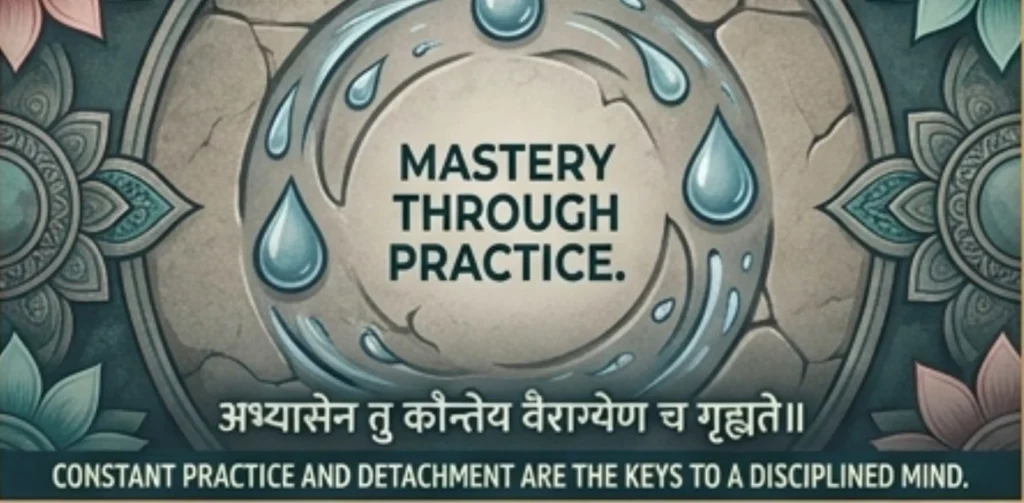
2. The Solution to Restlessness
अभ्यासेन तु कौन्तेय वैराग्येण च गृह्यते॥ (6.35)
Meaning: But by constant practice and detachment, the mind can be brought under control.
Student Lesson: Use “Abhyasa” (consistent study habits) to train your brain.
3. Avoiding Distractions
यतो यतो निश्चरति मनश्चञ्चलमस्थिरम्। ततस्ततो नियम्यैतदात्मन्येव वशं नयेत्॥ (6.26)
Meaning: From wherever the mind wanders, one must bring it back under the control of the Self.
Student Lesson: Each time you reach for your phone while studying, consciously pull your focus back to the book.
4. One-Pointed Determination
व्यवसायात्मिका बुद्धिरेकेह कुरुनन्दन। (2.41)
Meaning: Those who are on this path are resolute in purpose, and their aim is one.
Student Lesson: Multi-tasking is a myth. Focus on one subject at a time with total intensity.
5. The Golden Rule of Work
कर्मण्येवाधिकारस्ते मा फलेषु कदाचन। (2.47)
Meaning: You have a right to perform your duty, but you are not entitled to the fruits of your action.
Student Lesson: Focus on your preparation (the input) rather than worrying about the grades (the output).
6. Equanimity in Success and Failure
सिद्ध्यसिद्ध्योः समो भूत्वा समत्वं योग उच्यते॥ (2.48)
Meaning: Be steadfast in yoga, perform your duty, and abandon all attachment to success or failure.
Student Lesson: Do not let a high score make you arrogant, nor a low score make you depressed.
7. Overcoming Worry
तस्मादसक्तः सततं कार्यं कर्म समाचर। (3.19)
Meaning: Therefore, without being attached to the fruits of activities, one should act as a matter of duty.
Student Lesson: Study because it is your responsibility to learn, not just to beat someone else’s score.
8. Moderation in Everything
युक्ताहारविहारस्य युक्तचेष्टस्य कर्मसु। युक्तस्वप्नावबोधस्य योगो भवति दुःखहा॥ (6.17)
Meaning: He who is regulated in his habits of eating, sleeping, recreation, and work can mitigate all pains.
Student Lesson: Avoid late-night cramming and junk food. A balanced routine leads to a sharper mind.
9. Being Your Own Best Friend
आत्मैव ह्ययात्मनो बन्धुरात्मैव रिपुरात्मनः॥ (6.5)
Meaning: For the mind can be the friend and also the enemy of the self. Student Lesson: Your habits decide your future. Don’t be your own worst enemy through laziness.
10. Conquering the Senses
तस्मात्त्वमिन्द्रियाण्यादौ नियम्य भरतर्षभ। पाप्मानं प्रजहि ह्येनं ज्ञानविज्ञाननाशनम्॥ (3.41)
Meaning: Therefore, curb the senses first and slay this great symbol of sin (desire/distraction).
Student Lesson: Discipline your senses—if the TV or social media is distracting you, shut it out at the source.
11. The Power of Faith and Effort
श्रद्धावाँल्लभते ज्ञानं तत्परः संयतेन्द्रियः। (4.39)
Meaning: A faithful man who is dedicated to knowledge and who subdues his senses achieves wisdom.
Student Lesson: Believe in your ability to learn; dedication is the key to mastering any subject.
12. Knowledge is the Ultimate Purifier
न हि ज्ञानेन सदृशं पवित्रमिह विद्यते। (4.38)
Meaning: In this world, there is nothing so sublime and pure as knowledge.
Student Lesson: Education is not just for a job; it is the highest form of self-improvement.
13. Learning through Humility
तद्विद्धि प्रणिपातेन परिप्रश्नेन सेवया। (4.34)
Meaning: Learn the truth by approaching a spiritual master. Inquire submissively and render service.
Student Lesson: Don’t be afraid to ask your teachers questions. Humility opens the door to deeper understanding.
14. Avoid Inaction
मा ते सङ्गोऽस्त्वकर्मणि। (2.47)
Meaning: Do not let yourself be attached to Inaction.
Student Lesson: Procrastination feels comfortable, but it is a trap. Start the task today.
15. Action is Better than Thinking
नियतं कुरु कर्म त्वं कर्म ज्यायो ह्यकर्मणः। (3.8)
Meaning: Perform your prescribed duty, for action is better than Inaction. Student Lesson: Thinking about studying isn’t studying. Action is the only way to progress.
16. The Peril of Doubt
संशयात्मा विनश्यति। (4.40)
Meaning: A person who is always doubting has no happiness.
Student Lesson: Stop doubting your potential. Have confidence in your hard work.
17. Tolerance
मात्रास्पर्शास्तु कौन्तेय शीतोष्णसुखदुःखदाः। आगमापायिनोऽनित्यास्तांस्तितिक्षस्व भारत॥ (2.14)
Meaning: The appearance of happiness and distress is like the coming and going of winter and summer. They are temporary.
Student Lesson: Exam stress and tough phases are temporary. Learn to endure them with patience.
18. Managing Anger and Frustration
क्रोधाद्भवति सम्मोहः सम्मोहात्स्मृतिविभ्रमः। (2.63)
Meaning: From anger comes delusion, and from delusion, loss of memory. Student Lesson: If you get frustrated with a difficult problem, take a break. Anger clouds your ability to remember what you’ve learned.
19. Stability of Mind
यस्य नाहङ्कृतो भावो बुद्धिर्यस्य न लिप्यते। (18.17)
Meaning: One who is not motivated by ego, whose intellect is not entangled…
Student Lesson: Don’t let your ego get tied to your rank. Keep your intellect clear and objective.
20. Rise and Shine
तस्मादुत्तिष्ठ यशो लभस्व। (11.33)
Meaning: Therefore, get up! Prepare to fight and win glory.
Student Lesson: Shake off the lethargy. Rise to the challenge of your exams.
21. Excellence in Action
योगः कर्मसु कौशलम्॥ (2.50)
Meaning: Yoga is skill in action.
Student Lesson: Doing your work with total precision and excellence is a form of spiritual practice.
22. The Hierarchy of Power
इन्द्रियाणि पराण्याहुरिन्द्रियेभ्यः परं मनः। मनसस्तु परा बुद्धिर्यो बुद्धेः परतस्तु सः॥ (3.42)
Meaning: The senses are superior to the body; the mind is superior to the senses; the intellect is higher than the mind; and the soul is even higher than the intellect.
Student Lesson: Use your intellect (Logic) to overrule your mind (Emotions) when it wants to quit.
23. Divine Presence in Ability
पौरुषं नृषु। (7.8)
Meaning: I am the ability in man.
Student Lesson: Your talents and your capacity to work hard are gifts from the divine. Use them well.
24. Overcoming Fear
भयात् रणादुपरतं मंस्यन्ते त्वां महारथाः। (2.35)
Meaning: The great generals will think that you have left the battlefield out of Fear.
Student Lesson: Don’t quit out of Fear of failure. It is better to try and fail than to run away.
25. The Final Assurance of Victory
यत्र योगेश्वरः कृष्णो यत्र पार्थो धनुर्धरः। तत्र श्रीर्विजयो भूतिर्ध्रुवा नीतिर्मतिर्मम॥ (18.78)
Meaning: Wherever there is Krishna (Wisdom) and Arjuna (Action), there will be victory, prosperity, and success.
Student Lesson: Combine Knowledge with Hard Work, and success becomes inevitable.
Bhagwat Geeta Shlok for Social Media
Compact, concise, and graphic Bhagwat Geeta Shlok in Sanskrit is ideal for Instagram posts, WhatsApp status messages, and Twitter quotes. They generate interest in spirituality and engagement on social media platforms. For instance, “Uddharedatmanatmanam” is a concise, soulful Shlok related to elevating oneself, which appeals to young people in social media-centric times.

For Motivation & “Grind” Posts (प्रेरणा)
1. On Boundless Energy
Sanskrit: उत्साहान्निश्चयाद्धैर्यात्तत्तत्कर्मप्रवर्तनात्। (Ref: General Gita Wisdom)
Meaning: Through enthusiasm, determination, and patience, one succeeds in their endeavors.
2. On Being an Original
Sanskrit: श्रेयान्स्वधर्मो विगुणः परधर्मात्स्वनुष्ठितात्। (3.35)
Meaning: It is better to live your own destiny imperfectly than to live an imitation of somebody else’s life with perfection.
3. On Inner Strength
Sanskrit: क्लैब्यं मा स्म गमः पार्थ नैतत्त्वय्युपपद्यते। (2.3)
Meaning: Do not yield to unmanliness; it does not become you. Shake off this trivial faint-heartedness.
4. On Excellence
Sanskrit: योगः कर्मसु कौशलम्॥ (2.50)
Meaning: Yoga is excellence in action.
5. On Overcoming Fear
Sanskrit: अभयं सत्त्वसंशुद्धिः… (16.1)
Meaning: Fearlessness and purity of heart are the first signs of a divine nature.
For Aesthetic & “Zen” Posts (शांति)
6. On Inner Peace
Sanskrit: अशान्तस्य कुतः सुखम्? (2.66)
Meaning: For the unpeaceful, where is happiness?
7. On Staying Unbothered
Sanskrit: समदुःखसुखः स्वस्थः समलोष्टाश्मकाञ्चनः। (14.24)
Meaning: One who is situated in the self and regards alike pleasure and pain; who looks upon a lump of earth, a stone, and gold with an equal eye.
8. On Nature and Grace
Sanskrit: रसोऽहमप्सु कौन्तेय प्रभास्मि शशिसूर्ययः। (7.8)
Meaning: I am the taste in water, the light in the sun and the moon.
9. On the Quiet Mind
Sanskrit: यदा संहरते चायं कूर्मोऽङ्गानीव सर्वशः। (2.58)
Meaning: Like a tortoise withdrawing its limbs, one who can withdraw the senses from their objects possesses steady wisdom.
For Relationships & Compassion (करुणा)
10. On Universal Brotherhood
Sanskrit: आत्मौपम्येन सर्वत्र समं पश्यति योऽर्जुन। (6.32)
Meaning: He is a perfect yogi who, by comparison to his own self, sees the true equality of all beings.
11. On Kindness
Sanskrit: अद्वेष्टा सर्वभूतानां मैत्रः करुण एव च। (12.13)
Meaning: Be free from malice, be a friend to all, and be compassionate.
12. On Letting Go of Ego
Sanskrit: निर्ममो निरहङ्कारः स शान्तिमधिगच्छति॥ (2.71)
Meaning: One who is without desire, without a sense of “mine,” and without ego attains peace.
For Wisdom & Perspective (ज्ञान)
13. On Time (The Great Healer)
Sanskrit: कालोऽस्मि लोकक्षयकृत्प्रवृद्धो। (11.32)
Meaning: I am Time, the great destroyer of worlds.
14. On Change
Sanskrit: परिवर्तनं एव स्थिरमस्ति। (Gita Essence)
Meaning: Change is the only constant.
15. On the Power of Thought
Sanskrit: यो यच्छ्रद्धः स एव सः। (17.3)
Meaning: As a person’s faith is, so they are.
Short One-Liners for Reels/Bio
- मा शुचः (Maa Shuchah) – Do not grieve/worry.
- स्थितप्रज्ञ (Sthitaprajna) – One whose mind is steady.
- धर्मो रक्षति रक्षितः – Dharma protects those who protect it.
- परस्परं भावयन्तः – Nourishing one another.
- त्वमेव माता च पिता त्वमेव – You are my everything.
- मन्मना भव (Man-mana bhava) – Fill your mind with Me.
- स्वल्पमप्यस्य धर्मस्य – Even a little effort on this path saves one from great fear.
- पश्य मे पार्थ रूपाणि – Behold, O Parth, my manifold forms.
- ज्ञानमग्निः सर्वकर्माणि – The fire of knowledge burns all baggage to ashes.
- निमित्तमात्रं भव (Nimitta-matram bhava) – Just be an instrument.
Check Out Complete list of Sanskrit Bio for Instagram
Karma Bhagwat Geeta Shlok in Sanskrit
The topic discussed under this category is exclusively based upon the doctrine of Karma in Bhagwat Geeta Shlok in Sanskrit language. The explanation provided by these shlokas is an exemplary one in terms of clarity regarding the universal principle of causality and effect. For example, “Niyatam Kuru Karma Tvam” (Chapter 3, Verse 8).

- कर्मण्येवाधिकारस्ते मा फलेषु कदाचन। (2.47) — Act without desire for reward.
- नियतं कुरु कर्म त्वं कर्म ज्यायो ह्यकर्मणः। (3.8) — Perform your prescribed duties; action is better than inaction.
- यज्ञार्थात्कर्मणोऽन्यत्र लोकोऽयं कर्मबन्धनः। (3.9) — Work done as worship is liberating; work done selfishly binds.
- गतासूनगतासूंश्च नानुशोचन्ति पण्डिताः। (2.11) — The wise grieve neither for the living nor the dead.
- स्वधर्मे निधनं श्रेयः परधर्मो भयावहः। (3.35) — Better to die in one’s own duty than follow another’s path.
- शरीरवाङ्मनोभिर्यत्कर्म प्रारभते नरः। (18.15) — All actions begin with body, speech, and mind.
- यत्करोषि यदश्नासि यज्जुहोषि ददासि यत्। (9.27) — Whatever you do, offer it to Me.
- फलेषु कदाचन — The fruit of your actions is never under your control; act anyway.
- कर्मजं बुद्धियुक्ता हि फलं त्यक्त्वा मनीषिणः। (2.51) — Sages renounce the fruits of actions and attain liberation.
- सक्ताः कर्मण्यविद्वांसो यथा कुर्वन्ति भारत। (3.25) — As the ignorant act with attachment, so should the wise act, without attachment.
- प्रकृतेः क्रियमाणानि गुणैः कर्माणि सर्वशः। (3.27) — All actions are performed by the forces of nature.
- अहंकारविमूढात्मा कर्ताहमिति मन्यते। (3.27) — The ego-deluded soul considers itself the doer.
- यज्ञायाचरतः कर्म समग्रं प्रविलीयते। (4.23) — Actions done as sacrifice are completely dissolved.
- श्रेयान्स्वधर्मो विगुणः परधर्मात्स्वनुष्ठितात्। (18.47) — One’s imperfect duty is better than another’s perfect duty.
- ज्ञानाग्निः सर्वकर्माणि भस्मसात्कुरुते तथा। (4.37) — The fire of wisdom reduces all karmic actions to ashes.
- तस्मादसक्तः सततं कार्यं कर्म समाचर। (3.19) — Therefore always perform your duty without attachment.
- न कर्मणामनारम्भान्नैष्कर्म्यं पुरुषोऽश्नुते। (3.4) — No one achieves freedom by merely abstaining from action.
- शुभाशुभफलैरेवं मोक्ष्यसे कर्मबन्धनैः। (9.28) — You shall be freed from the bondage of good and evil karma.
- परस्परं भावयन्तः श्रेयः परमवाप्स्यथ। (3.11) — By working for each other’s welfare, you achieve the highest good.
- ते तं भुक्त्वा स्वर्गलोकं विशालम्। (9.21) — After enjoying the pleasures of heaven, they return to earth by karma.
- अव्यक्तादीनि भूतानि। (2.28) — Beings are unmanifest before birth and after death; why grieve?
- उभौ तौ न विजानीतो नायं हन्ति न हन्यते। (2.19) — Neither the soul slays nor is it slain — your karma does not touch it.
- जन्म कर्म च मे दिव्यम्। (4.9) — My birth and action are divine; knowing this, one is liberated.
- योगिनः कर्म कुर्वन्ति सङ्गं त्यक्त्वात्मशुद्धये। (5.11) — Yogis perform actions, abandoning attachment, for self-purification.
- ब्रह्मण्याधाय कर्माणि। (5.10) — One who offers all actions to the Brahman remains untouched by sin.
Bhagwat Geeta Shlok in Sanskrit for Motivation

Inspirational and soul-rousing verses from Bhagwat Geeta in Sanskrit, which revive human spirit after failure, disillusionment, and distress. Such verses serve as strong affirmations each day towards unfailing strength from within. For instance, “Yam Hi Na Vyathayante” (meaning that those who remain constant amidst pain and happiness cannot be defeated).
1. On Rising Above Weakness
Sanskrit: क्लैब्यं मा स्म गमः पार्थ नैतत्त्वय्युपपद्यते। क्षुद्रं हृदयदौर्बल्यं त्यक्त्वोत्तिष्ठ परन्तप॥ (2.3)
English: Do not yield to this degrading impotence, O Parth. It does not become you. Give up such petty weakness of heart and arise, O vanquisher of enemies!
2. On Focusing on the Journey, Not Just the Destination
Sanskrit: कर्मण्येवाधिकारस्ते मा फलेषु कदाचन। मा कर्मफलहेतुर्भूर्मा ते सङ्गोऽस्त्वकर्मणि॥ (2.47)
English: You have a right to perform your duty, but you are not entitled to the fruits of action. Never consider yourself the cause of the results, and never be attached to inaction.
3. On Self-Reliance
Sanskrit: उद्धरेदात्मनात्मानं नात्मानमवसादयेत्। आत्मैव ह्ययात्मनो बन्धुरात्मैव रिपुरात्मनः॥ (6.5)
English: Elevate yourself through the power of your own mind, and do not let yourself degrade. For the mind can be your greatest friend, and also your worst enemy.
4. On Excellence in Work
Sanskrit: योगः कर्मसु कौशलम्॥ (2.50)
English: Yoga is skill in action. (Motivation: Excellence in your work is the highest form of spiritual practice and connection.)
5. On Overcoming the Impossible
Sanskrit: अभ्यासेन तु कौन्तेय वैराग्येण च गृह्यते॥ (6.35)
English: The mind is restless and difficult to curb, O son of Kunti, but it can be conquered through constant practice (Abhyasa) and detachment.
6. On Determination and Resolution
Sanskrit: व्यवसायात्मिका बुद्धिरेकेह कुरुनन्दन। (2.41)
English: Those who are on this path are resolute in purpose, and their aim is one. (Motivation: Success belongs to those who have a single-minded focus on their goals.)
7. On the Necessity of Action
Sanskrit: नियतं कुरु कर्म त्वं कर्म ज्यायो ह्यकर्मणः। (3.8)
English: Perform your prescribed duty, for action is far superior to inaction.
8. On Fearlessness
Sanskrit: अभयं सत्त्वसंशुद्धिः ज्ञानयोगव्यवस्थितिः। (16.1)
English: Fearlessness, purity of heart, and steadfastness in the path of knowledge are the marks of a noble soul.
9. On Trusting Your Own Path
Sanskrit: श्रेयान्स्वधर्मो विगुणः परधर्मात्स्वनुष्ठितात्। (3.35)
English: It is far better to do your own duty, even if imperfectly, than to master another’s duty. (Motivation: Don’t compare your Chapter 1 to someone else’s Chapter 20. Stick to your own craft.)
10. The Call to Action
Sanskrit: तस्मादुत्तिष्ठ यशो लभस्व जित्वा शत्रून भुङ्क्ष्व राज्यं समृद्धम्। (11.33)
English: Therefore, stand up! Win glory, conquer your enemies (challenges), and enjoy a prosperous kingdom.
Bhagwat Geeta Shlok in Sanskrit for Life
Bhagwat Geeta Shlok from a philosophical perspective is highly introspective and gives insight into the fundamental issues of life — the meaning of life, relationship, death, happiness, and the true self. “Mamaivamsho Jivaloke” (Chapter 15, Verse 7) reminds us that we are eternal fragments of the divine consciousness of the Universe.
1. On Life’s Dualities
Sanskrit: मात्रास्पर्शास्तु कौन्तेय शीतोष्णसुखदुःखदाः। आगमापायिनोऽनित्यास्तांस्तितिक्षस्व भारत॥ (2.14)
English: O son of Kunti, the contact of the senses with their objects gives rise to feelings of heat and cold, pleasure and pain. These are temporary and come and go like the seasons. Learn to endure them without being disturbed.
2. On the Art of Living
Sanskrit: तस्मादसक्तः सततं कार्यं कर्म समाचर। असक्तो ह्याचरन्कर्म परमाप्नोति पूरुषः॥ (3.19)
English: Therefore, continue to perform your duties without attachment. By working without being attached to the results, a person attains the Supreme.
3. On Inner Peace
Sanskrit: विहाय कामान्यः सर्वान्पुमांश्चरति निःस्पृहः। निर्ममो निरहङ्कारः स शान्तिमधिगच्छति॥ (2.71)
English: That person who gives up all material desires and lives free from a sense of greed, proprietorship, and ego attains perfect peace.
4. On Maintaining Balance
Sanskrit: दुःखेष्वनुद्विग्नमनाः सुखेषु विगतस्पृहः। वीतरागभयक्रोधः स्थितधीर्मुनिरुच्यते॥ (2.56)
English: One whose mind remains undisturbed amidst misery, who does not crave pleasure, and who is free from attachment, fear, and anger, is called a sage of steady wisdom.
5. On Personal Growth
Sanskrit: उद्धरेदात्मनात्मानं नात्मानमवसादयेत्। आत्मैव ह्ययात्मनो बन्धुरात्मैव रिपुरात्मनः॥ (6.5)
English: Elevate yourself through your own efforts; do not degrade yourself. For you are your own best friend and your own worst enemy.
6. On Perception and Equality
Sanskrit: विद्याविनयसम्पन्ने ब्राह्मणे गवि हस्तिनि। शुनि चैव श्वपाके च पण्डिताः समदर्शिनः॥ (5.18)
English: The truly wise see with an equal eye a learned and humble scholar, a cow, an elephant, a dog, and even an outcast.
7. On the Root of Suffering
Sanskrit: ध्यायतो विषयान्पुंसः सङ्गस्तेषूपजायते। सङ्गात्सञ्जायते कामः कामात्क्रोधोऽभिजायते॥ (2.62)
English: While contemplating the objects of the senses, a person develops attachment for them; from attachment arises desire, and from unfulfilled desire, anger is born.
8. On the Value of Sacrifice
Sanskrit: यज्ञाशिष्टाशिनः सन्तो मुच्यन्ते सर्वकिल्बिषैः। (3.13)
English: The righteous who eat what is left from sacrifice (sharing/offering) are released from all sins. Those who cook only for their own sake eat only sin.
9. On the Power of Faith
Sanskrit: श्रद्धावाँल्लभते ज्ञानं तत्परः संयतेन्द्रियः। ज्ञानं लब्ध्वा परां शान्तिमचिरेणाधिगच्छति॥ (4.39)
English: A person of deep faith, who is dedicated to the truth and has mastered the senses, attains knowledge. Having gained knowledge, they quickly find supreme peace.
10. On Divine Guidance
Sanskrit: ईश्वरः सर्वभूतानां हृद्देशेऽर्जुन तिष्ठति। भ्रामयन्सर्वभूतानि यन्त्रारूढानि मायया॥ (18.61)
English: The Supreme Lord dwells in the hearts of all living beings, O Arjuna. By His divine power, He directs the wanderings of all beings, who are seated as if on a machine.
Conclusion
The Sanskrit verses of the Bhagwat Geeta are not restricted to the confines of the temple and academic books; they are scriptures that give life to every moment of our human existence. Whether it is handling stress related to our professional life or coping with the loss of a loved one, whether it is instilling discipline in our lives or attaining spiritual bliss, the Bhagwat Geeta Shlok gives us answers that cannot be found in any modern-day self-help book.
The lessons learned from every single verse of the Bhagwat Geeta Shlok in Sanskrit have been helping emperors, scholars, scientists, and ordinary men and women for centuries now. While we navigate through the challenges of our present-day lives, invoking this holy knowledge is not escapism but boldness.
FAQs
What is the most popular Bhagwat Geeta Shlok in Sanskrit?
The most famous shloka is “Karmanye Vadhikaraste Ma Phaleshu Kadachana” (Chapter 2, Verse 47), meaning do your duty without expecting its result.
How many shlokas does the Bhagwat Geeta have?
There are 700 shlokas in the Bhagwat Geeta, which are in 18 chapters of Mahabharat epic.
Is there any advantage of studying Bhagwat Geeta Shlok by students?
Yes, there are plenty of shlokas related to knowledge, discipline, concentration, and self-improvement that can be useful for students.
Do I need Sanskrit language knowledge to study Bhagwat Geeta Shlok?
Not at all! The Shlokas of Bhagwat Geeta come along with Hindi & English translation versions.
Which Bhagwat Geeta chapter discusses Karma?
Chapters 3 & 4 of Bhagwat Geeta (Karma Yoga & Jnana Karma Sanyasa Yoga).