The Indian quick-service restaurant (QSR) industry is growing rapidly, creating attractive opportunities for entrepreneurs looking to invest in established food brands. According to industry estimates, India’s QSR market is expected to surpass USD 38 billion by 2030, driven by rising urbanisation, increasing disposable incomes, and the growing popularity of online food delivery. Among the homegrown brands benefiting from this trend is Burger Singh, known for its Indian-inspired burgers and expanding presence across the country.
If you’re exploring the Burger Singh franchise cost in India, understanding the investment, operating expenses, expected profit margins, and franchise requirements is essential before making a decision. Since its launch in 2014, Burger Singh has expanded to 200+ outlets across 100+ cities and strengthened its market position by raising ₹82 crore in Series B funding in 2026 at a valuation of around ₹520 crore. With multiple franchise models catering to different investment budgets, the brand has become a popular choice for aspiring food business owners.
In this guide, you’ll find everything you need to know about the Burger Singh franchise cost, available business models, profit potential, ROI, eligibility criteria, application process, and whether investing in the brand makes financial sense in 2026.
What is Burger Singh? Brand Overview and Growth Story
Burger Singh is one of India’s fastest-growing homegrown quick-service restaurant (QSR) brands, known for blending classic burgers with bold Indian flavours. Founded in 2014 by Kabir Jeet Singh and Nitin Rana in Gurugram, Haryana, the brand was created to offer burgers tailored to Indian taste preferences instead of replicating Western fast-food menus. Inspired by Kabir Jeet Singh’s experience while studying in Birmingham, where he experimented with Indian spices in burgers, Burger Singh introduced a unique menu featuring items such as Amritsari Murgh Makhani Burger, Bihari Gosht Burger, and Achari Chicken Burger.
Since opening its first outlet, Burger Singh has expanded rapidly across the country. As of 2026, the company operates 200+ outlets in more than 100 cities, serving customers through dine-in restaurants, food courts, cloud kitchens, and delivery platforms like Swiggy and Zomato. The brand continues to strengthen its presence in Tier 1, Tier 2, and Tier 3 cities by offering flexible franchise models that suit different investment budgets.
Burger Singh’s growth has also been backed by strong financial performance. In March 2026, the company raised ₹82 crore in Series B funding at a valuation of approximately ₹520 crore. It also reported ₹117 crore in revenue for FY 2024–25, highlighting the increasing popularity of Indian-inspired burgers and the brand’s expanding customer base.
Today, Burger Singh competes with both international chains, such as McDonald’s and Burger King and Indian QSR brands by focusing on affordable pricing, regional flavours, and an asset-light expansion strategy. Its consistent growth, expanding franchise network, and strong brand recognition have made it an attractive franchise opportunity for entrepreneurs looking to invest in India’s growing fast-food industry.
Burger Singh Franchise Models Available in India (2026)
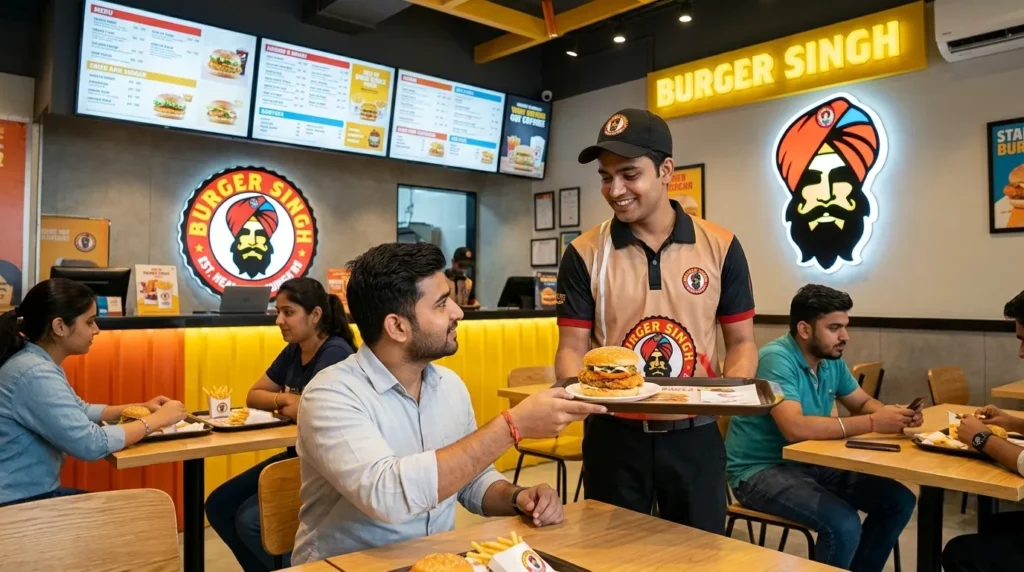
Burger Singh offers multiple franchise models to accommodate different investment capacities, business goals, and location types. Whether you’re a first-time entrepreneur with a limited budget or an experienced investor looking to open a large restaurant, the brand provides flexible formats designed to maximise revenue while meeting local customer demand. Each model differs in terms of investment, space requirements, staffing, and earning potential, allowing franchisees to choose the option that best suits their financial resources and target market.
1. Cloud Kitchen Model
The Cloud Kitchen Model is the most affordable way to start a Burger Singh franchise. It is designed exclusively for online food delivery through platforms such as Swiggy and Zomato, eliminating the need for dine-in seating. This model typically requires an investment of ₹15 lakh to ₹25 lakh and around 350–500 sq. ft. of space. With lower operating costs and fewer staff members, it offers a relatively quick break-even period of 10–15 months, making it an attractive option for first-time franchisees.
2. Food Court Model
The Food Court Model is ideal for shopping malls, airports, railway stations, and other high-footfall commercial locations. Requiring an investment of approximately ₹20 lakh to ₹30 lakh, this format occupies 250–350 sq. ft. and focuses on quick service for customers on the move. Its steady customer traffic and lower rental costs compared to standalone restaurants make it a popular choice for investors seeking consistent daily sales.
3. Express Outlet Model
The Express Outlet Model is suitable for busy high streets, commercial markets, and urban neighbourhoods. It generally requires an investment of ₹30 lakh to ₹40 lakh with a space requirement of 600–800 sq. ft. Unlike smaller formats, express outlets can accommodate both takeaway and limited dine-in customers. This model offers higher revenue potential while maintaining moderate operating expenses, making it suitable for entrepreneurs aiming for long-term growth.
4. Flagship Store Model
The Flagship Store Model is Burger Singh’s full-scale restaurant format, offering complete dine-in, takeaway, and delivery services. It typically requires an investment of ₹45 lakh to ₹55 lakh and around 1,000–1,200 sq. ft. of space. Located in premium commercial areas, flagship stores generate the highest revenue potential but also involve greater staffing and operational costs. This model is best suited for experienced investors with sufficient capital and access to prime locations.
5. Dine-In and Drive-Thru Models
For investors with larger budgets, Burger Singh also offers Dine-In and Drive-Thru franchise formats. The dine-in model generally requires an investment of ₹44 lakh to ₹50 lakh, while the drive-thru model can cost between ₹64 lakh and ₹70 lakh, depending on the location and infrastructure. Drive-thru outlets are particularly suitable for highways, suburban areas, and locations with high vehicle traffic, while dine-in restaurants focus on providing a complete customer experience with expanded seating and menu options.
By offering multiple franchise formats, Burger Singh enables entrepreneurs to choose a business model that aligns with their investment budget, operational capabilities, and local market demand. Evaluating factors such as location, customer footfall, and long-term growth potential can help you select the franchise model that best fits your business objectives.
Burger Singh Franchise Cost Breakdown: Where Does Your Money Go?
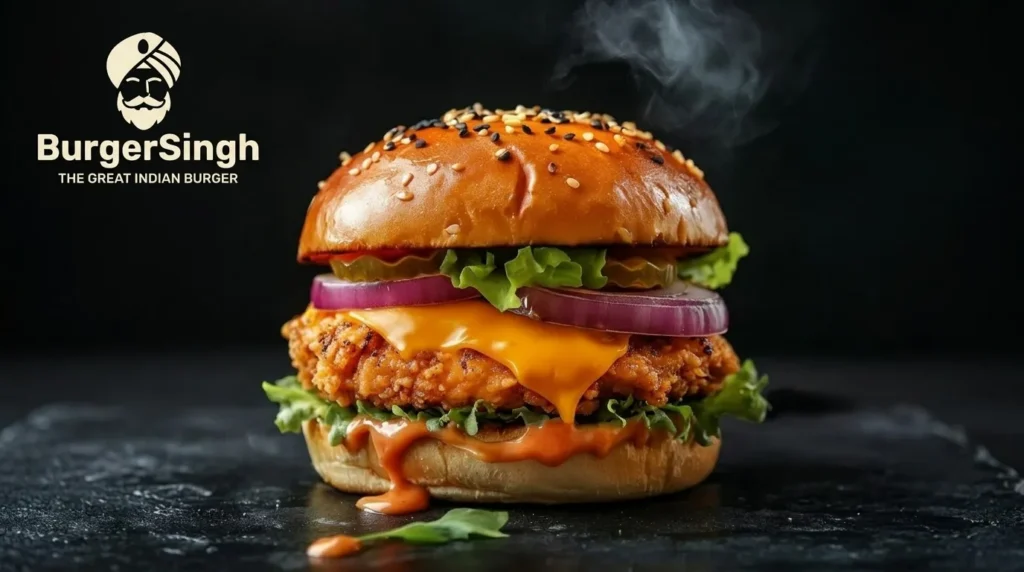
Understanding the Burger Singh franchise cost is essential before investing, as the total amount covers much more than just the franchise fee. From setting up the kitchen and designing the outlet to purchasing equipment and obtaining licences, every expense contributes to building a fully operational restaurant. Depending on the franchise model and location, the total investment generally ranges from ₹15 lakh to ₹55 lakh. Knowing where your money goes helps you plan your finances better and avoid unexpected expenses during the setup phase.
| Expense Category | Estimated Cost (₹) | Purpose |
|---|---|---|
| Franchise Fee | ₹5 lakh – ₹10 lakh | Grants the right to operate under the Burger Singh brand and includes initial training and business support. |
| Kitchen Equipment | ₹15 lakh – ₹18 lakh | Covers grills, fryers, refrigerators, preparation tables, exhaust systems, and other commercial kitchen equipment. |
| Interior Design & Branding | ₹7 lakh – ₹9 lakh | Includes store interiors, branding elements, lighting, signage, and décor following Burger Singh’s standards. |
| Furniture & Fixtures | ₹8 lakh – ₹10 lakh | Covers dining tables, chairs, counters, storage units, and customer seating arrangements. |
| POS & Technology | ₹2 lakh – ₹3 lakh | Includes POS software, billing systems, CCTV cameras, computers, and internet setup. |
| Initial Inventory | ₹2 lakh – ₹3 lakh | Covers opening stock of ingredients, beverages, packaging materials, and other consumables. |
| Licences & Miscellaneous | ₹1 lakh – ₹2 lakh | Includes FSSAI registration, local permits, utility deposits, insurance, and other regulatory expenses. |
| Total Estimated Investment | ₹15 lakh – ₹55 lakh | Varies depending on the chosen franchise model, outlet size, and location. |
The franchise fee allows you to use Burger Singh’s established brand name, business model, and operational systems while providing access to training and ongoing support. A large share of the investment goes toward kitchen equipment, ensuring the outlet meets the brand’s food preparation and quality standards. Costs for interior design, furniture, and branding help create a consistent customer experience across all locations.
In addition, you’ll need to invest in technology systems such as POS software and CCTV for efficient restaurant management, while initial inventory ensures you’re ready to serve customers from day one. Finally, licences, permits, and miscellaneous expenses are necessary to comply with local regulations and legally operate the business.
Apart from these setup costs, it’s advisable to keep sufficient working capital to cover rent, employee salaries, utility bills, marketing, and inventory replenishment during the first few months. Proper financial planning will help your Burger Singh franchise operate smoothly until it reaches stable sales and profitability.
Burger Singh Franchise Profit Margin and ROI Analysis
Before investing in any franchise, it’s important to understand its earning potential. While the Burger Singh franchise cost determines your initial investment, factors such as sales volume, operating expenses, location, and customer demand ultimately influence profitability. A well-managed outlet in a high-footfall area can generate healthy returns, making Burger Singh an attractive option in India’s growing quick-service restaurant (QSR) market.
Estimated Profit Margin
Burger Singh outlets generally operate with healthy margins when managed efficiently. Here’s an overview of the expected profitability:
| Profit Metric | Estimated Range | What It Means |
|---|---|---|
| Gross Profit Margin | 65% – 70% | Revenue remaining after deducting food ingredients and packaging costs. |
| EBITDA Margin | 20% – 25% | Operating profit before interest, taxes, depreciation, and amortisation. |
| Net Profit Margin | 12% – 18% | Final profit after accounting for rent, salaries, royalty, marketing fees, utilities, and other operating expenses. |
These figures may vary depending on the outlet’s location, operating efficiency, rent, and daily customer footfall.
Monthly Revenue and Profit Potential
Different franchise formats have varying revenue and profit potential based on their size and customer capacity.
| Franchise Model | Estimated Annual Revenue | Estimated Monthly Profit |
|---|---|---|
| Cloud Kitchen | ₹50 lakh – ₹70 lakh | ₹80,000 – ₹1.5 lakh |
| Food Court | ₹75 lakh – ₹90 lakh | Around ₹2.4 lakh |
| Express Outlet | ₹90 lakh – ₹1.2 crore | ₹4 lakh – ₹6 lakh |
| Flagship Store | ₹1.5 crore – ₹1.8 crore | ₹8 lakh – ₹15 lakh |
The actual earnings depend on factors such as location, customer traffic, delivery sales, operational efficiency, and overall market demand.
Break-even Period and ROI
Recovering the initial investment is a key consideration for franchise investors. Burger Singh’s different business formats offer varying break-even timelines and expected returns.
| Franchise Model | Break-even Period | Estimated Annual ROI |
|---|---|---|
| Cloud Kitchen | 10 – 15 months | 30% – 35% |
| Food Court | 12 – 18 months | 28% – 32% |
| Express Outlet | 15 – 20 months | 25% – 28% |
| Flagship Store | 18 – 24 months | Depends on location and sales performance |
Cloud kitchens generally achieve faster returns because they require lower upfront investment and have comparatively lower operating costs. Larger formats involve higher capital expenditure but offer greater revenue potential when established in prime locations.
Factors That Affect Profitability
Several factors influence the profitability of a Burger Singh franchise:
- Location and customer footfall
- Rental and utility expenses
- Operational efficiency and inventory management
- Online delivery orders through Swiggy and Zomato
- Staff productivity and customer service
- Local competition and market demand
Choosing a strategic location, maintaining consistent food quality, and controlling operating costs can significantly improve long-term returns.
Overall, a Burger Singh franchise has the potential to deliver attractive profit margins and a competitive return on investment for entrepreneurs who select the right franchise model and manage their outlet efficiently. While actual earnings vary by location and business performance, careful planning and effective operations can help maximise profitability over the long term.
Space and Location Requirements for Burger Singh Franchise
Choosing the right location is crucial for the success of a Burger Singh franchise. A well-positioned outlet can attract more customers, increase sales, and help recover the initial investment faster. Burger Singh generally prefers locations with high visibility, easy accessibility, and a steady flow of potential customers. The space required depends on the franchise model you choose, with smaller formats like cloud kitchens requiring less area than flagship dine-in restaurants.
Space Requirements
| Franchise Model | Recommended Space |
|---|---|
| Cloud Kitchen | 350–500 sq. ft. |
| Food Court | 250–350 sq. ft. |
| Express Outlet | 600–800 sq. ft. |
| Flagship Store | 1,000–1,200 sq. ft. |
| Drive-Thru | 1,500+ sq. ft. (approx.) |
Ideal Location Requirements
- High Customer Footfall: Shopping malls, busy markets, commercial streets, and office hubs are ideal because they attract a large number of potential customers throughout the day.
- Residential Catchment: Areas with a high population of families, students, and working professionals can generate consistent dine-in, takeaway, and online delivery orders.
- Easy Accessibility: The outlet should be easy to locate and conveniently accessible by both pedestrians and vehicles. Good road connectivity and nearby parking are added advantages.
- Strong Delivery Demand: Since Burger Singh receives a significant share of orders through platforms like Swiggy and Zomato, locations with strong online food delivery demand can improve overall sales.
- Reasonable Rental Costs: Rent should ideally remain within 8–10% of projected monthly revenue to help maintain healthy profit margins.
- Essential Infrastructure: The property should have a reliable electricity supply, water connection, drainage system, ventilation, internet connectivity, and sufficient kitchen space to support daily restaurant operations.
Selecting a location that meets these requirements can improve customer traffic, support efficient operations, and increase the long-term profitability of a Burger Singh franchise.
Before approving a franchise application, Burger Singh evaluates whether the applicant has the financial capacity, business commitment, and suitable location to operate the outlet successfully. While previous restaurant experience can be beneficial, it is not always mandatory. Meeting the following eligibility criteria can improve your chances of securing a Burger Singh franchise.
- Investment Capacity: Applicants should have sufficient funds to cover the total franchise investment, which typically ranges from ₹15 lakh to ₹55 lakh, depending on the chosen franchise model.
- Suitable Business Location: You should either own or be able to lease a commercial property that meets Burger Singh’s space, infrastructure, and location requirements for the selected outlet format.
- Business or Management Skills: Prior experience in the food service, retail, or hospitality industry is preferred but not compulsory. Strong management and customer service skills can help in running the business efficiently.
- Commitment to Brand Standards: Franchisees must follow Burger Singh’s operational procedures, quality standards, pricing policies, and branding guidelines to maintain consistency across all outlets.
- Financial Documentation: Applicants may be required to submit documents such as identity proof, address proof, bank statements, income tax returns, and other financial records to verify their investment capability.
- Ability to Manage Daily Operations: Whether managing the outlet personally or appointing a professional manager, franchisees should ensure smooth day-to-day operations, including staff supervision, inventory management, and customer service.
- Willingness to Complete Training: Burger Singh provides training for franchise owners and key staff members. Applicants should be willing to participate in these programmes to understand the brand’s operating procedures and service standards.
- Compliance with Legal Requirements: Franchisees must obtain all necessary licences and registrations, including FSSAI certification, GST registration, and any local permits required to operate a food business legally.
Meeting these eligibility requirements demonstrates your readiness to operate a Burger Singh franchise and helps ensure a successful long-term partnership with the brand.
Training and Support Burger Singh Provides to Franchisees
Burger Singh offers comprehensive training and ongoing operational support to help franchisees establish and manage their outlets successfully. From the initial setup to day-to-day operations, the brand provides guidance to maintain consistent quality and customer service across all locations.
- Initial Franchise Training: Franchise owners and key staff receive training on food preparation, kitchen operations, customer service, hygiene standards, and daily business management.
- Store Setup Assistance: Burger Singh helps with outlet planning, interior design, equipment selection, and store layout to ensure the restaurant meets brand standards.
- Operations Support: Franchisees receive standard operating procedures (SOPs), inventory management guidelines, and regular operational assistance for smooth business operations.
- Marketing Support: The company assists with launch promotions, brand marketing, digital campaigns, and promotional activities to attract customers and increase sales.
- Technology and POS Support: Burger Singh provides guidance on using POS systems, billing software, inventory management tools, and online ordering platforms for efficient operations.
- Supply Chain Assistance: Franchisees receive support in sourcing approved raw materials, ingredients, and packaging products to maintain consistent food quality.
- Regular Business Reviews: The brand conducts periodic performance reviews and offers recommendations to improve sales, operational efficiency, and overall profitability.
- Ongoing Customer Support: Franchisees can contact Burger Singh’s support team for assistance with operational issues, training updates, and business-related queries whenever required.
Step-by-Step Process to Apply for a Burger Singh Franchise
Applying for a Burger Singh franchise involves a structured process to ensure both the brand and the franchisee are a good fit. From submitting your application to launching the outlet, each step is designed to help set up a successful business.
- Submit an Online Franchise Enquiry: Visit the official Burger Singh website and fill out the franchise enquiry form with your personal details, preferred location, and investment budget.
- Complete the Application Process: If your enquiry is shortlisted, you’ll be asked to provide additional information about your financial background, business experience, and proposed outlet location.
- Initial Evaluation: Burger Singh reviews your application, investment capacity, and business plan to determine whether you meet the franchise eligibility criteria.
- Location Assessment and Approval: The brand evaluates your proposed site based on customer footfall, accessibility, market potential, and infrastructure before granting approval.
- Sign the Franchise Agreement: Once the location is approved, both parties sign the franchise agreement, outlining the investment, operational terms, franchise tenure, royalty fees, and responsibilities.
- Outlet Setup and Training: Burger Singh assists with store design, equipment installation, branding, and staff training to ensure the outlet is ready for operations.
- Launch Your Franchise: After completing the setup and final inspections, the outlet officially opens with support from Burger Singh’s marketing and operations teams to help attract customers from day one.
Pros and Cons of Taking a Burger Singh Franchise
Like any business opportunity, investing in a Burger Singh franchise has both advantages and challenges. Understanding these pros and cons can help you make an informed investment decision.
| Pros | Cons |
|---|---|
| Established Indian Brand: Burger Singh has built strong brand recognition with its unique Indian-inspired burger menu and expanding customer base. | High Competition: The QSR industry is highly competitive, with brands like McDonald’s, Burger King, KFC, and several regional chains competing for customers. |
| Multiple Franchise Models: Investors can choose from cloud kitchens, food court outlets, express stores, and flagship restaurants based on their budget and business goals. | Location-Dependent Success: Sales and profitability largely depend on selecting the right location with sufficient customer footfall. |
| Growing QSR Market: India’s fast-food industry continues to expand, creating strong demand for affordable and convenient dining options. | Royalty and Marketing Fees: Franchisees must pay ongoing royalty and marketing charges, which reduce overall net profits. |
| Comprehensive Training and Support: Burger Singh provides operational training, marketing assistance, supply chain support, and business guidance for franchisees. | Operational Responsibility: Managing staff, maintaining food quality, controlling inventory, and delivering consistent customer service require continuous attention. |
| Strong Online Delivery Presence: Partnerships with Swiggy and Zomato help generate additional sales through food delivery channels. | Initial Capital Requirement: Depending on the franchise model, the investment of ₹15 lakh to ₹55 lakh may not be suitable for every entrepreneur. |
| Expansion Across India: With 200+ outlets in over 100 cities, Burger Singh continues to expand into Tier 1, Tier 2, and Tier 3 markets, offering long-term growth opportunities. | Market Trends Can Change: Consumer preferences and food trends evolve over time, requiring franchisees to adapt to new menu offerings and changing customer expectations. |
Burger Singh vs Other Indian Burger Franchise Options
Choosing the right burger franchise involves comparing investment requirements, royalty fees, brand presence, and business models. Burger Singh competes with several Indian burger brands that offer different investment levels and growth opportunities. The comparison below provides a general overview to help prospective franchisees evaluate their options.
| Brand | Estimated Investment | Outlets | Royalty Fee | Franchise Models |
|---|---|---|---|---|
| Burger Singh | ₹15 lakh – ₹55 lakh | 200+ | Around 6% | Cloud Kitchen, Food Court, Express Outlet, Flagship Store, Drive-Thru |
| Biggies Burger | ₹20 lakh – ₹50 lakh | 130+ | Varies | Kiosk, Dine-In, Food Court, Cloud Kitchen |
| Wat-A-Burger | ₹18 lakh – ₹40 lakh | 100+ | Varies | Kiosk, Dine-In, Cloud Kitchen |
| The Burger Company | ₹12 lakh – ₹35 lakh | 150+ | Varies | Cloud Kitchen, Kiosk, Dine-In |
Comparing these factors can help you choose the burger franchise that best matches your investment budget, business goals, and preferred operating model. Before making a final decision, review the latest franchise terms and conduct a detailed feasibility study for your target location.
Is Burger Singh Franchise a Good Investment in 2026?
Yes, a Burger Singh franchise can be a good investment in 2026 for entrepreneurs looking to enter India’s growing quick-service restaurant (QSR) market. With 200+ outlets across 100+ cities, the brand has built a strong presence by offering Indian-inspired burgers and flexible franchise models. Its ₹82 crore Series B funding in 2026 and ₹117 crore revenue in FY 2024–25 further highlight its growth potential.
The investment ranges from ₹15 lakh to ₹55 lakh, making it suitable for different budgets. Cloud kitchens and food court outlets offer lower entry costs, while flagship stores provide higher revenue opportunities in prime locations.
However, success depends on factors such as choosing the right location, managing operating costs, maintaining food quality, and delivering excellent customer service. If you have the required investment and a suitable business location, a Burger Singh franchise can offer promising long-term returns.
Explore more franchise options
Conclusion
Investing in a Burger Singh franchise can be a rewarding opportunity for entrepreneurs looking to enter India’s expanding quick-service restaurant (QSR) industry. With an investment ranging from ₹15 lakh to ₹55 lakh, the brand offers multiple franchise models to suit different budgets and business goals. Its growing network of 200+ outlets across 100+ cities, strong delivery presence, and continued expansion reflect its increasing popularity among Indian consumers.
However, the success of a Burger Singh franchise depends on selecting the right location, managing operating costs, maintaining consistent food quality, and delivering an excellent customer experience. Before making a final decision, carefully review the franchise agreement, assess your financial readiness, and conduct a thorough market and location analysis. By understanding the Burger Singh franchise cost, profit potential, and operational requirements, you can make an informed investment decision and improve your chances of building a profitable and sustainable business in 2026.