The global quick-service restaurant (QSR) industry continues to attract investors seeking businesses with strong brand recognition and scalable growth potential. Among the most established names in this sector, Dairy Queen stands out for its decades-long reputation, diverse menu, and loyal customer base. As consumer demand for premium desserts, frozen treats, and fast-food dining continues to grow, many entrepreneurs are evaluating the Dairy Queen franchise cost to determine whether it offers a worthwhile long-term investment.
Investing in a well-known franchise can reduce many of the challenges associated with launching an independent restaurant, but it also requires a clear understanding of the financial commitment involved. From the initial franchise fee and setup expenses to ongoing royalties, operational requirements, and expected profitability, every aspect of the investment should be carefully assessed before making a decision. This guide provides a complete overview of the Dairy Queen franchise cost in 2026, including estimated investment, eligibility requirements, profit potential, franchise process, and the key factors every prospective franchise owner should consider before investing.
What Is Dairy Queen and Why Is It Worth Considering in 2026?
Founded in 1940, Dairy Queen (DQ) has grown into one of the world’s most recognized quick-service restaurant (QSR) brands. The company is a subsidiary of Berkshire Hathaway, led by Warren Buffett, which adds to its strong reputation and long-term business stability. Today, Dairy Queen operates more than 7,000 locations worldwide, serving millions of customers with a menu that combines signature frozen desserts, burgers, sandwiches, chicken, snacks, and beverages.
One of Dairy Queen’s biggest business strengths is its dual-revenue model. Unlike brands that rely on a single product category, Dairy Queen generates sales from both its food menu and its high-margin dessert offerings, including its iconic Blizzard Treats and soft-serve ice cream. This diversified revenue stream helps franchisees attract customers throughout the day and across different seasons, creating multiple opportunities to increase sales.
For entrepreneurs looking to invest in an established global franchise, Dairy Queen offers the advantage of strong brand recognition, proven operating systems, and continuous product innovation. However, understanding the financial commitment is essential before investing. This guide breaks down the Dairy Queen franchise cost in 2026, covering the initial investment, franchise fees, ongoing royalties, profit potential, eligibility requirements, and every major expense prospective franchisees need to know before getting started.
Dairy Queen Franchise Business Model Explained
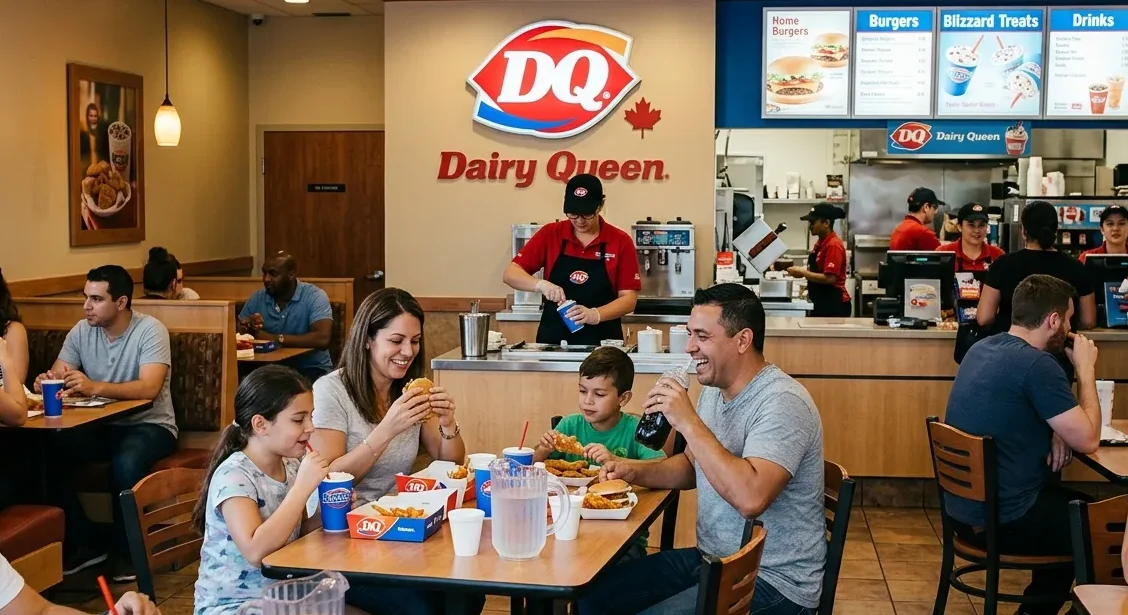
Dairy Queen follows a franchise-based business model that allows independent entrepreneurs to operate restaurants under one of the world’s most recognized quick-service restaurant (QSR) brands. Instead of managing every outlet directly, the company grants franchise rights to qualified investors who operate their locations according to Dairy Queen’s established standards, menu guidelines, and operating procedures.
A major advantage of the Dairy Queen franchise model is its dual-revenue strategy. Franchisees generate income from both fast-food offerings, such as burgers, chicken, fries, and beverages, and the brand’s signature frozen desserts, including Blizzard Treats, soft-serve ice cream, and seasonal specialties. This diversified menu helps attract a wide customer base and creates multiple opportunities for sales throughout the day.
To maintain consistency across its global network, Dairy Queen provides franchisees with comprehensive training, operational support, marketing assistance, approved suppliers, and ongoing product innovation. In return, franchise owners pay an initial franchise fee along with recurring royalty and advertising fees based on sales. This proven business model enables entrepreneurs to benefit from Dairy Queen’s strong brand recognition, established customer loyalty, and scalable operating system while focusing on delivering a consistent customer experience and growing long-term profitability.
Types of Dairy Queen Franchise Formats
Dairy Queen offers multiple franchise formats to suit different investment budgets, market sizes, and customer preferences. Each format is designed to maximize sales while meeting the needs of specific locations and target audiences.
1. Traditional Dairy Queen Restaurant
This is the most common franchise format, featuring a full-service menu that includes burgers, chicken, fries, beverages, and Dairy Queen’s signature frozen desserts. Traditional restaurants are typically located in high-traffic commercial areas, shopping centers, or standalone buildings and require the highest investment.
2. DQ Grill & Chill
The DQ Grill & Chill concept is a modern restaurant format that combines an expanded food menu with Dairy Queen’s famous dessert offerings. It provides dine-in, takeaway, and sometimes drive-thru services, making it one of the brand’s most popular and revenue-generating franchise models.
3. Dairy Queen Treat Store
A Treat Store focuses primarily on frozen desserts such as Blizzard Treats, soft-serve ice cream, sundaes, cakes, and specialty beverages. Since it has a smaller menu and operational footprint, it generally requires less space and a lower investment than full-service restaurants.
4. Non-Traditional Locations
Dairy Queen also operates in non-traditional venues such as airports, shopping malls, universities, hospitals, travel plazas, amusement parks, and entertainment centers. These locations benefit from high customer footfall and often require compact store formats tailored to the available space.
Each franchise format has different space requirements, investment levels, and revenue potential, allowing investors to choose the option that best fits their budget, location, and business objectives.
Dairy Queen Franchise Cost Breakdown
Understanding the Dairy Queen franchise cost is essential before investing in the brand. The total investment varies depending on factors such as the franchise format, store size, location, construction costs, equipment requirements, and local market conditions. In addition to the initial setup expenses, franchisees should also budget for ongoing royalty fees, marketing contributions, inventory, and working capital during the first few months of operation.
For most investors, the initial investment covers the franchise fee, leasehold improvements, kitchen equipment, furniture, signage, point-of-sale systems, opening inventory, staff training, licenses, insurance, and other pre-opening expenses. Since these costs can differ by region and restaurant format, it is advisable to verify the latest figures directly with Dairy Queen before making an investment decision.
Dairy Queen Franchise Cost Breakdown
| Expense | Estimated Cost (USD) |
|---|---|
| Initial Franchise Fee | $45,000 |
| Total Initial Investment | $1.5 million – $2.8 million |
| Real Estate & Construction | Varies by location |
| Kitchen Equipment & Fixtures | Included in total investment |
| Furniture, Signage & POS Systems | Included in total investment |
| Initial Inventory | Included in total investment |
| Training & Opening Support | Included in franchise package |
| Royalty Fee | 4%–6% of gross sales* |
| Marketing/Advertising Fee | Around 5%–6% of gross sales* |
| Working Capital | Included in total investment (varies) |
Dairy Queen Franchise Revenue and Profitability
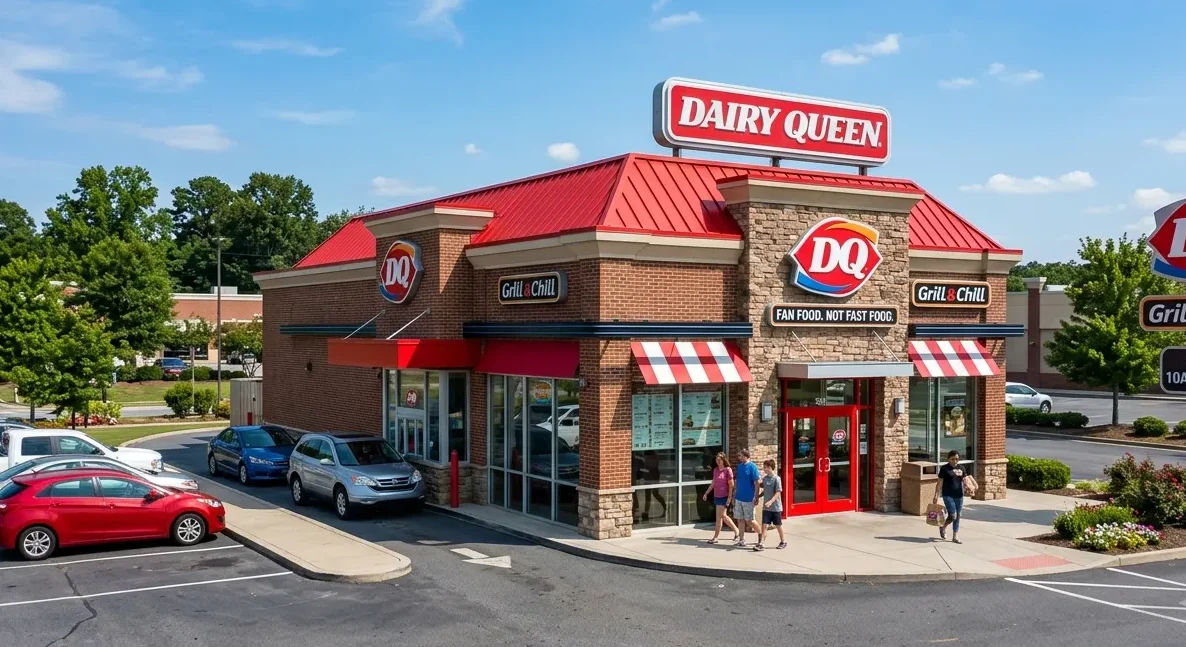
Evaluating Dairy Queen franchise revenue and profitability is one of the most important steps before investing. While Dairy Queen is a globally recognized brand with a loyal customer base, actual earnings depend on several factors, including location, customer traffic, operating efficiency, labor costs, rent, and overall business management. Understanding both revenue and profit margins gives investors a more realistic picture of the franchise’s financial potential.
Average Revenue Per Location
According to recent Franchise Disclosure Document (FDD) data and industry sources, the median Dairy Queen location generates approximately $1.5 million in annual gross sales. Freestanding DQ Grill & Chill restaurants opened between 2015 and 2024 have reported similar average sales, making them one of the brand’s strongest-performing formats.
Revenue can vary based on restaurant size, local demand, competition, and site selection. High-traffic locations with strong visibility and consistent customer flow generally achieve better sales performance.
| Revenue Metric | Estimated Figure |
|---|---|
| Median Annual Gross Sales | Approximately $1.5 Million |
| Revenue Per Dollar Invested | Approximately 0.90x |
| Best Performing Format | DQ Grill & Chill |
Estimated Profit Margins
Dairy Queen profit margins are reported using different financial measurements, which is why estimates can vary.
Restaurant-level operating margins reported in FDD-based data average around 27.3% for well-managed DQ Grill & Chill restaurants. This reflects the restaurant’s operating performance before certain ownership and financing expenses.
Industry analysts often use a more conservative EBITDA margin of around 13%, which considers expenses such as royalties, advertising fees, labor, food costs, rent, and other operating costs. Since EBITDA reflects the ongoing expenses of running the food business, it provides a practical estimate of operational profitability.
| Profit Measure | Estimated Margin |
|---|---|
| Restaurant-Level Operating Margin | Around 27.3% |
| EBITDA Margin | Around 13% |
Is a Dairy Queen Franchise Profitable in 2026?
A Dairy Queen franchise has the potential to be profitable in 2026 when it is operated efficiently in a strong location. Profit is determined after deducting food costs, labor expenses, rent, royalty fees, advertising contributions, and other operating expenses from total revenue.
The brand’s dual-revenue model, which combines fast food with premium frozen desserts, helps generate consistent sales throughout the year. However, profitability depends largely on location quality, customer traffic, cost control, and day-to-day management. A well-run DQ Grill & Chill restaurant in a high-demand market can deliver attractive long-term returns, while a poorly located or inefficiently managed outlet may struggle despite the strength of the Dairy Queen brand.
The revenue per dollar invested of approximately 0.90x also provides investors with useful insight into the franchise’s earning potential and long-term payback period.
Step-by-Step Application and Approval Process
Applying for a Dairy Queen franchise involves multiple stages to ensure that prospective franchisees meet the brand’s financial, operational, and business standards. From submitting an initial inquiry to opening the restaurant, each step is designed to evaluate the applicant’s suitability and prepare them for successful franchise ownership.
1. Submit a Franchise Inquiry
Complete the franchise inquiry form through Dairy Queen’s official franchise website and provide basic details about your background, financial capacity, and preferred investment location.
2. Initial Screening and Qualification
The franchise development team reviews your application to determine whether you meet the brand’s financial requirements, business experience, and eligibility criteria.
3. Review the Franchise Disclosure Document (FDD)
Qualified applicants receive the Franchise Disclosure Document (FDD), which outlines the investment requirements, franchise fees, royalty structure, legal obligations, and operational guidelines.
4. Interviews and Business Evaluation
Applicants may participate in discussions or interviews with the franchise development team to assess their business goals, management experience, and long-term commitment to the Dairy Queen brand.
5. Secure Financing and Select a Location
After preliminary approval, franchisees arrange financing if needed and work with Dairy Queen to identify a suitable site that meets the company’s location and demographic standards.
6. Sign the Franchise Agreement
Once the location and financial arrangements are approved, both parties sign the franchise agreement, officially granting the right to operate a Dairy Queen franchise.
7. Complete Training and Restaurant Setup
Franchisees undergo comprehensive training covering operations, food safety, customer service, inventory management services, and restaurant administration. Construction, equipment installation, and staff hiring are completed during this phase.
8. Grand Opening and Ongoing Support
After the restaurant passes final inspections, it officially opens for business. Dairy Queen continues to provide operational guidance, marketing support, product updates, and business assistance to help franchisees maintain brand standards and grow their business.
Dairy Queen Franchise vs. Competitors: How Does It Compare?
Choosing the right franchise involves comparing investment requirements, brand recognition, profitability, and business model. Dairy Queen competes with several leading quick-service restaurant (QSR) brands, each offering different investment levels and growth opportunities. While Dairy Queen stands out for its dual-revenue model of food and frozen desserts, other brands may have lower startup costs or different market positioning.
| Franchise Brand | Initial Investment | Franchise Fee | Business Model | Brand Strength | Best For |
|---|---|---|---|---|---|
| Dairy Queen | $1.5M–$2.8M | $45,000 | Food + Frozen Desserts | Global | Investors seeking a diversified QSR brand |
| McDonald’s | $1.5M–$2.6M | $45,000 | Burgers & Fast Food | Global | Large-scale franchise investors |
| Burger King | $333K–$3.4M | $50,000 | Burgers & Fast Food | Global | Experienced restaurant operators |
| Wendy’s | $2M–$3.7M | $50,000 | Burgers & Fast Food | Global | Multi-unit franchise investors |
| Baskin-Robbins | $100K–$700K | $25,000 | Ice Cream & Desserts | Global | Dessert-focused entrepreneurs |
Dairy Queen differentiates itself through its combination of a full fast-food menu and high-margin frozen desserts, allowing franchisees to generate revenue from multiple product categories. Although the initial investment is higher than some dessert-only franchises, the broader menu, established global presence, and loyal customer base make it a competitive option for investors looking for long-term growth in the QSR industry.
Pros and Cons of Owning a Dairy Queen Franchise
Owning a Dairy Queen franchise offers the advantage of operating under a globally recognized brand with a proven business model, but it also requires a significant financial and operational commitment. Before investing, it’s important to weigh both the benefits and the challenges.
Pros
- Operate under a globally recognized brand with over 7,000 locations worldwide.
- Benefit from a dual-revenue model that combines fast food with high-margin frozen desserts.
- Gain access to a loyal customer base and strong brand recognition.
- Receive comprehensive training, operational guidance, and ongoing franchise support.
- Leverage national and regional marketing campaigns to drive customer traffic.
- Access an established supply chain and standardized operating systems.
- Opportunity to expand into multiple locations as the business grows.
- Potential for long-term profitability with efficient management and a strong location.
Cons
- Requires a high initial investment, typically ranging from $1.5 million to $2.8 million.
- Ongoing royalty and advertising fees reduce overall profit margins.
- Strict franchise standards limit flexibility in menu, pricing, and operations.
- Daily operations require significant time, staffing, and management oversight.
- Profitability depends heavily on selecting the right location and controlling operating costs.
- Rising expenses such as labor, rent, and food costs can impact earnings.
- The break-even period is generally 5 to 8 years, making it a long-term investment.
For investors with adequate capital and a long-term business mindset, Dairy Queen can offer a stable franchise opportunity backed by a trusted global brand. However, conducting thorough financial planning and market research is essential before making an investment decision.
Explore More Franchise Options:
- Burger Singh franchise cost
- Amul Franchise Cost
- Tea Time Franchise Cost
- Naturals Ice Cream Franchise Cost
Conclusion
The Dairy Queen franchise cost represents a significant investment, but it also provides access to one of the world’s most established quick-service restaurant brands. Backed by Berkshire Hathaway, a presence in more than 7,000 locations worldwide, and a proven dual-revenue model that combines fast food with high-margin frozen desserts, Dairy Queen offers a compelling opportunity for entrepreneurs seeking long-term growth in the QSR industry.
However, investing in a Dairy Queen franchise requires more than sufficient capital. Success depends on selecting the right location, managing operating costs, maintaining high service standards, and following the brand’s established operating system. While the initial investment ranges from $1.5 million to $2.8 million, well-managed locations in high-traffic markets can generate strong annual sales and sustainable returns over time.
Before making a final decision, carefully evaluate the Dairy Queen franchise cost, financial requirements, ongoing fees, expected profitability, and your ability to manage daily operations. Reviewing the latest Franchise Disclosure Document (FDD) and conducting thorough market research will help you make an informed investment decision. For entrepreneurs with the required financial resources and a long-term business vision, a Dairy Queen franchise can be a rewarding opportunity with strong brand support and long-term growth potential.