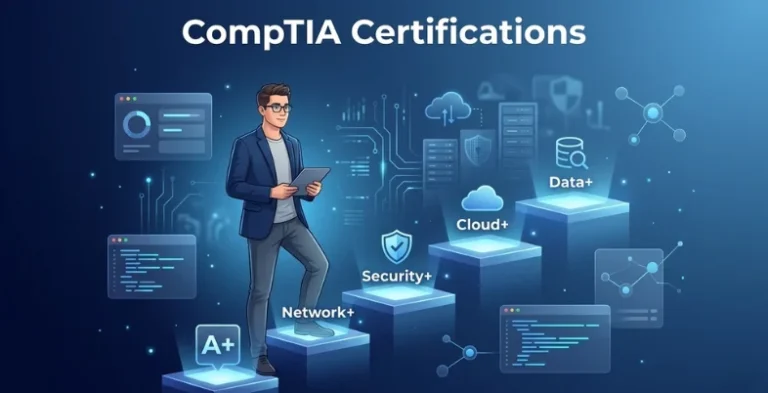
In the rapidly evolving world of technology, CompTIA certifications have emerged as an essential tool for IT professionals seeking to enhance their knowledge, validate their skills, and progress in their careers. Since its establishment in 1982, the Computing Technology Industry Association (CompTIA) has provided vendor-neutral certifications recognized across the globe. These certifications cater to all levels of IT expertise, making them suitable for beginners and experienced professionals alike.
The Role of CompTIA in IT Career Growth
CompTIA certifications provide measurable proof of IT competence, which employers highly value. With technology playing a critical role in modern business, organizations increasingly require professionals who can demonstrate both technical proficiency and problem-solving skills. In addition to technical skills, leveraging modern learning tools can enhance ongoing education and skill development—explore platforms like best edtech apps for students to stay ahead in IT and related domains. CompTIA certifications cover multiple IT domains, from basic hardware support to advanced cybersecurity, enabling professionals to pursue specialized roles while remaining versatile in the industry.
Entry-Level Certification: CompTIA A+
CompTIA A+ is designed for beginners and serves as the foundation for IT careers. It covers computer hardware, operating systems, software troubleshooting, networking fundamentals, and basic security practices. The certification prepares candidates for roles such as help desk technicians, IT support specialists, and technical support analysts. By combining theoretical knowledge with practical skills, A+ ensures that candidates are ready to handle real-world IT problems effectively.
Networking Skills: CompTIA Network+
Network administration and troubleshooting are essential skills in the IT sector. CompTIA Network+ provides training in network design, configuration, management, and security. Candidates learn about protocols, network topologies, wireless networking, and troubleshooting techniques. Network+ certification is valuable for network administrators, system engineers, and IT professionals responsible for maintaining enterprise networks.
Continue to Article: https://www.prepaway.com/n10-008-exam.html
Cybersecurity Essentials: CompTIA Security+

As cyber threats continue to escalate, organizations are prioritizing cybersecurity. CompTIA Security+ equips professionals with knowledge in threat detection, cryptography, risk management, and identity management. Security+ is recognized as a foundational cybersecurity certification, preparing individuals for roles such as security analysts, cybersecurity engineers, and IT auditors. It also serves as a stepping stone to advanced cybersecurity certifications.
Cloud Computing Knowledge: CompTIA Cloud+
Cloud technology is transforming IT infrastructure. CompTIA Cloud+ focuses on deploying, managing, and securing cloud environments. Candidates learn about virtualization, cloud resource management, cloud security, and troubleshooting. Cloud+ certification prepares professionals for cloud administrator, cloud engineer, and IT specialist roles in cloud computing, making it increasingly relevant as organizations adopt cloud solutions.
Linux Administration: CompTIA Linux+
Linux plays a crucial role in servers, networking devices, and cloud platforms. CompTIA Linux+ validates a professional’s ability to manage Linux systems, use command-line tools, implement security, and troubleshoot effectively. Linux+ certified individuals can pursue careers as Linux system administrators, engineers, and IT consultants. The certification emphasizes hands-on experience, ensuring candidates can operate Linux environments confidently.
More Details: https://www.prepaway.com/sy0-701-exam.html
Advanced Certifications: PenTest+, CySA+, CASP+
CompTIA offers advanced certifications for experienced IT professionals. PenTest+ focuses on penetration testing, CySA+ on cybersecurity analytics, and CASP+ on enterprise security and risk management. These certifications are designed to demonstrate expertise in specialized areas, opening doors to advanced career opportunities in cybersecurity leadership, threat analysis, and ethical hacking.
Benefits of CompTIA Certification
Career Opportunities: CompTIA certifications enhance employability and open doors to promotions and higher-paying roles. Certified professionals are often prioritized in recruitment due to validated skills and practical expertise.
Practical Skill Validation: Certifications provide formal proof of hands-on skills, ensuring candidates can perform tasks effectively in real-world IT environments.
Vendor-Neutral Advantage: CompTIA certifications focus on general IT principles rather than specific products or technologies. This allows professionals to work across multiple platforms, increasing flexibility and career options.
Commitment to Lifelong Learning: CompTIA encourages continuous education through recertification and continuing education units, keeping professionals up-to-date with evolving technologies.
Preparing for CompTIA Certification Exams
- Exam Objectives: Understanding the exam objectives is essential. These provide a clear roadmap of the skills and topics tested in the exam.
- Study Resources: Candidates can utilize books, online courses, video tutorials, and practice exams. Platforms such as prepaway.com offer valuable practice tests and guides to simulate real exam conditions.
- Hands-On Practice: Practical experience, including lab exercises, troubleshooting, and configuration tasks, reinforces theoretical knowledge and prepares candidates for practical scenarios on exams.
- Study Groups and Communities: Engaging in forums, discussion boards, and study groups provides collaborative learning opportunities, sharing tips, and insights for exam preparation.
- Exam Strategy: Practicing with timed tests helps candidates manage time effectively during the exam and develop strategies to answer challenging questions efficiently.
Frequently Asked Questions (FAQs)
Q1: Are CompTIA Certifications Recognized Worldwide?
Yes, these certifications are globally recognized and valued by employers across industries.
Q2: Which CompTIA Certification Should Beginners Start with?
CompTIA A+ is recommended for individuals new to IT.
Q3: How long are CompTIA Certifications Valid?
Most certifications are valid for three years, with renewal options through continuing education or higher-level certifications.
Q4: Can I Take CompTIA Exams Online?
Yes, CompTIA provides online proctored exams for secure testing from home.
Q5: Do I need Practical Experience to Pass CompTIA Exams?
Hands-on experience is highly recommended, especially for advanced certifications like Security+, PenTest+, and Cloud+.
Conclusion
CompTIA certifications offer a comprehensive pathway for IT professionals to validate their knowledge, enhance their skills, and advance their careers. From foundational certifications like A+ to specialized certifications in networking, cybersecurity, cloud computing, and Linux administration, CompTIA provides opportunities for all levels of IT expertise. By leveraging reliable study resources, hands-on practice, and platforms like prepaway.com, candidates can prepare effectively, ensuring success in the ever-evolving IT industry and positioning themselves for rewarding career growth.