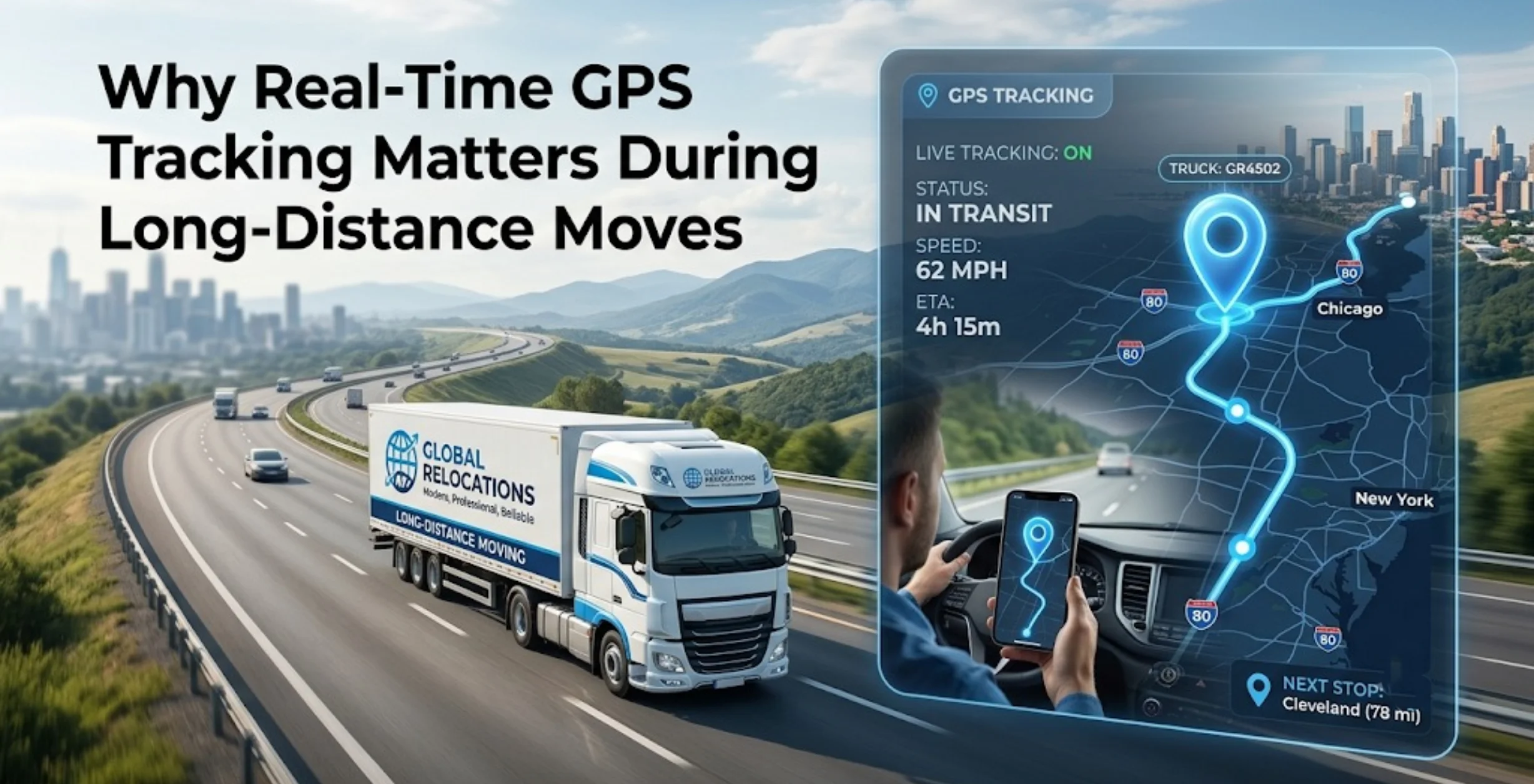
Moving asks a lot from you. You pack up your life, hand it to a crew, and then hope everything shows up when and where it should. Not exactly relaxing, right? That is why real-time GPS tracking and moving truck tracking have become so valuable. They turn that uncomfortable waiting period into something you can actually monitor.
During long-distance moving, live updates help you see where the truck is, notice delays earlier, and plan your arrival with a little more confidence. When you request GPS tracking for movers, you are not being difficult. You are asking for visibility. You want to track your move in real time instead of calling dispatch every few hours for crumbs of information.
Why Visibility Has Become Non-Negotiable
People no longer want vague delivery windows and “we’ll call you soon” answers. You are trusting someone with furniture, files, keepsakes, and the odd box labeled “kitchen stuff” that somehow contains everything important. Visibility is now part of the service.
Trust Starts With Proof
A moving scam complaint is filed with the FMCSA for 1 in every 4,000 moves in the country. That may look like a small number on paper, but if you are the person dealing with missing items, surprise fees, or a carrier that goes quiet, it feels enormous.
Tracking will not solve every risk by itself. Still, it gives you proof of movement and a clearer record of what is happening along the route.
Better Updates Reduce Stress
Live location data cuts down on the guessing game. You do not have to keep calling just to ask, “Any update?” Families can plan travel, elevator reservations, pet care, building access, and delivery timing with fewer last-minute surprises. In that sense, visibility plays a real role in making relocation easier than it used to be.
Once transparency becomes the standard, the natural next question is simple: how does tracking actually protect your move?
How Tracking Improves Every Stage of the Move
After the truck pulls away, timing, routing, and security all matter. A good tracking system gives you and the moving company the same basic source of truth.
Security Feels Less Like Guesswork
When you can see the truck’s location, security becomes less abstract. Modern GPS tracking for movers can include route history, stop alerts, and location checks. Those features help identify long pauses, unusual detours, or route changes that deserve a closer look.
You are not watching because you distrust everyone. You are watching because your belongings matter.
ETAs Get More Useful
Security is important, but so is knowing when the truck will arrive. Strong moving truck tracking helps movers provide better ETAs, which means you are less likely to spend an entire day sitting in an empty house with no chair, no coffee maker, and slowly fading patience.
A better ETA helps you schedule cleaners, reserve freight elevators, coordinate staff, or simply decide when to start driving to the new place.
Communication Gets Cleaner
Tracking works best when updates are easy to access. If a mover says you can track your move real-time, ask how. Is there an app? A text link? Email updates? A web dashboard?
Clear communication prevents small questions from turning into big frustrations. And let’s be honest, moving already brings enough of those.
Even with good updates, though, the road can still throw a few curveballs.
Suggested read: How Is Automated Asset Tracking a Solution for Warehouses?
Weather, Detours, and Real-World Problems
No long trip goes perfectly mile after mile. Traffic builds. Storms roll in. Roads close. Drivers also have legal hour limits, and those rules can affect timing.
Rerouting Happens Sooner
When dispatch can see the truck’s current position, they can respond faster. A delay does not have to sit unnoticed until it becomes a major problem. This is where real-time GPS tracking helps moving teams choose safer routes and notify customers early.
That heads-up matters. “We are rerouting because of weather” feels much better than silence followed by a missed delivery window.
Families and Businesses Benefit Differently
For families, the biggest relief is emotional. Instead of waiting and worrying, you can watch steady progress.
For companies, long-distance moving can involve computers, documents, equipment, and office furniture that need to arrive on a tight schedule. If delivery timing slips, work can stall. Tracking helps teams adjust plans before the disruption gets expensive.
With the core benefits in place, it is worth looking at the newer tools that make tracking more practical.
New Features in Moving Truck Tracking
Modern tracking is no longer just a blinking dot on a map. Better systems now combine location data, alerts, reporting, and mobile access in ways that are genuinely useful.
Geo-Fencing and Smart Alerts
A geo-fence is a digital boundary around a specific place, such as your pickup address, a storage facility, or your new home. When the truck enters or leaves that zone, moving truck tracking can send an automatic update.
That saves everyone time. You get notified without needing to ask. The moving team also avoids another round of phone tag.
Route Data Supports Accountability
The majority of surveyed fleets, nearly three out of four, use GPS fleet tracking technology, and from 2021 to 2025, average fuel savings doubled from 8% to 16%, while average accident cost savings doubled from 11% to 22%. That matters because safer, more efficient fleets usually create smoother customer experiences.
Route data can also help if there is ever a dispute. It gives both sides something more useful than memory. Next, you can use those features to compare movers before signing anything.
Choosing the Right Tracking Setup
Many companies talk about tracking. Not all of them offer tracking that is actually useful to customers. Before you book, ask direct questions and listen closely to the answers.
Features Worth Asking About
A strong setup should include live location updates, route history, ETA notices, mobile access, and support if the app stops refreshing. You can also confirm interstate licensing through the FMCSA mover search tool.
If a company cannot explain how its tracking works, pause. That does not always mean trouble, but it is worth another question.
Quick Comparison Table
| Feature | Why It Matters |
| Live map access | Helps you see current truck location |
| ETA notifications | Reduces waiting and planning stress |
| Route history | Adds documentation if a dispute comes up |
| Multi-device access | Lets family or staff check updates too |
Once you know what to ask, the next step is using the system well from the start.
How to Track Your Move Without Overthinking It
Do not wait until delivery day to figure out the tracking portal. Test everything early, while there is still time to fix a login issue or ask for the correct link.
Before Pickup
Ask whether GPS tracking for movers is included, who sends access, and how often the location refreshes. Save the dispatcher’s number too. Technology is helpful, but when something feels off, a real person still matters.
During Transit
Check updates at set times instead of staring at the map all day. The smartest way to track your move real-time is to use location updates alongside your checklist, travel schedule, and delivery-day access rules.
Tracking should calm you down, not turn you into an unpaid traffic controller.
As these tools become easier to use, moving is likely to become even more transparent.
What’s Coming Next
Once you experience live tracking, it is easy to wonder what comes next. The moving industry is gradually adding tools that make shipment visibility more accurate and customer-friendly.
Smarter Routes and Cleaner Moves
AI-supported routing can help movers avoid heavy traffic, reduce fuel use, and plan better rest stops. Some companies may also share carbon reports, giving customers a clearer way to compare greener moving options.
More Connected Customer Tools
Voice assistant updates, faster 5G location refreshes, and digital proof of delivery may become more common. For customers planning long-distance moving, that means fewer blind spots and fewer awkward “where’s my stuff?” calls.
Before you choose a mover, it helps to understand a few common tracking questions.
Common Questions About GPS Tracking During a Move
Can I track my move if more than one company is involved?
Often, yes, but it depends on who controls the shipment during each leg. Ask whether one dashboard covers the full route or whether you will receive separate tracking links from each carrier or storage provider.
What personal information is visible in tracking apps?
Most apps show truck location, shipment status, ETA, and sometimes delivery notes. They usually should not show sensitive personal details beyond what is needed for the move, but ask about data access and retention before booking.
What if the tracking app stops updating?
Start by refreshing the app and checking your connection. If the location still does not change, call the coordinator or dispatcher. Dead zones, device issues, or carrier handoffs can pause updates without meaning that something is wrong.
Final Thoughts on Moving With More Confidence
Real-time visibility will not make moving effortless. Nothing does. But it removes a lot of the uncertainty that makes relocation so draining. With live updates, better ETAs, route records, and clearer communication, you can plan smarter and breathe a little easier.
For families, businesses, and specialty moves, tracking turns trust into something you can see. If a mover cannot explain how tracking works, take that seriously before you hand over the keys. A confident move starts with clear information.